
窖藏

Search documents
习酒,纵深全国
Sou Hu Cai Jing· 2025-12-24 04:27
Core Insights - The 2026 National Distributor Conference of Xijiu, held on December 20, gathered over 800 distributors and partners, focusing on the company's strategic direction amidst a challenging market environment [1][12] - Xijiu aims to implement a "Nationalization 2.0" strategy through seven key initiatives: integration, supply control, market expansion, brand building, price stabilization, growth promotion, and efficiency enhancement [1][12] Market Context - The Chinese liquor industry is undergoing a deep adjustment, shifting from "total expansion" to a new phase of "stock competition" and "value growth," with market share concentrating among leading brands [4] - Xijiu reported a sales revenue of approximately 19 billion yuan for the year, with a year-on-year increase of 0.73% in delivery volume from January to November, and a significant rise in daily bottle openings by over 30% [4][14] Leadership and Collaboration - The conference featured speeches from key executives, including Chairman Wang Diqiang, emphasizing the importance of collaboration with distributors and the support from local government [2][6] - Xijiu's leadership highlighted the role of trust and long-term partnerships with distributors as crucial for the company's sustained growth [6] Strategic Initiatives - Xijiu has outlined four core work directions for 2026, focusing on practical measures to enhance the Nationalization 2.0 strategy and strengthen collaboration with distributors [7] - The company plans to adapt its marketing strategies to align with channel restructuring trends, separating marketing functions to improve market responsiveness and service efficiency [7][9] Market Order and Compliance - Maintaining market order is a priority, with Xijiu committing to support compliant distributors through policy incentives and resource allocation [9] - The company aims to create a stable operating environment for distributors by implementing strict management practices [9] Product and Brand Development - Xijiu is committed to quality assurance, ensuring that substandard products are rejected throughout the production process, aligning with rising consumer quality expectations [10] - The company is enhancing its product lineup to meet diverse consumer needs, including traditional and social drinking occasions [10] Future Outlook - By the end of 2025, Xijiu's nationalization process is expected to transition into a high-quality development phase, focusing on quality, order, collaboration, and long-term strategies [12] - The conference set a clear path for Xijiu's 2026 development, reinforcing the consensus among manufacturers and distributors to achieve stable growth and advance towards becoming a world-class brand [12][14]

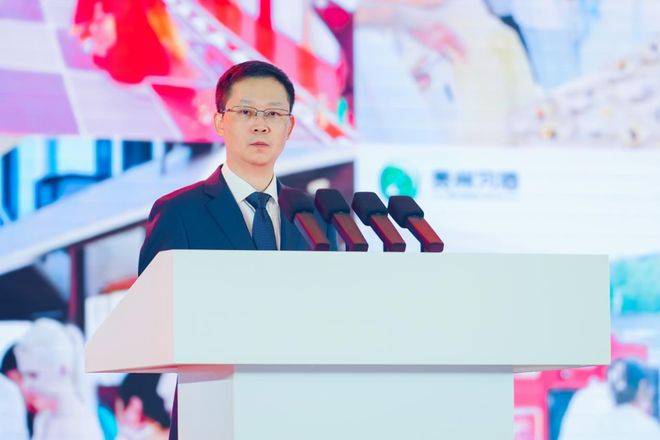
习酒开展“营销2.0”的营销体系改革
Mei Ri Jing Ji Xin Wen· 2025-12-02 00:35
Core Viewpoint - The company is implementing a "Marketing 2.0" reform to enhance its marketing system, focusing on the establishment of three centers and the appropriate separation and deep integration of marketing and sales [1] Group 1: Marketing System Reform - The reform includes the establishment of three centers: Brand Promotion Center, Marketing Center, and Data Operation Center [1] - The Brand Promotion Center is responsible for overall online and offline promotional activities, consumer cultivation, and effective communication of the brand's cultural narrative [1] - The Marketing Center focuses on the sales of three major product lines: Junpin, Jiaocang, and Jinduan, integrating online, offline, and customized development efforts [1] - The Data Operation Center aims to enhance data accuracy and collection, establishing market evaluation models to support market decision-making [1] Group 2: Industry Context and Implications - The "Marketing 2.0" reform addresses industry challenges related to stock competition, responding to the company's channel pressures and brand upgrade needs [1] - The reform serves as a benchmark exploration for the liquor industry, transitioning from channel inventory pressure to precise operations [1] - Previous issues included fragmented promotion across multiple product lines and insufficient channel control, which the reform aims to resolve by integrating resources and leveraging data to tackle pricing discrepancies and sluggish sales [1]