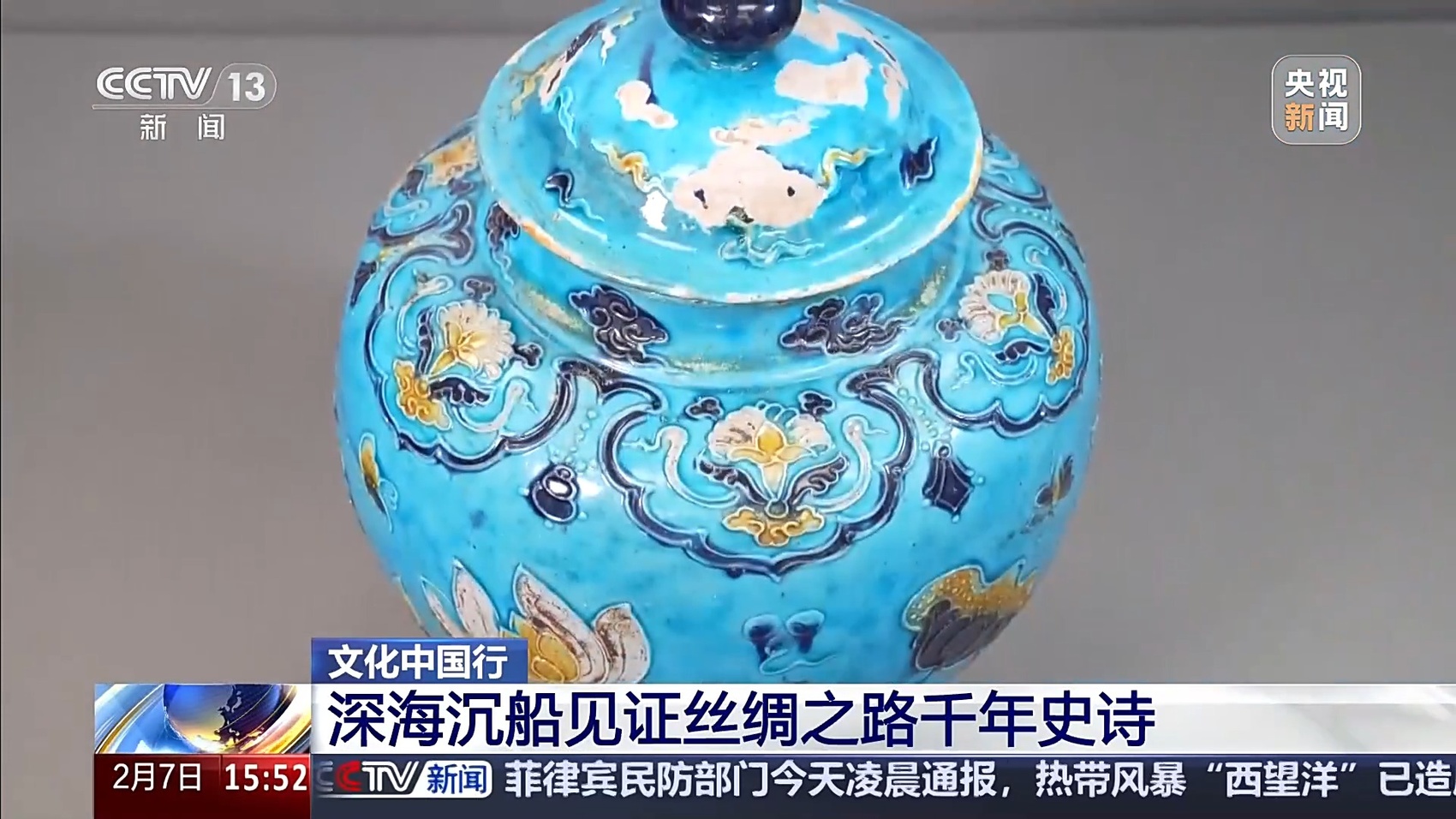
素三彩

Search documents
文化中国行丨我国沉船考古首次发现珐华器 生动见证古代“定制外销”
Yang Shi Xin Wen Ke Hu Duan· 2026-02-08 12:54
Core Viewpoint - The exhibition "Sailing Towards the Sea" at the Beijing Grand Canal Museum showcases artifacts from the Ming Dynasty, highlighting the cultural and commercial exchanges along the Maritime Silk Road, particularly through the discovery of two ancient shipwrecks in the South China Sea [1][8]. Group 1: Artifacts and Their Significance - The majority of the exhibits are ceramics, primarily featuring blue and white porcelain, Famille Rose, and monochrome glazes, with the Famille Rose being a first-time discovery in underwater archaeology in China [3][4]. - A notable artifact is a large Famille Rose jar from the Ming Zhengde period, which serves as a testament to ancient "customized exports" and showcases exquisite craftsmanship [3][4]. - The blue and white plate with auspicious dragon motifs exemplifies cultural symbolism and serves as an excellent medium for cultural export [6]. Group 2: Historical Context and Trade Insights - The two shipwrecks, Northwest Slope No. 1 and No. 2, represent the first simultaneous discovery of ancient Chinese outbound and inbound trade vessels, illustrating the bidirectional nature of maritime trade [8]. - The location of the shipwrecks is identified as a crucial route for ancient maritime trade in China, emphasizing the historical importance of these trade networks [10]. - The artifacts recovered from the deep sea not only reflect the Ming Dynasty's porcelain craftsmanship and overseas trade but also signify China's advanced capabilities in deep-sea archaeology [12].

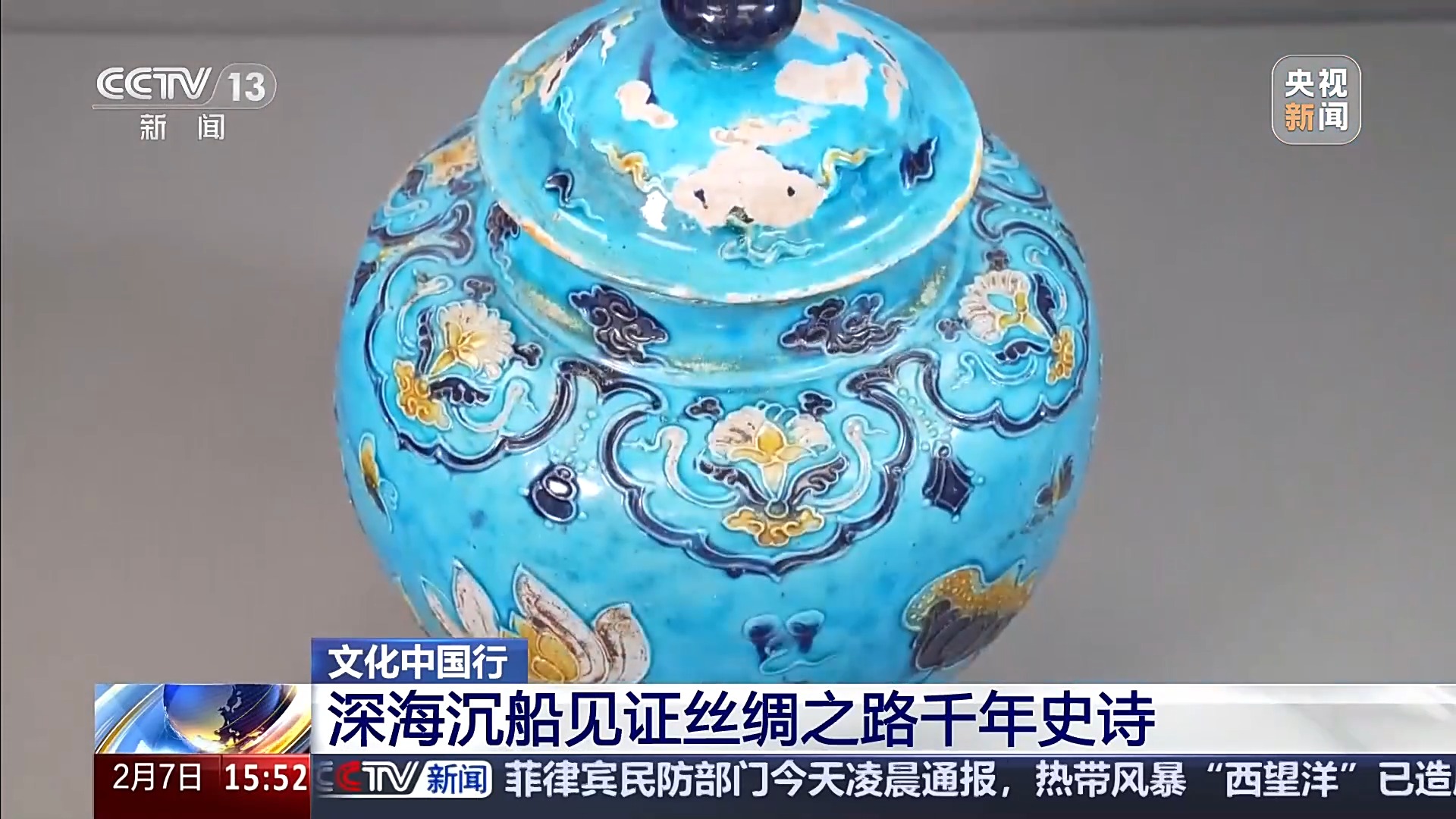
我国沉船考古首次发现珐华器 生动见证古代“定制外销”
Xin Lang Cai Jing· 2026-02-07 11:31
Core Viewpoint - The exhibition "Sailing Towards the Sea" at the Beijing Grand Canal Museum showcases artifacts from the Ming Dynasty, highlighting the cultural and commercial exchanges along the Maritime Silk Road, particularly through the discovery of two ancient shipwrecks in the South China Sea [1][9]. Group 1: Exhibition Details - The exhibition features artifacts from two shipwrecks discovered in October 2022, located at a depth of approximately 1500 meters between Hainan Island and the Xisha Islands, dating back to the Ming Dynasty [1]. - The majority of the exhibits are ceramics, including blue and white porcelain, Famille Rose, and monochrome glazes, with the Famille Rose being a first-time discovery in underwater archaeology in China [3][5]. Group 2: Significance of Artifacts - The Famille Rose piece, a large jar with gold inlay and intricate hollowed designs, exemplifies the complexity of ancient Chinese craftsmanship and serves as a testament to "customized exports" of the time [3][5]. - Other artifacts, such as the blue and white plate with auspicious dragon motifs, represent cultural symbolism and serve as excellent carriers of cultural export [7]. Group 3: Historical Context - The shipwrecks are significant as they represent the first simultaneous discovery of ancient Chinese outbound and inbound trade vessels, illustrating the bidirectional exchanges of the Maritime Silk Road [9]. - The location of the shipwrecks is identified as a crucial route for ancient maritime trade in China, emphasizing the importance of these findings in understanding historical trade networks [11]. Group 4: Archaeological Impact - The artifacts recovered from the deep sea not only reflect the Ming Dynasty's porcelain craftsmanship and overseas trade but also demonstrate China's advanced capabilities in deep-sea archaeology, highlighting the potential for dialogue between ancient and modern times [13].