耐高温消防机器人

Search documents
在2025中国应急展 看科技“神器”助力灾害救援
Xin Hua Wang· 2025-11-19 08:56
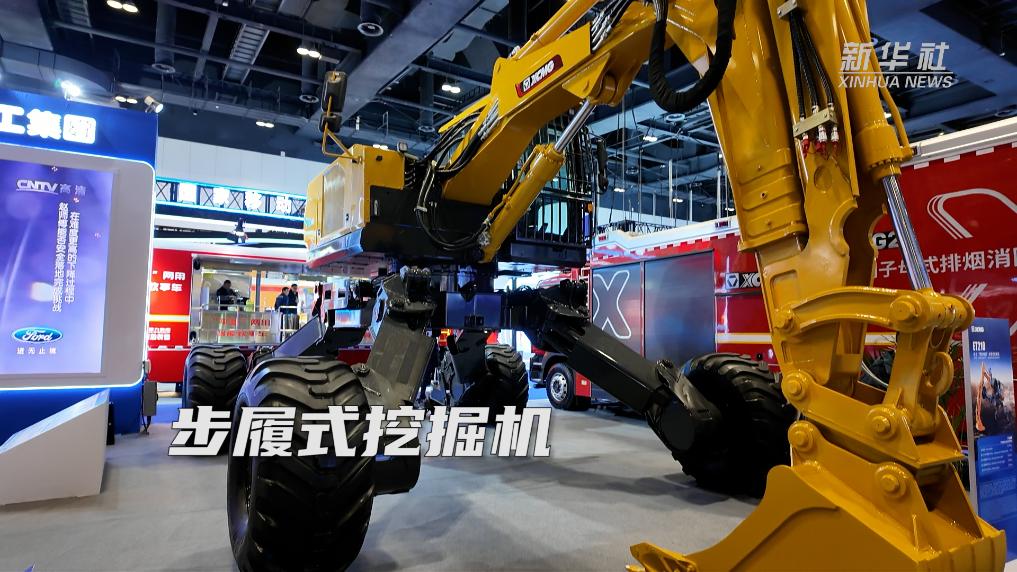
Core Viewpoint - The 2025 China International Emergency Management Exhibition showcases innovations and applications in emergency management technologies, including firefighting, disaster prevention, and rescue equipment [1]. Group 1: Event Overview - The exhibition is held from November 18 to 20 at the National Convention Center in Beijing [1]. - It focuses on the latest advancements in emergency management information technology, firefighting, disaster reduction, and safety production [1]. Group 2: Featured Technologies - Notable technologies include walking excavators, high-temperature resistant firefighting robots, heavy-load transport drones, and integrated drone firefighting and rescue equipment [1].

2020年到2024年,年均增长率11.75% 安全应急产业发展步入快车道
Jing Ji Ri Bao· 2025-10-19 01:08
Core Insights - The article highlights the rapid development and innovation in China's safety and emergency industry, showcasing advanced firefighting technologies and equipment at the 21st China International Fire Expo [1][2][3] - The industry is projected to grow from 1.5 trillion yuan in 2020 to 2.4 trillion yuan by 2024, with an average annual growth rate of 11.75% [1] Industry Developments - The demand for firefighting capabilities is increasing due to the rise of high-rise buildings and large complexes in urban areas [2] - The market for firefighting vehicles is transitioning towards smarter and more specialized equipment, driven by policy and demand [2] - The combination of drones and firefighting vehicles is becoming a popular solution, with innovations such as tethered drones capable of reaching 200 meters for firefighting tasks [2] Technological Innovations - Advanced firefighting robots are being developed, capable of operating in extreme temperatures up to 1000°C for reconnaissance and firefighting [2][3] - Specialized firefighting vehicles, such as those equipped for hazardous materials detection, are in increasing demand [3] - Exoskeleton suits are being introduced to enhance firefighters' capabilities, reducing physical strain and extending operational time [3] Future Outlook - The continuous improvement in technological innovation is expected to lead to more advanced emergency response equipment and techniques, enhancing public safety and supporting high-quality development [3]
2020年到2024年,年均增长率11.75%—— 安全应急产业发展步入快车道
Jing Ji Ri Bao· 2025-10-18 22:05
Core Insights - The article highlights the rapid development and innovation in China's emergency response industry, showcasing advanced firefighting technologies and equipment at the 21st China International Fire Expo [1][2]. Industry Overview - China's safety emergency industry has grown from 1.5 trillion yuan in 2020 to 2.4 trillion yuan in 2024, with an average annual growth rate of 11.75%, becoming a key focus for industrial restructuring and upgrading [1]. - The development of the safety emergency industry is strategically significant for national security, social stability, and economic growth, as emphasized by industry leaders [1]. Technological Advancements - The expo featured a range of innovative firefighting equipment, including high-lift fire trucks capable of reaching heights of 100 meters and effective for tackling fires in high-rise buildings [1][2]. - The integration of drones with firefighting vehicles has emerged as a popular trend, allowing for enhanced reconnaissance and firefighting capabilities [2]. - Firefighting robots capable of operating in extreme temperatures (up to 1000°C) were showcased, enhancing safety for rescue personnel [2][3]. Specialized Equipment - There is a growing demand for specialized firefighting vehicles designed for various emergencies, including hazardous materials incidents and natural disasters [3]. - Innovations such as exoskeleton suits for firefighters can significantly reduce physical strain, improving operational efficiency during high-intensity rescue missions [3]. Future Outlook - The continuous improvement in technological innovation is expected to lead to more advanced emergency response equipment and techniques, reinforcing safety measures for public welfare and supporting high-quality development in the industry [3].