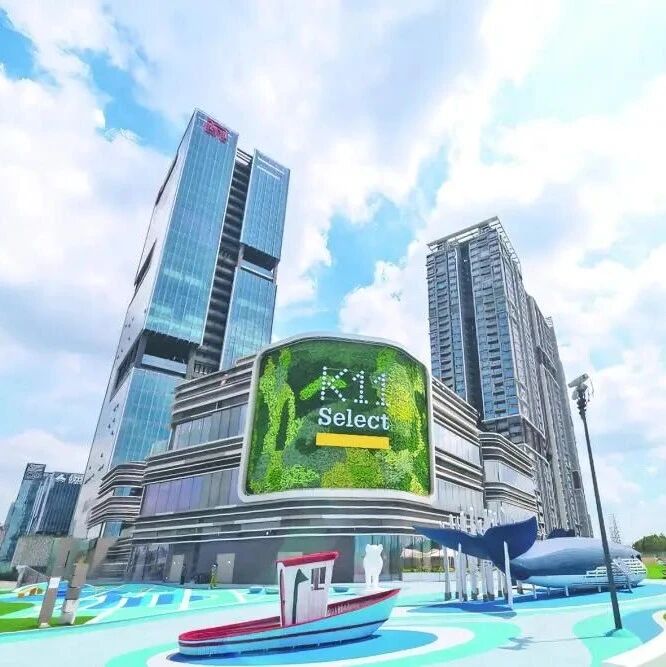
聚龙湾太古里

Search documents
港资守擂、内资突围、区域龙头割据,商业版图谁主沉浮?
Xin Lang Cai Jing· 2026-02-24 05:27
Core Insights - The retail commercial property market in 2025 is undergoing a profound structural adjustment due to macroeconomic headwinds and changing consumer habits, leading to varied survival scenarios among companies with different backgrounds and strategies [3][30] Group 1: Hong Kong Property Companies - Sun Hung Kai Properties remains the "rental king," recording net rental income of HKD 18.392 billion for the fiscal year 2025, demonstrating strong resilience [4][31] - The company maintains a high mall occupancy rate of 95% in Hong Kong by introducing popular mainland brands and optimizing public spaces [4][31] - Swire Properties reported a 20% year-on-year revenue increase in the first half of 2025, with retail sales in mainland China up 70% compared to 2019, but faced significant market differentiation [7][34] - Hang Lung Properties experienced mixed results, with overall income stable but significant city-level disparities, prompting a shift to more refined operational strategies [9][36] - Link REIT adopts a pragmatic approach to stabilize its operations amid structural changes in consumer behavior, enhancing its asset portfolio in Hong Kong and mainland China [11][38] - Kerry Properties shows financial discipline with a 22% drop in net profit but maintains a controlled debt ratio of 40% [13][40] - Shui On Land's resilience heavily relies on its Shanghai projects, which contribute 78% of rental income, highlighting the challenges in its national expansion [16][43] Group 2: Mainland Property Companies - Longfor Properties is focusing on revitalizing older projects, reducing interest-bearing debt by HKD 60 billion over three and a half years, and achieving a historical low financing cost of 3.58% [20][45] - China Resources' commercial segment reported a revenue of CNY 3.267 billion, a 14.6% increase, with a gross margin of 66.1% [21][48] - The average opening rate of new projects in the first half of 2025 exceeded 91%, with significant retail sales growth from third-party managed projects [22][49] Group 3: Regional Leaders - Hisense Plaza in Qingdao has maintained its status as Shandong's top luxury venue for 28 years, achieving annual sales exceeding CNY 6 billion [26][51] - Lihua Group represents a different path in regional commerce with its "department store + supermarket" model, facing challenges in national expansion and declining performance since 2019 [28][53]







广州消费迎来破圈时刻
21世纪经济报道· 2025-12-29 11:54
Core Viewpoint - Guangzhou's commercial landscape is experiencing unprecedented growth, driven by the city's strategic initiatives to enhance its status as an international consumption center by 2025 [1][5][6]. Group 1: Commercial Development - The opening of multiple shopping malls in Guangzhou, including the third Sam's Club and the unique Jiangwan Taikoo Li, reflects a surge in commercial activity [1][2]. - The "14th Five-Year Plan" emphasizes the development of a "5+2+4" commercial system, with significant investments and policies aimed at accelerating the construction of high-end commercial spaces [1][5]. - Since July, Guangzhou has seen a consistent stream of new mall openings, indicating a vibrant commercial environment [1][6]. Group 2: Market Dynamics - International brands and top commercial giants are increasingly investing in Guangzhou, recognizing the city's consumer potential and robust supply chain [2][6]. - The commercial ecosystem in Guangzhou is transitioning from quantity to quality, with new commercial landmarks acting as engines for economic growth [2][6]. - The competition among shopping districts is shifting from attracting foot traffic to creating unique experiences and emotional value for consumers [7][9]. Group 3: Strategic Initiatives - Guangzhou's government has introduced financial incentives and prioritized land supply to stimulate the opening of new commercial projects [1][5]. - The city is focusing on creating a "15-minute convenient living circle" and digital transformation of community commerce to boost local consumption [7][9]. - The "first store economy" is evolving into a comprehensive economic model that includes brand first stores, product launches, and design showcases, with a projected annual increase of 25% in new store openings from 2021 to 2024 [10][11]. Group 4: Future Outlook - The competition among commercial districts is expected to intensify, with a focus on unique positioning and the integration of cultural, tourism, and business elements [11]. - The upcoming "15th Five-Year Plan" aims to enhance the consumer environment and promote the transformation of traditional shopping venues into experience centers [9][11]. - Guangzhou's commercial development is set to leverage its historical significance as a trading hub to transition into a global consumption center [11].