
国际消费中心城市

Search documents
多措并举,从“一时火”到“一直火”(有所思)
Ren Min Ri Bao· 2026-02-26 23:36
Core Viewpoint - Multiple cities in China are implementing innovative measures to boost inbound consumption, aiming to transform temporary spikes in spending into sustained growth [1][2] Group 1: Policy Initiatives - Guangzhou has established "immediate buy and return" centralized refund points, while Tianjin has launched the "Tianjin Traditional Chinese Medicine Tour," and Chongqing has introduced several international brand flagship stores [1] - The "14th Five-Year Plan" suggests cultivating international consumption center cities and expanding inbound consumption [1] Group 2: Market Trends - By 2025, the number of outbound tourists eligible for tax refunds is expected to increase by 305%, with sales of tax-refunded goods projected to rise by 95.9% year-on-year [1] - Topics like "bringing empty boxes to China" have gained traction on overseas social media platforms, indicating a growing interest in Chinese products [1] Group 3: Challenges and Solutions - There are still issues such as insufficient acceptance of foreign cards by small and medium-sized merchants, lack of smooth coordination in visa, customs, and consumption processes, and difficulties in finding change [1] - To enhance the consumption environment, it is crucial to address these bottlenecks and shortcomings, creating a more welcoming atmosphere for foreign tourists [1] Group 4: Supply and Product Development - China possesses a complete industrial system and strong supporting capabilities, enabling the provision of a wide range of high-quality products, which is essential for attracting foreign tourists [1] - Localities should focus on product innovation, developing high-quality goods that meet international aesthetic standards while showcasing regional cultural characteristics, thereby promoting the "Buy in China" brand [1] Group 5: Cultural Integration - Engaging with Chinese culture, such as visiting flower streets in Guangzhou, enjoying crosstalk in Tianjin, and tasting hot pot in Chongqing, is becoming a new trend for foreign tourists [2] - Deepening the integration of traditional Chinese culture, including intangible cultural heritage and performing arts, with the tourism industry can enhance the depth and breadth of foreign tourist spending in China [2] Group 6: Long-term Strategy - Sustaining inbound consumption requires a multi-faceted approach and comprehensive efforts beyond just innovative measures [2] - Promoting high-quality development of inbound consumption not only injects lasting momentum into China's economy but also fosters cultural exchanges, allowing foreign tourists to experience a real, three-dimensional, and comprehensive China [2]
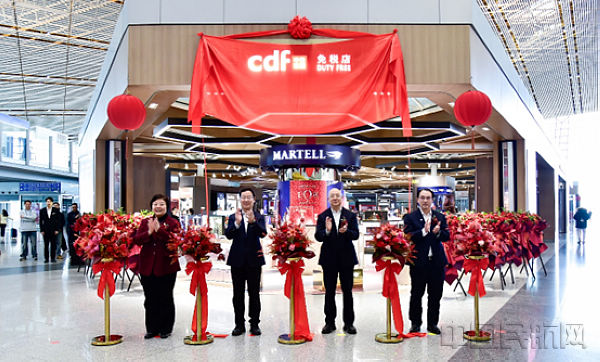
首都机场3号航站楼免税店举办开业仪式
Zhong Guo Min Hang Wang· 2026-02-13 08:04
Core Viewpoint - The opening of the duty-free store at Beijing Capital International Airport's Terminal 3 marks a significant milestone in enhancing the airport's commercial offerings and aligns with national strategies to boost consumption and establish Beijing as an international consumption center [6]. Group 1: Opening Ceremony - The duty-free store at Terminal 3 officially opened on February 13, 2026, with key figures from the Capital Airport Group and China Tourism Group in attendance [1]. - The ceremony included a speech by Wang Yangguang, Chairman and General Manager of China Duty Free Group (CDFG) [1]. Group 2: Store Features and Promotions - The upgraded duty-free store aims to provide a richer product matrix, stable high-end supply, and competitive pricing through innovative store design and digital member services [2]. - During the opening period coinciding with the Spring Festival travel rush, CDFG launched a promotional campaign offering discounts on various products, including fragrance items at up to 60% off and food and beverages at up to 15% off for registered members [2]. Group 3: Strategic Importance - The new duty-free stores at Terminals 2 and 3 cover approximately 14,200 square meters of core commercial space, representing a new phase in the airport's duty-free business [6]. - This initiative is part of a broader effort to respond to national consumption strategies and enhance Beijing's role as a hub for international commerce and exchanges [6].


建设国际一流商圈,北京朝阳区三里屯街道打造国际交往窗口
Xin Lang Cai Jing· 2026-02-05 09:58
Core Viewpoint - The approval of the "Detailed Control Plan for Sanlitun Street (2021-2035)" aims to enhance consumption upgrades, international communication functions, and improve living environment quality in the Sanlitun area, contributing to high-quality regional development [2][29]. Planning Scope - The planning area covers Sanlitun Street, with a total land area of approximately 317.8 hectares, including two blocks (CY00-0304 and CY00-0305) focused on urban renewal [4]. Development Goals - The plan aims to create a "shared and beautiful" environment, showcasing a street image of global cultural exchange and establishing an international first-class model for urban renewal [9]. Spatial Structure - The spatial structure includes a vibrant corridor along Worker’s Stadium North Road and a dual-core commercial center, linking the CBD and Sanlitun International Consumption Experience Area [10]. Planning Features - The plan emphasizes the creation of an international business district and a commercial landmark, enhancing the commercial and business functions of the area [13]. - It aims to establish an international communication window, leveraging the embassy district to create a model for international living [14]. Community Integration - The plan focuses on integrating commercial and residential spaces, enhancing public service facilities, and addressing the needs of both local residents and international communities [17]. Public Space Activation - The initiative includes increasing small green spaces and creating a garden-style commercial area, enriching the urban landscape and enhancing the quality of international communication spaces [21][24]. Comprehensive Regional Update - The plan serves as a practical implementation of Beijing's overall urban planning, guiding the development, construction, and management of the area to support the construction of an international consumption center [29].

让全球游客买得爽、玩得深、带得走!打造国际消费中心,上海市政协委员开出“深层菜单”
Sou Hu Cai Jing· 2026-02-04 10:51
Core Viewpoint - Shanghai is experiencing a vibrant consumer atmosphere during the Spring Festival, reflecting its status as an international consumption center, with projected inbound tourists exceeding 6 million and retail sales reaching 1.85 trillion yuan in 2024 [1] Group 1: Consumer Trends and Strategies - The Shanghai government aims to enhance consumption significantly by 2026, focusing on inbound tourism, tax refunds, and cross-border payment facilitation to unlock consumer potential [3] - The integration of cultural, tourism, commerce, and sports events is proposed to create a new consumption ecosystem, addressing the fragmentation in current offerings [3][4] - Recommendations include establishing a leadership group for the integration of cultural and commercial events, promoting immersive experiences rather than just transactional interactions [4] Group 2: Digital Empowerment and Experience Enhancement - Digital tools are essential for enhancing consumer experiences, with suggestions to upgrade the "Shanghai Small Tour" app to include AI guides and multilingual services [5] - The focus is on creating spaces that offer emotional value and cultural immersion, encouraging visitors to engage with Shanghai's unique lifestyle [5] Group 3: Tax Refunds and International Consumer Engagement - The convenience of tax refunds is critical for retaining international consumers, with plans to increase refund points from over 600 to 1,000 by 2025 and to over 3,000 by 2027 [7] - Suggestions include clustering tax refund points near popular tourist areas and introducing mobile refund services to enhance accessibility [7] Group 4: Quality and Service Improvement - The emphasis is on moving away from price competition to focus on quality and service, with a call for a certification system for quality products and services in Shanghai [9] - The need for better integration of digital payment systems for international visitors is highlighted, suggesting partnerships with payment platforms to simplify transactions for newcomers [9][10] Group 5: Revitalizing Traditional Brands - The potential of Shanghai's "old brands" is recognized, with a focus on enhancing their appeal through improved packaging, service, and cultural storytelling [12] - Recommendations include creating immersive experiences that combine culture and technology, such as AI interactions and cultural workshops, to attract younger consumers and tourists [12][13] - Establishing a system for city-themed souvenirs and promoting traditional products as cultural ambassadors for Shanghai is proposed [13]

从规划蓝图到民生图景:多维度看北京“十五五”未来新篇
Zhong Guo Jing Ji Wang· 2026-02-02 03:16
Group 1: Urban Development and Planning - The core strategy emphasizes the need to strengthen the "one core, two wings" approach to accelerate the construction of a modern capital metropolitan area, with the urban sub-center being a key focus [1] - The urban sub-center has transitioned from a planning phase to a new stage of functional enhancement and comprehensive development, aiming to create vibrant urban areas and new consumption growth points [2] - The planning outlines the construction of distinctive new landmarks such as Shougang Park and Jingxi Zhigu, which contribute to the high-quality development of the capital [1][2] Group 2: Industrial Development and Innovation - Beijing aims to build a competitive modern industrial system, focusing on digital and green economies, positioning itself as a key driver of new productivity development in the country [3] - The Zhongguancun Life Science Park exemplifies new productivity, housing nearly 1,000 biotech companies and creating a complete innovation ecosystem [3] - Jingxi Zhigu has been designated as a key area for artificial intelligence development, contributing to Beijing's goal of becoming a global AI innovation hub [4] Group 3: Consumer Market and Economic Growth - Beijing is working to stimulate domestic demand and deepen the construction of an international consumption center, with plans to create 2-3 new consumption landmarks worth over 100 billion [5] - Shougang Park serves as a practical example of this initiative, integrating international events with trendy consumption to create a unique consumer experience [6] - The Liangma River International Style Waterfront has seen significant commercial revenue growth post-renovation, contributing to a vibrant international consumption corridor [7] Group 4: Governance and Quality of Life - The planning emphasizes a people-centered development approach, focusing on improving governance and quality of life for residents, particularly in the Huaitian area [8] - The Huaitian area has completed 246 key projects with a total investment of approximately 43.7 billion, addressing critical issues in transportation, education, and healthcare [8] - The overall strategy aims to ensure that the benefits of modernization are equitably shared among the population, enhancing the quality of life through effective governance [8]
弘坊项目建设如火如荼 郑州将再添商业新地标
He Nan Ri Bao· 2026-01-29 23:39
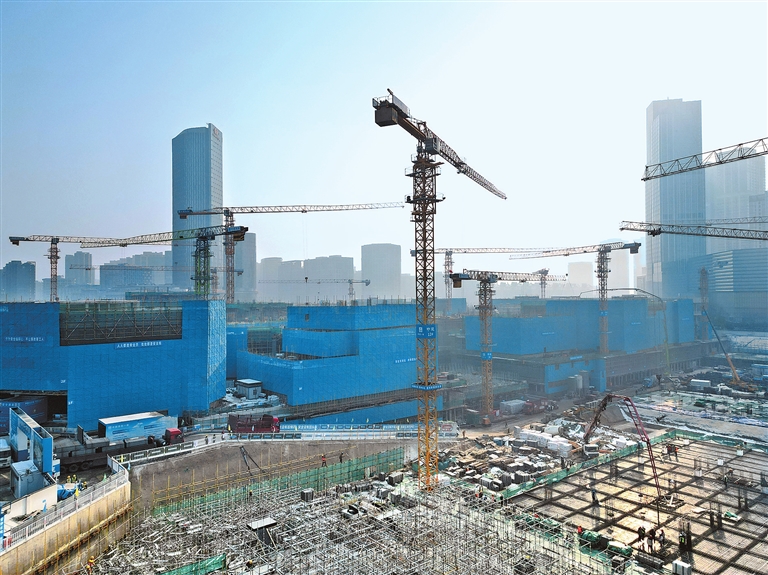
Group 1 - The Hongfang project in Zhengdong New District is a significant commercial development with a total investment of approximately 5.8 billion yuan, covering an area of about 196 acres and a construction area of around 420,000 square meters [3][4] - The project is designed to be a high-end commercial district, integrating culture, commerce, tourism, shopping, and entertainment, and is expected to be completed by 2027 [4][5] - The project consists of multiple components, including commercial streets, a garden terrace hotel, urban squares, museums, art galleries, and cultural parks, with the east and west sections focusing on different themes [3][4] Group 2 - The construction of the Hongfang project involves over 1,400 workers and 17 tower cranes, with significant progress made on both the east and west sections, aiming for completion of the main structure before the Spring Festival [3][5] - The project is part of Zhengzhou's initiative to build an international consumer center, enhancing the region's value and creating new consumption scenarios [5] - Upon completion, the Hongfang project is expected to create around 10,000 jobs and contribute to the development of a new commercial circle in conjunction with nearby complexes [5]
事关消费品以旧换新,扩大市场准入和开放领域……商务部最新发布
中汽协会数据· 2026-01-29 07:04
Core Viewpoint - The article highlights the significant growth in China's consumer market, with a focus on retail sales, service consumption, and policies aimed at boosting domestic demand and international consumption [1][2][3]. Group 1: Retail Sales and Consumer Trends - The total retail sales of consumer goods in China exceeded 50 trillion yuan for the first time, reaching 50.1 trillion yuan, with a growth rate of 3.7%, contributing 52% to economic growth, an increase of 5 percentage points [1]. - The sales of products related to the "trade-in" program amounted to 2.61 trillion yuan, benefiting 366 million people, with significant growth in retail sales of home appliances (11%), communication equipment (20.9%), and furniture (14.6%) [2]. - The retail sales of services grew by 5.5%, with double-digit growth in sectors such as cultural and recreational services, tourism consulting, and transportation [3]. Group 2: Policy Initiatives and Market Development - The government is optimizing the "trade-in" policy to promote consumption of durable goods like automobiles and home appliances, and is implementing pilot reforms in automotive circulation to unleash consumption potential [5]. - There is a focus on cultivating new growth points in service consumption, enhancing supply levels in cultural entertainment, tourism, and healthcare, while also promoting new service consumption areas such as transportation and home services [6]. - The initiative to accelerate the development of international consumption center cities aims to create a more attractive consumption environment and new consumption scenarios for both domestic and international consumers [7]. Group 3: Foreign Investment and Trade - The government plans to expand market access and optimize foreign investment support policies, particularly in the service sector, to encourage foreign investment in areas like telecommunications, healthcare, and education [8][9]. - There is an emphasis on developing service trade and expanding inbound consumption through the establishment of a national service trade innovation development demonstration zone and promoting the export of professional services [10]. - The government is also supporting free trade zones to foster innovation in emerging industries and enhance the overall quality of service sector development [11]. Group 4: Digital Trade and Standards - The construction of a national digital trade demonstration zone is underway, along with the formulation of relevant standards to promote compatibility between domestic and international standards [12].
朝阳区委常委、常务副区长赵海东:锚定国际消费主承载区提质增效
Bei Jing Qing Nian Bao· 2026-01-29 00:53
Core Insights - Chaoyang District has showcased significant achievements in economic, technological innovation, and public welfare during the "14th Five-Year Plan" period, characterized by three key themes: "stabilizing force," "international style," and "vibrant atmosphere" [1][3][4] Economic Performance - The GDP of Chaoyang District is approaching 1 trillion, with a projected growth rate of 5.2% by 2025. Public budget revenues are expected to reach 113.71 billion and 56.9 billion respectively, maintaining a leading position in the city [3] - Fixed asset investment is anticipated to complete 130 billion, consistently exceeding 100 billion for several years. The total retail sales of consumer goods are projected at 260.03 billion, accounting for one-fifth of the city's total [3] - The financial sector's added value is expected to grow by 14.3%, surpassing the city's average growth of 5.6%, contributing to 50.6% of the overall growth [3] International Engagement - Chaoyang District aims to enhance its international presence by creating a multi-dimensional platform for foreign exchanges, with actual foreign investment reaching 2.13 billion, a growth of 34%, accounting for 31% of the city's total [4] Consumer Landscape - The district is recognized as a major consumption hub, with plans to launch seven commercial facilities, including the North Area of Sanlitun and JD Mall, to enhance the consumer experience [4] - The third Chaoyang International Light Consumption Season is expected to attract over 20 million visitors and generate sales exceeding 4 billion [4] Technological Innovation - By 2026, Chaoyang District plans to increase the number of specialized technology parks from 23 to 100, focusing on creating a complete industrial ecosystem that includes policies, funds, and services to attract more tech companies [6] - The district currently hosts 3,649 national high-tech enterprises and aims to leverage these resources to foster technological innovation [5] Consumer Ecosystem Development - The district will develop a "24-hour vibrant city" by integrating new demands with new supplies, enhancing the consumer experience across various demographics and timeframes [7] - Plans include the establishment of high-energy consumption landmarks and the promotion of unique commercial areas, such as the CBD × Sanlitun International Consumption Experience Zone [7] Public Welfare and Governance - Chaoyang District is committed to improving public services, with plans to enhance educational resources and healthcare facilities, including the construction of nine new schools and ten healthcare projects [9] - The district will also focus on ecological improvements, aiming to create beautiful neighborhoods and enhance green spaces [10]
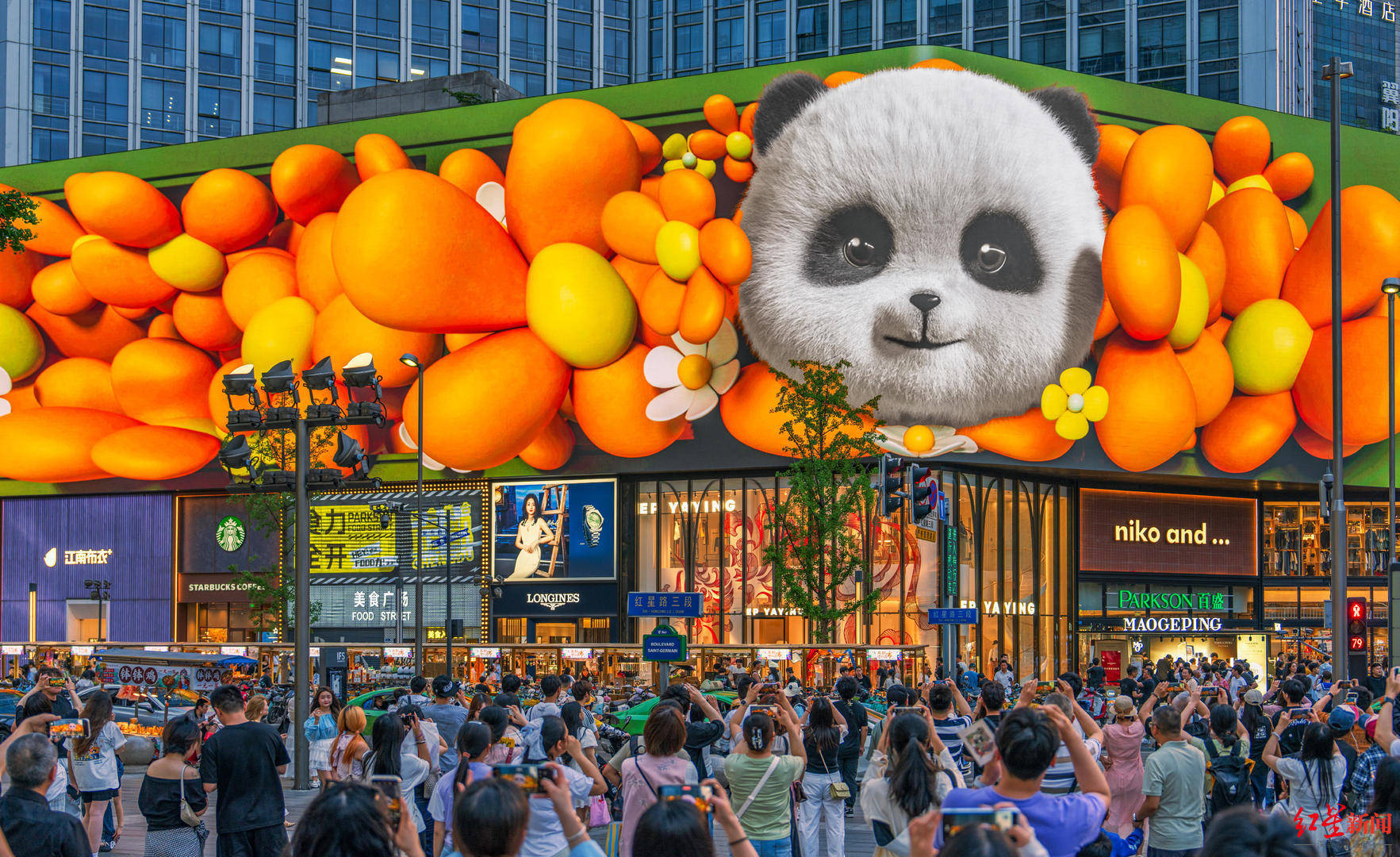
两会热评③丨“副省级消费第一城”,为什么是成都?
Sou Hu Cai Jing· 2026-01-28 11:03
Group 1 - Chengdu has achieved a remarkable consumer performance, with a projected retail sales growth of 5.5% in 2025, making it the top city among sub-provincial cities in China [1] - Chengdu has entered the trillion-level consumer city category in 2023, showcasing resilience in consumer growth despite external uncertainties and insufficient domestic demand [1][3] - The consumption focus is shifting westward, with Chengdu, Wuhan, and Chongqing showing higher growth rates compared to eastern coastal cities [1] Group 2 - Chengdu's proactive measures, including the "Implementation Plan for Boosting Consumption," have been pivotal in enhancing consumer confidence and establishing it as an international consumption center [3] - The city has implemented various policies, such as a subsidy program for replacing old consumer goods, which has seen over 870,000 items exchanged, and has been recognized as a national pilot city for retail innovation [3] - Chengdu's first duty-free store has opened, welcoming 2.38 million inbound tourists, marking a 44.3% increase, and the city has been selected as a pilot for building an international consumption environment [3] Group 3 - Consumer confidence is fundamentally linked to future expectations, with steady economic growth and industrial upgrades fostering a belief in improved living standards [5] - The relationship between consumer spending and business revenue is highlighted, emphasizing that individual consumption directly translates to corporate profits [4] - The nurturing of consumer confidence is essential for sustaining economic vitality and individual aspirations for a better life [5]
市政协委员刘静:联动国资国潮 拓展北京消费国际新空间
Bei Jing Shang Bao· 2026-01-27 14:01
Core Viewpoint - The development of Beijing as an international consumption center is a significant strategic shift in national policy, moving from export and investment-driven growth to a focus on domestic demand and consumption leadership [1] Group 1: Economic Contribution and Trends - In 2025, final consumption expenditure contributed 52% to economic growth, marking consumption as the primary driver of China's economic development [1] - The consumer market is increasingly characterized by a younger demographic, with individuals aged 18-35 making up 58% of the consumer base, indicating a shift towards a more discerning and value-driven consumption logic [1] Group 2: National Brand Preference and Consumer Behavior - 85.79% of consumers prefer domestic brands, establishing a consumption pattern dominated by local brands, with a focus on younger generations and middle-income, highly educated groups [2] - The 2025 China Brand Global Trust Index (GTI) shows that Chinese brands have improved their net trust levels in developed markets, indicating a positive shift in consumer perception [2] Group 3: Recommendations for Enhancing Consumption Center - Beijing should avoid homogenization and instead leverage its unique cultural heritage and local resources to create a distinctive consumption ecosystem that blends tradition with modern trends [2] - The establishment of a Beijing National Trend Innovation Brand Incubation Center is recommended to accelerate the online and international processes of domestic products, promoting the integration of local culture and national brands [2] Group 4: E-commerce and Internationalization - Utilizing e-commerce platforms to facilitate direct sales of national trend brands and time-honored products can help overcome spatial limitations and enhance international visibility [3] - The integration of e-commerce platforms with government services is suggested to improve consumer access for international visitors, making the shopping experience in Beijing more convenient and appealing [3]