
脑脊接口技术

Search documents
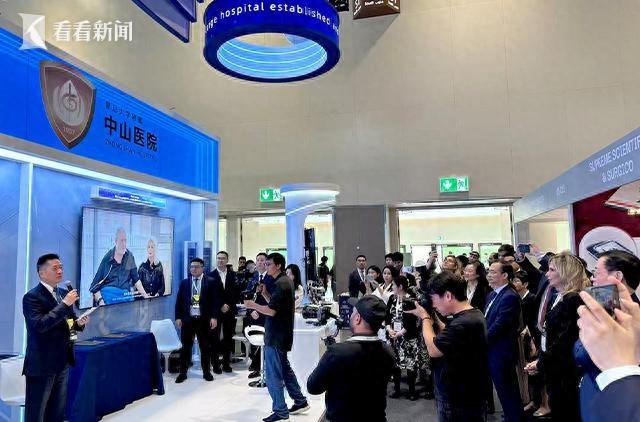
复旦大学附属中山医院亮相迪拜世界健康博览会
Xin Lang Cai Jing· 2026-02-09 11:00
Core Viewpoint - Fudan University Zhongshan Hospital showcased its advanced medical technologies and management practices at the World Health Expo in Dubai, aiming to enhance global health collaboration and promote its capabilities as a leading medical institution in China [1][3]. Group 1: International Strategy and Collaboration - The participation in the World Health Expo represents a key practice in the hospital's ongoing internationalization strategy and its proactive integration into global health governance [3]. - The hospital aims to present its comprehensive strengths in medical services, technological innovation, and hospital governance, establishing a foundation for substantial international cooperation [3]. Group 2: Technological Advancements - Zhongshan Hospital highlighted its core strengths in advanced diagnostic and treatment technologies, particularly in liver surgery and cardiovascular diseases, while showcasing its capabilities in managing complex and critical conditions [5]. - The hospital also presented its AI-enabled smart healthcare solutions, demonstrating the integration of artificial intelligence across various clinical settings, including outpatient services and intensive care [7]. Group 3: Management Practices - A robust management system is emphasized as the cornerstone of the hospital's high-quality development, with insights shared on medical quality and safety control, patient-centered services, and collaborative innovation in medical education and research [9]. - The Dubai event is seen as a crucial step in promoting the "Zhongshan experience" globally, with a focus on transforming the outcomes of the exhibition into tangible international collaborations in disease prevention, technology development, and talent exchange [9].

上海打造类脑智能产业集聚高地,行业迎来哪些机遇?
Di Yi Cai Jing· 2025-06-28 02:11
Core Insights - Shanghai is making significant progress in the development of brain-like intelligence technology, clinical research, and testing, with a focus on building an ecosystem for the industry [1][2] - The Yangpu District has released an implementation plan to promote the brain-like intelligence industry, aiming to create a collaborative environment for upstream and downstream enterprises and attract multi-level capital [1][2] Industry Development - The implementation plan includes the establishment of a future industry technology park, a public technology platform, an innovation development alliance, and specialized incubators for brain-like intelligence [1][2] - The plan aims to cultivate 3-5 "gazelle" companies and gather 10-15 representative enterprises in the brain-like intelligence sector, forming a comprehensive industrial ecosystem [1][2] Technological Advancements - Recent technological developments include the world's first "brain-spinal interface" technology and an implantable visual prosthesis that restores vision in animal models [2][3] - Clinical trials for brain-machine interface products targeting conditions like Parkinson's, depression, and epilepsy are underway in several top-tier hospitals in Shanghai [2][3] Regulatory Framework - The Shanghai Medical Device Testing Research Institute is leading the establishment of industry standards for brain-machine interface technologies, enhancing the testing capabilities for these products [3] - The National Medical Insurance Administration has initiated pricing guidelines for neurological services related to brain-machine interface technologies, addressing previous gaps in insurance coverage [3] Ecosystem and Talent Pool - Yangpu District benefits from a concentration of research talent from several universities, including Fudan University and Tongji University, which supports the rapid development of the brain-like intelligence industry [3] - The successful development of the industry relies on the construction of medical resources and the establishment of foundational technologies, databases, and computational resources [3] Market Opportunities - The brain-like intelligence industry has broad and expanding applications, including medical-grade brain-machine interfaces, home rehabilitation, cognitive training, and educational training [4][5] - Companies are encouraged to explore diverse payment models and new market scenarios to meet the varied demands of the market [5]