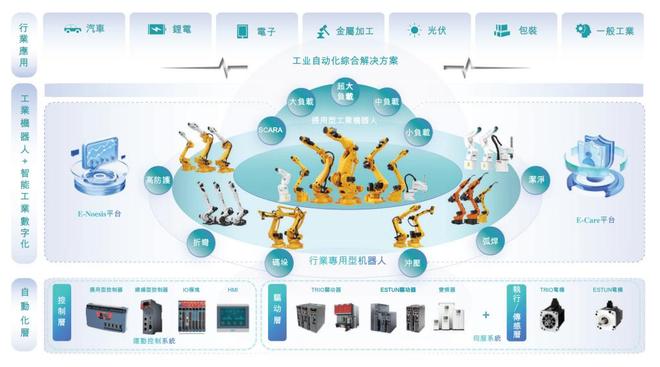
自动化核心部件与运动控制系统

Search documents
埃斯顿预计2025年业绩扭亏为盈,二次递表冲刺港股“工业机器人第一股”
Jin Rong Jie· 2026-01-22 08:18
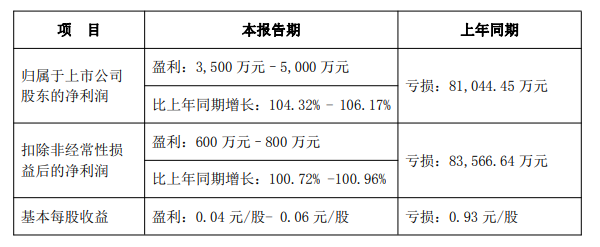
Core Viewpoint - Estun is expected to achieve a net profit of 35 million to 50 million yuan for the fiscal year 2025, marking a significant turnaround from a loss of over 810 million yuan in the previous year, representing a year-on-year growth of 104.32% to 106.17% [1][2] Financial Performance - The net profit attributable to shareholders is projected to be between 35 million and 50 million yuan, compared to a loss of 810.44 million yuan in the same period last year, indicating a growth of 104.32% to 106.17% [2] - The net profit after deducting non-recurring gains and losses is expected to be between 6 million and 8 million yuan, a significant improvement from a loss of 835.67 million yuan last year, reflecting a growth of 100.72% to 100.96% [2] - Basic earnings per share are anticipated to be between 0.04 yuan and 0.06 yuan, recovering from a loss of 0.93 yuan per share in the previous year [2] Business Growth Drivers - The turnaround in performance is attributed to robust revenue growth in core business areas, particularly in high-demand sectors such as automotive, electronics, and lithium batteries, which have driven domestic revenue growth [3] - A significant reduction in asset impairment provisions, which amounted to approximately 466 million yuan in the previous year, has also positively impacted net profit, with no major asset impairment expected for 2025 [3] Market Position and Strategy - Estun has become the leading domestic company in the industrial robot solutions market in China, surpassing foreign brands in terms of shipment volume in the first half of 2025 [4] - The company ranks sixth globally in the industrial robot market, with a market share of 1.7% worldwide and 2.0% in China, based on 2024 revenue [4] - Estun's multi-brand strategy, including brands like "Estun," "Cloos," "Trio," and "M.A.i," enhances its technological capabilities and product offerings, covering a wide range of 96 robot models [6] IPO and Future Plans - The upcoming Hong Kong IPO aims to raise funds for expanding global production capacity, forming strategic alliances, investing in R&D for next-generation industrial robot technologies, upgrading global service systems, repaying existing loans, and supplementing working capital [7]


埃斯顿赴港IPO:巨亏8亿、短债高企与外资撤离下的“破局”之问
Jin Rong Jie· 2025-07-14 09:50
Core Viewpoint - Nanjing Estun Automation Co., Ltd. is facing significant challenges as it prepares for its IPO on the Hong Kong Stock Exchange, including a sharp decline in performance, heavy debt burdens, and foreign capital withdrawal [1][8]. Financial Performance - In 2024, the company reported revenue of 4.009 billion yuan, a decrease of 13.8% from 2023, and a net loss of 810 million yuan, a staggering decline of 700.1% year-on-year [3][4]. - The company's core business, industrial robots and intelligent manufacturing systems, saw a revenue drop of 16.04% in 2024, with significant declines in sales from its subsidiary in Germany and the photovoltaic sector [3]. - The company recorded asset impairments totaling 467 million yuan, exacerbating its overall losses [3]. Research and Development - Despite financial struggles, the company maintains high R&D expenditures, with amounts of 308 million yuan, 389 million yuan, and 442 million yuan from 2022 to 2024, reflecting increases of 26.3% and 13.84% in 2023 and 2024, respectively [6]. - The company aims to enhance its competitive edge through technological innovation and high-value products, although the high R&D costs are currently a burden on profitability [6]. Debt Situation - The company's total liabilities increased from 5.181 billion yuan in 2022 to 8.248 billion yuan in 2024, with a significant rise in short-term debt [7]. - By the first quarter of 2025, total liabilities reached 9.053 billion yuan, with current liabilities at 6.387 billion yuan, indicating a cash flow challenge as operating cash flow turned negative in 2024 [7]. Foreign Investment Withdrawal - The company is experiencing a withdrawal of foreign capital, with significant reductions in holdings by foreign institutional investors since 2022, reflecting a decline in market confidence [8]. - The proportion of shares held by foreign investors dropped from 23.71% in 2022 to 2.21% by June 30, 2025, indicating a loss of interest from international investors [8].