工业4.0

Search documents
金元证券每日晨报-20260330
Jinyuan Securities· 2026-03-30 03:04
Market Overview - The A-share market showed positive movement with the Shanghai Composite Index rising by 0.63% to 3,913.72 points, the Shenzhen Component Index increasing by 1.13% to 13,760.37 points, and the ChiNext Index up by 0.71% to 3,295.88 points [3][11] - The Hong Kong Hang Seng Index rose by 0.38% to 24,951.88 points, while the South Korean KOSPI Index fell by 0.40% to 5,763.22 points [11] - In the US market, the Dow Jones Industrial Average decreased by 1.73% to 45,166.64 points, and the Nasdaq Index dropped by 2.15% to 20,948.36 points [11] International News - The Houthis in Yemen have escalated military actions in response to regional tensions, targeting significant military objectives in Israel with ballistic missiles [7] - US President Trump claimed control over the Strait of Hormuz, indicating a potential reduction in US military presence in Iran after achieving military objectives [8] - Ongoing conflicts between the US, Israel, and Iran have intensified, with Iran threatening to strike military and political targets in retaliation for attacks on its territory [9] Domestic News - The Ministry of Ecology and Environment held a meeting in Wuhan to address air pollution in the Yangtze River middle reaches, emphasizing the need for green transformation in key industries [13] - Hong Kong's visitor numbers have increased by approximately 17% year-on-year, with expectations for retail sales to continue growing [14] - A report titled "2026 Industrial 4.0 Barometer" indicates that China's industrial digitalization level is leading globally, with a score of 72%, up 3 percentage points from the previous year [14] Company Announcements - Mingde Bio is advancing a major asset restructuring plan to acquire 100% of Wuhang Bikaier's equity [16] - Juchip Technology is projected to see a 91.95% year-on-year increase in net profit by 2025 [16] - United Optoelectronics is acquiring 92.62% of Changyi Optoelectronics and has received approval for fundraising from the Shenzhen Stock Exchange [16] - Fulian Precision has established a wholly-owned subsidiary to focus on humanoid robot smart joints [16]
电与未来同行:松下中国在海南开展电能知识可持续科普活动
Sou Hu Wang· 2026-03-06 03:39
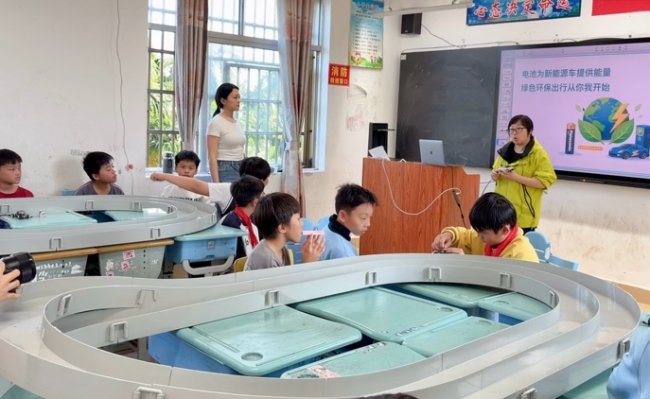
Core Viewpoint - Panasonic China is actively engaging in sustainable education initiatives in rural areas of Hainan, aiming to enhance students' scientific understanding and promote sustainable development through hands-on learning experiences [1][12]. Group 1: Educational Activities - The "Charging Up! Panasonic Green Energy Car" activity introduces students to the concepts of new energy vehicles and low-carbon travel by comparing CO₂ emissions from fuel vehicles with clean energy generation, establishing a logical connection between energy choices, emissions impact, and climate change [4]. - The "Exploring Industrial Robots" activity encourages students to collaborate in understanding the principles of industrial robots and their applications in smart manufacturing, transforming abstract concepts like "Industry 4.0" into practical experiences [5]. - The "Playing with Panasonic Electromagnetic Train" activity allows students to explore the principles of electricity and magnetism through experiments that visualize and measure these concepts, enhancing their understanding of everyday electrical devices and promoting thoughts on clean energy and low-carbon living [9]. Group 2: Long-term Goals - Panasonic China's series of educational programs aims not only to teach students scientific principles but also to instill a mindset of using evidence to understand the world and make informed choices for the future, fostering critical skills for sustainable living [11]. - The company emphasizes its commitment to corporate social responsibility by providing educational resources and practical opportunities in energy technology and smart manufacturing, aligning with China's national strategy for educational modernization and technological talent development [12].


任泽平:游学欧洲的七大印象
泽平宏观· 2026-03-05 16:06
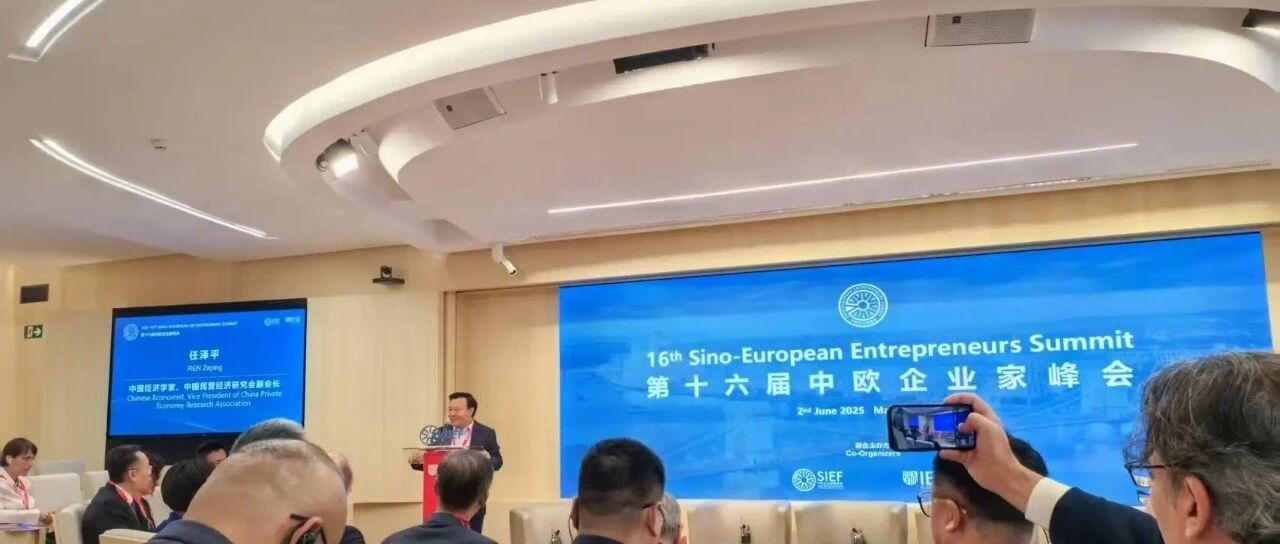
Key Insights - The article highlights significant changes in Europe, particularly in terms of security, economic competitiveness, and social dynamics, as observed during a recent trip to Spain and France [1][2]. Group 1: Security Concerns - Security in Europe is a major concern, with increased warnings about petty crime and a noticeable rise in homelessness and vagrancy in cities like Paris and Madrid [3]. - Comparatively, domestic security in China is perceived to be much better, even in smaller cities [3]. Group 2: Manufacturing and Economic Competitiveness - Chinese manufacturing is thriving globally, with brands like Haier, Hisense, Xiaomi, and BYD gaining visibility in Europe [4]. - European companies express both admiration and fear towards Chinese products, which are seen as high-quality and low-cost, posing a potential threat to local industries if tariffs are eliminated [4]. - The high costs of labor and energy in Europe, exacerbated by the Russia-Ukraine conflict, further diminish its manufacturing competitiveness [4]. Group 3: Innovation and Economic Stagnation - European countries are actively pursuing technological innovation, yet they lag behind the US and China in terms of new technologies and unicorn startups [5][7]. - The article attributes this stagnation to rigid innovation mechanisms and strong union influences that hinder cross-industry innovation [7]. - The European economy has not fully recovered to pre-pandemic levels, relying heavily on luxury goods, tourism, and automotive sectors, with limited entrepreneurial activity among the youth [8]. Group 4: Quality of Life and Social Dynamics - European citizens enjoy a high quality of life, with free education and healthcare, leading to a lifestyle that prioritizes enjoyment over work [10][11]. - The average monthly salary in Spain is around €2,000, with Madrid averaging €3,000, while the cost of living is comparable to major Chinese cities [11][12]. Group 5: Cultural and Legal Aspects - There is a strong emphasis on personal freedom and privacy in Europe, with legal protections favoring women in cases of domestic disputes [13]. - The cultural heritage and civilization level in Europe are highlighted, showcasing a rich history in law, market practices, and respect for individuals [15]. Group 6: Global Trade and Relations - The article critiques the global trade policies initiated by former US President Trump, which are viewed unfavorably in Europe [18]. - European leaders express a desire for collaboration with China to promote free trade, while hoping for a correction in US policies through future elections [18][19]. Group 7: Future Outlook - The article concludes with a positive outlook for China's manufacturing competitiveness, innovation, and overall national strength, emphasizing ongoing support for private enterprises and new infrastructure development [20][21].
默茨访华,黄金互补期终结后的试探
虎嗅APP· 2026-03-04 00:10
Core Viewpoint - The article discusses the complex relationship between Germany and China, highlighting Germany's economic crisis and the need for strategic partnerships while acknowledging the competitive dynamics that have emerged as China evolves from a manufacturing giant to a manufacturing powerhouse [2][12]. Economic Crisis in Germany - Germany's GDP showed a slight decline of 0.1% last year, but this masks a deeper economic crisis, with cumulative losses since 2022 nearing €1 trillion, surpassing previous economic stagnation periods [4][5]. - The number of bankruptcies in Germany reached a 20-year high in 2025, with over 17,600 companies failing, indicating a widespread crisis affecting various industries [5]. - Employment in the industrial sector decreased by 124,000 jobs in 2025, with the automotive industry alone losing 50,000 jobs, reflecting a significant decline in industrial employment since the COVID-19 pandemic [6]. Structural Issues - The crisis is driven by multiple factors, including high energy costs, reduced external demand, and long-standing internal issues such as low digital penetration and bureaucratic inefficiencies [6][7]. - The German Industrial Association's president described the situation as a "structural recession," emphasizing that this is not merely a cyclical downturn [7]. Industrial 4.0 and AI Challenges - Germany's Industrial 4.0 initiative, which aimed to revolutionize manufacturing through digitalization, has not achieved its intended outcomes, with many companies struggling to implement data-driven optimizations [8][9]. - The rise of AI has further highlighted Germany's shortcomings in data utilization and software innovation, areas where it lags behind competitors like the U.S. and China [9][10]. Shifts in Sino-German Economic Relations - The historical economic cooperation between Germany and China is shifting from a complementary relationship to one characterized by competition, particularly in the automotive sector, where German car exports to China plummeted by 66% in 2025 [12][13]. - Germany's need for a fair competitive environment in China, diversification of supply chains, and further market openness from China are critical for future cooperation [14][15]. Future Cooperation Opportunities - Potential areas for collaboration include climate and green technology, third-party market cooperation in developing regions, and dialogue on AI governance and digital standards [17][18]. - Germany's strategic importance in the EU and its cultural and technological strengths remain significant, despite current economic challenges [19][20]. Conclusion - The visit by German Chancellor Merz to China symbolizes a pragmatic attempt to navigate the complexities of competition and cooperation, acknowledging that the previous era of mutual benefit is no longer sustainable [23].
惠而浦(600983):深度二:如何看待大股东及二股东的赋能?
GOLDEN SUN SECURITIES· 2026-03-01 12:29
Investment Rating - The report maintains a "Buy" rating for the company [6]. Core Insights - The report emphasizes the empowerment from major shareholders, particularly Whirlpool Group and Galanz Group, which enhances operational capabilities and profit margins for the company [1][2]. - The company is expected to benefit from strategic adjustments at Whirlpool Group due to financial pressures, leading to potential order releases in both domestic and international markets [1][15]. - The company is projected to achieve significant profit growth, with net profits expected to reach 505 million, 610 million, and 729 million yuan from 2025 to 2027, reflecting year-on-year growth rates of 150.4%, 20.8%, and 19.4% respectively [3]. Summary by Sections 1. Empowerment from Whirlpool Group - The strong supply chain capabilities and product advantages of the Chinese home appliance industry position the company well for international expansion [1]. - Whirlpool Group's high local self-manufacturing rate and recent financial pressures are expected to drive strategic adjustments, potentially releasing specific orders in the U.S. market and seeking external suppliers in non-U.S. markets [15]. - The deep binding of commercial agreements and innovative product development based on overseas insights are key reasons for choosing Whirlpool China [1][29]. 2. Empowerment from Galanz Group - Galanz Group's comprehensive supply chain support and order collaboration are expected to significantly enhance profit margins for the company [2]. - The company is the only listed platform for Whirlpool, providing substantial opportunities for order and customer development [2]. - Galanz's strong supply chain autonomy and "Industry 4.0" smart manufacturing capabilities are foundational for optimizing component procurement and achieving cost reductions [2][41]. 3. Industry Competition and Financing - The resolution of industry competition issues allows the company to return to a conventional regulatory framework, potentially creating more capital operation opportunities [3]. - The company is expected to leverage orders from Whirlpool Group and OEM growth in Japan and Southeast Asia, alongside cost reductions from Galanz's influence, to drive future growth [3].

当德国工业4.0叩开中国机器人企业大门,将碰撞出哪些火花
Di Yi Cai Jing· 2026-02-27 05:36
Group 1 - The core viewpoint of the articles highlights the intersection of manufacturing and technology ecosystems in the context of embodied intelligence, with German companies seeking to leverage China's advancements in robotics and automation [1][4]. - FMC³Robotics, a German startup, has established its first office in China to tap into the rapidly growing market for embodied intelligence solutions, reflecting a shift in strategy among German firms [1][4]. - Germany's economy has faced challenges, with GDP declining by 0.3% in 2023 and projected to decline further in 2024, leading to a focus on robotics and automation to reduce costs in traditional manufacturing [3][4]. Group 2 - The German manufacturing sector is under pressure, with industrial output declining by 1.5% in 2023 and 4.5% in 2024, prompting a need for innovation through robotics [3][4]. - The number of corporate bankruptcies in Germany is expected to rise by 8.3% in 2025, with manufacturing and trade sectors experiencing significant increases, indicating economic instability [3][4]. - Germany's industrial robot market is projected to grow, with the total number of operational industrial robots expected to reach 278,900 units by 2024, reflecting a strong foundation in innovation and investment [5][6]. Group 3 - The aging workforce in Germany poses a significant challenge, with a median age of 42.8 years, leading to a demand for small industrial robots to automate processes in small and medium-sized enterprises [6][7]. - There is a notable difference in the approach to robotics between Europe and China, with German companies focusing on specific industrial applications while recognizing the advantages of China's complete supply chain [6][7]. - The global landscape for robotics is shifting, with Chinese companies increasingly dominating the market for dexterous robotic hands, indicating a trend towards specialized, cost-effective solutions [6][7].

从合作到共生:德企为何“链”上杭州?
Zhong Guo Xin Wen Wang· 2026-02-27 02:37
Core Insights - The visit of German Chancellor Merz to Hangzhou, particularly to Siemens Energy, signifies a strong commitment to Sino-German cooperation and investment opportunities in the region [2][3][7] Group 1: Siemens Energy's Development in Hangzhou - Siemens Energy has been operating in Hangzhou for 31 years, evolving from a 37-acre facility to a 66,000 square meter intelligent manufacturing base, showcasing significant growth and investment [3][4] - The company has expanded its capabilities to cover the entire value chain, including R&D, engineering design, manufacturing, testing, and operational services, reflecting its deep integration into the Chinese market [4][5] - Siemens Energy's products are now exported to over 90 countries and regions, highlighting its global reach and the importance of China in its supply chain and innovation strategy [4][5] Group 2: Broader Trends in Foreign Investment in Hangzhou - Other German companies, such as Bosch Power Tools, have also established significant operations in Hangzhou, emphasizing local innovation and high-end manufacturing [6] - The trend among multinational companies is shifting from simple assembly to leading global innovation, with local teams developing core technologies for worldwide markets [6] - Hangzhou's favorable business environment, including efficient government support and a robust industrial ecosystem, is attracting more foreign investments [6][7] Group 3: Future Collaboration Opportunities - The German delegation's visit to Yushu Technology indicates a growing interest in AI and robotics, with potential for collaboration between German precision manufacturing and Hangzhou's AI capabilities [8][9] - The partnership between German and Chinese companies in high-value sectors like healthcare, digital economy, and green technology is evolving, reflecting a shift from traditional industries [8][9] - The establishment of Neura Robotics' China headquarters in Hangzhou signals the beginning of deeper Sino-German industrial collaboration, particularly in the robotics sector [9]
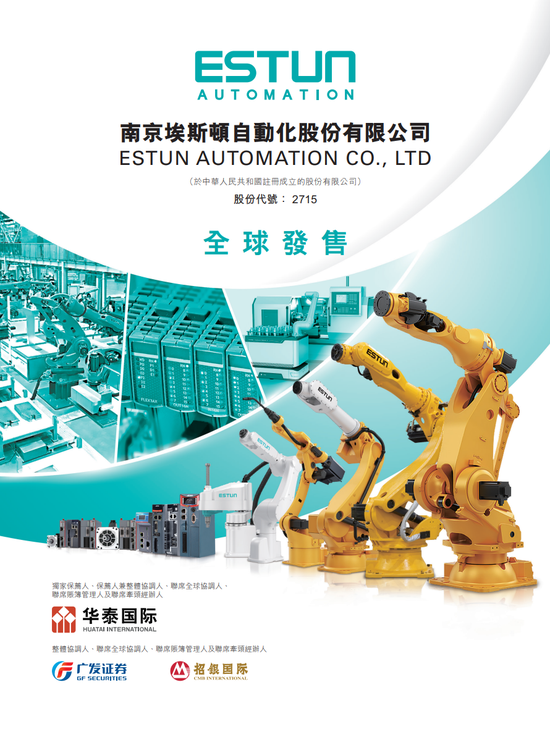
埃斯顿今起招股,嘉实基金、亨通光电、君宜资本等基石认购超5亿港元,预计3月9日挂牌上市
Xin Lang Cai Jing· 2026-02-27 00:21
Core Viewpoint - Estun (02715.HK) plans to globally offer 96.78 million H-shares, with a maximum price of HKD 17.00 per share and a minimum expected price of HKD 15.36 per share, aiming to raise approximately HKD 14.86 billion from the offering [3][13][27] Company Overview - Estun is a leading Chinese industrial robotics company, maintaining the highest domestic shipment volume of industrial robots for several consecutive years and becoming the first domestic brand to surpass foreign brands in market share by mid-2025 [4][18] - The company ranks sixth globally and in China by revenue among all manufacturers in the industrial robotics sector, with market shares of 1.7% and 2.0% respectively [4][18] Product Offerings - Estun provides industrial robots and intelligent manufacturing systems, enhancing productivity, safety, and reliability in industrial environments [4][18] - The product portfolio includes general-purpose and specialized robots capable of executing high-precision, repetitive, and hazardous tasks [4][9] - The company also offers integrated intelligent manufacturing systems that connect various processes from machining to packaging, minimizing human intervention [5][19] Market Growth - The global industrial robotics solutions market is projected to grow from USD 14.7 billion in 2020 to USD 25.4 billion by 2024, with a compound annual growth rate (CAGR) of 14.6%, and is expected to reach USD 51.8 billion by 2029, with a CAGR of 15.4% from 2024 to 2029 [12][25] Financial Performance - Estun's revenues for 2022, 2023, 2024, and the first nine months of 2024 and 2025 were CNY 3.881 billion, CNY 4.652 billion, CNY 4.009 billion, CNY 3.370 billion, and CNY 3.804 billion respectively [13][26] - The company's gross margins for the same periods were 32.9%, 31.3%, 28.3%, and 28.2% [26] - The overseas market revenue for the same periods was CNY 1.312 billion, CNY 1.594 billion, CNY 1.370 billion, CNY 1.139 billion, and CNY 1.118 billion, accounting for 33.8%, 34.3%, 34.2%, 33.8%, and 29.4% of total revenue respectively [26] Use of Proceeds - The estimated net proceeds from the global offering will be allocated as follows: 25% for expanding global production capacity, 25% for strategic alliances and investments in the industrial robotics supply chain, 20% for R&D projects, 10% for enhancing global service capabilities and digital management systems, 10% for repaying existing loans, and the remaining 10% for working capital and general corporate purposes [14][27]

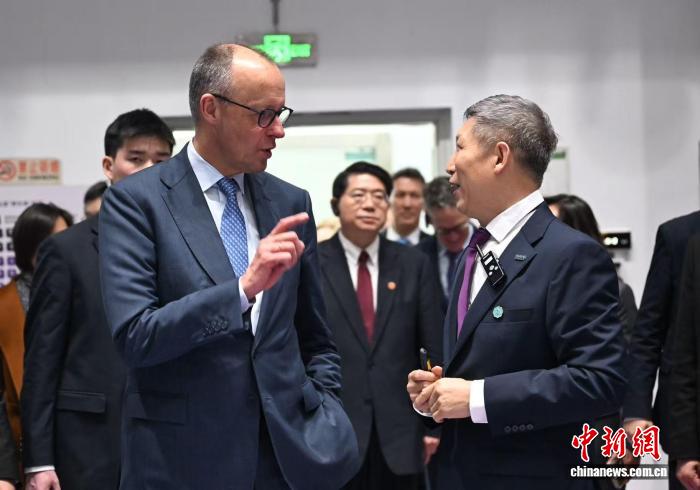
默茨奔赴杭州,德国欲借中国“数字东风”突围?专家解读
Feng Huang Wang Cai Jing· 2026-02-26 14:46
Core Insights - The visit of German Chancellor Merz to Hangzhou signifies Germany's interest in China's advancements in digital economy and AI integration with industrial manufacturing [1] - Germany's Industry 4.0 implementation is lagging behind China's Made in China 2025 initiative, highlighting China's leadership in the integration of manufacturing and AI [1] - The German government aims to explore cooperation opportunities with China in emerging fields to find pathways for industrial upgrades and to participate in the formulation of future rules in these sectors [1] Group 1 - Hangzhou is recognized as a hub for digital economy and innovation, home to companies like Yushu Technology, which reflects China's vibrant innovation landscape [1] - The visit is expected to lead to a more proactive Chinese policy from Germany, which could significantly influence the EU's strategy towards China [1] - The collaboration in new technologies is seen as a way for Germany to address its relative stagnation in the digital sector and to seek new opportunities for its existing enterprises [1]
联合国报告:稀土不过小试牛刀,2030中国将焊死美国再工业化大门
Sou Hu Cai Jing· 2026-02-26 06:47
Group 1 - The core finding of the UNIDO report indicates that China's manufacturing value added accounts for 31.6% of the global total, surpassing the combined share of the EU and the US [2] - By 2030, China's manufacturing share is projected to rise to 45%, suggesting that nearly half of the world's industrial capacity will be concentrated in China [2][11] - The report emphasizes China's leading position in supply chain integrity and technological innovation, based on a decade of global industrial data analysis [2] Group 2 - The US manufacturing share has declined from 25% in 2000 to 11% in 2024, while Japan's share fell from 11% to 5%, and Germany's from 8% to 3% [4] - The global supply chain heavily relies on China for raw materials and intermediate products, with 40% to 60% of industrial raw materials sourced from China [4][11] - The US government's efforts to stimulate domestic semiconductor and electric vehicle industries through significant investments have shown limited effectiveness due to challenges in processing technology and cost control [4] Group 3 - China controls 90% of the global rare earth supply, not only in terms of production but also in refining and manufacturing technology [7] - The US, despite having domestic mineral resources, only accounts for 1% of global rare earth processing capacity, with companies like MP Materials producing limited quantities [7] - China's annual production of rare earths reaches 300,000 tons, benefiting from large-scale automated production where labor costs constitute only 20% of total costs [9] Group 4 - The report warns that the implementation of rare earth export controls highlights the vulnerability of Western industries in their supply chains, particularly for green energy technologies [9][13] - If the rare earth controls expand, the costs of European photovoltaic projects could increase by 25% [9] - The report suggests that the automation and technological advancements in China have shifted the competitive landscape, making it difficult for Western countries to catch up [15] Group 5 - The shift in global manufacturing dynamics is expected to impact geopolitical strategies, as evidenced by the Western military production shortages during the Russia-Ukraine conflict [17] - The report indicates that if China's industrial advantages continue to grow, Western re-industrialization efforts will face significant barriers, including cost competitiveness and supply chain dependencies [17] - China's leadership in Industry 4.0, with a 90% coverage of 5G base stations, far exceeds the West's 60%, providing a solid foundation for smart manufacturing [17] Group 6 - Industrial employment in China exceeds 180 million, accounting for 40% of the global total, which supports the domestic economy and influences global markets through exports [19] - The future of global industry will depend on conversion efficiency, where China has already established a leading position [19] - The report metaphorically describes the closing of the door on US re-industrialization due to concerns over supply chain monopolies [20] Group 7 - The US is attempting to establish critical mineral reserves through the "Project Vault" initiative, investing $12 billion, but this may only alleviate short-term risks [22] - European automotive companies are increasing joint ventures with China by 10% to mitigate supply chain pressures, yet overall dependency remains high [23] - China's export structure shows that high-tech products now account for 55%, with the server industry exceeding 400 billion RMB, indicating a more balanced global division of labor [23] Group 8 - China has gained a comprehensive lead in industrial capabilities, including the establishment of international industrial standards, which increases compliance costs for Western companies [25] - The report highlights that this is not merely a matter of blocking but a natural outcome of market dynamics, where automated production has made efficiency a core competitive advantage [25]