
自动气象观测系统

Search documents
太原武宿机场三期改扩建工程空管工程取得新进展
Zhong Guo Min Hang Wang· 2025-08-15 01:20
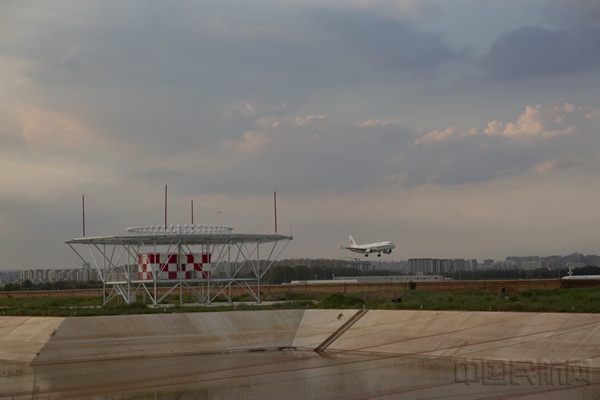
Core Points - The completion of the first phase of the air traffic control engineering for the third phase expansion of Taiyuan Wusu International Airport is a significant milestone, laying a solid foundation for the trial flights, industry acceptance, and official operation of the new second runway [1][6] Group 1: Project Overview - The air traffic control engineering project is crucial for enhancing regional air transport capacity and ensuring flight safety, as existing facilities can no longer meet the growing demand [4] - After full operation, the flight guarantee capacity of Taiyuan Airport will increase from 600,000 to 1.2 million flights per year, supporting a strategic passenger throughput of 40 million annually [4] Group 2: Engineering Details - The project adheres to the "three synchronizations" principle (synchronized approval, construction, and operation), which is essential for the construction and operation of the airport [4] - The newly built omnidirectional beacon/distance measuring equipment (DVOR/DME) and automatic meteorological observation system are necessary for the operation of the new second runway [4] Group 3: Acceptance Process - The acceptance process involved various stakeholders, including surveying, design, supervision, construction, testing, and equipment manufacturers, ensuring comprehensive verification of the project [5] - The acceptance team confirmed that the project was completed according to contract and design specifications, meeting national and industry standards, and approved the completion [5]

雪域高原架起“空中金桥”
Ke Ji Ri Bao· 2025-07-25 01:45
Core Viewpoint - The development of aviation in Tibet has transformed from basic manual operations to advanced smart air traffic control systems, significantly enhancing safety and efficiency in high-altitude operations [1][3][4]. Infrastructure Development - The new air traffic control tower at Lhasa Gonggar International Airport is the tallest and largest high-altitude airport tower in China, equipped with cutting-edge technology for communication, navigation, monitoring, and meteorology [1]. - The airport network in Tibet has evolved to a "1 main and 7 branches" layout, facilitating economic development and cultural exchange [1]. Technological Advancements - The air traffic control capabilities in Tibet have progressed from manual observation to automated systems, allowing for real-time tracking and monitoring of aircraft, which enhances safety and operational efficiency [3]. - The introduction of automated monitoring systems and advanced communication technologies has enabled air traffic controllers to maintain comprehensive situational awareness [3]. Meteorological Improvements - Initially, weather data relied on manual observations, limiting operations to daytime flights; however, advancements in meteorological technology have led to automated data collection and real-time weather forecasting [4]. - The establishment of a modern meteorological system has eliminated the constraints of adverse weather on flight operations, allowing for increased flight frequency and the transition from limited operations to becoming a high-altitude hub [4].