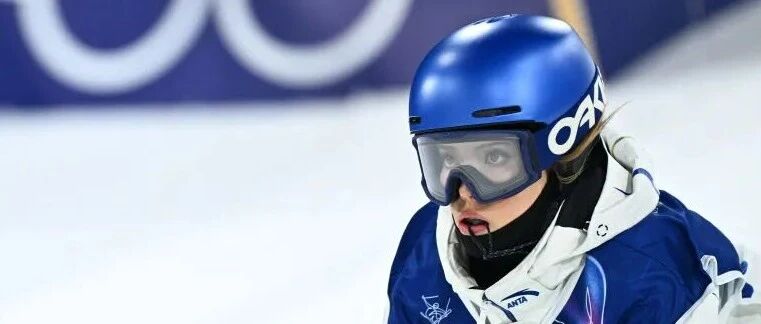
自由式滑雪U型场地技巧比赛

Search documents
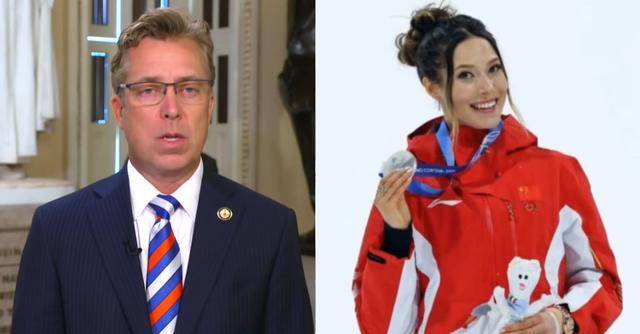
离大谱!美国要征收谷爱凌100%个人所得税,政客提出全新体育法案
Sou Hu Cai Jing· 2026-02-27 02:57
Core Viewpoint - The proposed "OLYMPICS Act" aims to impose a 100% federal income tax on American athletes representing certain countries, specifically targeting Eileen Gu, a prominent athlete who has chosen to represent China instead of the USA [1][3][5]. Legislative Details - The "OLYMPICS Act" is designed to tax U.S. citizens or lawful permanent residents (green card holders) at a 100% rate on income earned while representing countries deemed as "foreign entities," including China, Russia, North Korea, and Iran [3][5]. - The bill encompasses earnings from major global sports events, such as the Olympics and World Cup, where athletes compete under national representation [6]. Eileen Gu's Financial Profile - Eileen Gu's projected income for 2025 is $23.1 million (approximately 165 million RMB), with only about $100,000 (less than 0.5% of total income) coming from competition prizes, while over 99.5% is derived from endorsements and commercial activities [6][5]. - Her endorsement portfolio includes over ten brands, spanning both Chinese companies like Anta and international luxury brands like Porsche [6]. Tax Implications and Legal Considerations - Gu's complex nationality and tax status complicate the situation; she is considered a Chinese citizen under Chinese law but may still be subject to U.S. taxes as a U.S. citizen unless she formally renounces her citizenship [9][11]. - Tax experts suggest that Gu may qualify as a non-resident for Chinese tax purposes, meaning she would primarily pay taxes on income earned within China [11]. Political Context and Reactions - The proposal reflects a broader sentiment among some U.S. politicians and media, who view Gu's representation of China as a betrayal, leading to calls for punitive measures against her [13][19]. - Critics, including economists, argue that the bill is economically flawed and could be challenged constitutionally as an excessive fine rather than a legitimate tax [15][21]. Broader Implications - The situation highlights the politicization of sports in the U.S., where athletes' choices are scrutinized and leveraged for political agendas, potentially harming the integrity of sports and athletes' interests [19][21]. - The dual standards in the treatment of athletes representing other countries versus Gu's case reveal underlying biases and political motivations [19].

冬奥会|国际雪联回应:未削减谷爱凌训练次数 她已获得额外测试训练邀请
Xin Lang Cai Jing· 2026-02-15 11:37
Group 1 - The International Ski Federation (FIS) responded to Gu Ailing's concerns about unfair training arrangements for multi-event athletes, stating that they have not reduced training opportunities for athletes [1] - Gu Ailing, who competes in multiple events, expressed that the overlap of the big air final and the first training day for the U-shaped venue technique would result in a loss of one-third of her training time [1] - FIS emphasized that they arranged three training sessions before the qualification round, which is more than the usual two sessions in World Cup events, indicating an increase in training opportunities [2] Group 2 - Gu Ailing was invited to participate in a separate one-hour U-shaped venue technique test training on February 15, which is an additional arrangement beyond the three scheduled training sessions [2] - FIS acknowledged the complexity of scheduling for the Olympics, stating that conflicts in training and competition schedules for athletes participating in multiple events can sometimes be unavoidable [2] - The selection for the U-shaped venue technique test included five male and five female athletes, chosen based on their ability to provide constructive feedback on the venue's construction and performance [2]
谷爱凌:安排不公平
21世纪经济报道· 2026-02-15 03:10
Core Viewpoint - The article discusses the challenges faced by Gu Ailing, a Chinese freestyle skier, due to scheduling conflicts at the Winter Olympics, which have affected her training opportunities for different events [1][3][7]. Group 1: Event Participation and Performance - Gu Ailing participated in the women's big air qualification round at the Winter Olympics, marking her first competition in this event since winning gold in the same category at the previous Olympics [3][8]. - Despite limited training in big air, Gu Ailing scored 170.75 points in the qualification round, securing her place in the finals [8]. - She emphasized that her participation was not solely for medals but to explore her capabilities across multiple disciplines [8]. Group 2: Training Conflicts and Concerns - The schedule for the big air final coincided with the first training day for the U-shaped pool event, causing Gu Ailing to lose one-third of her training time for the latter [3][6]. - Gu Ailing expressed disappointment with the International Ski Federation's scheduling, stating that it was unfair and hindered her preparation for the U-shaped pool event [6][7]. - She highlighted the technical differences between the events, comparing them to different types of running, and noted that athletes focusing on a single event have advantages [6][7]. Group 3: Communication and Suggestions - Gu Ailing attempted to communicate with relevant authorities to find alternative training arrangements, such as training with snowboarders or securing additional training time, but was met with no changes [7]. - She believes that the Olympic spirit should encourage athletes to pursue excellence across multiple disciplines rather than penalizing them for doing so [7].