滑雪

Search documents
吉林粉雪迎客来
Xin Lang Cai Jing· 2026-02-23 22:47
Group 1 - The North Big Lake Ski Resort has become a popular destination for skiing enthusiasts, attracting a significant number of visitors since the winter season began, with 700,000 visitors recorded by the end of January, representing a 16% year-on-year increase [1] - The ski resort plans to open 74 ski trails this season, covering a total area of 275 hectares, and is recognized as a national training base for skiing, having hosted multiple international and national events [1] - Marketing efforts have led to an increase in revenue, with earnings reaching 340 million yuan, a growth of 18% compared to the previous year [1] Group 2 - The local hospitality sector has seen a surge in demand, with numerous guesthouses in the nearby village of Nanguo, which can accommodate over 2,000 visitors simultaneously [1] - The "Snow Friends Restaurant" has expanded its facilities, with over 40 rooms and a new restaurant that can seat up to 17 tables, achieving an occupancy rate of over 50% during the snow season [2] - The local power supply infrastructure is being upgraded to meet the increased electricity demand from the ski resort and guesthouses, with plans for line upgrades in the Nanguo village area [2] Group 3 - Jilin City is set to host events for the 2027 World Winter Games, with the North Big Lake Ski Resort scheduled to host various skiing competitions, prompting preparations for venue construction and service enhancements [2]
一位滑雪教练的“冰雪奇缘”
Xin Lang Cai Jing· 2026-02-19 23:02
Core Viewpoint - The development of the winter sports industry in Chongli, driven by the Beijing Winter Olympics, has significantly increased tourism and created numerous job opportunities in the region. Group 1: Industry Growth - Chongli has become the largest high-end ski resort area in China, with nine large ski resorts established since the successful bid for the Winter Olympics in 2015 [3] - The number of tourists in Chongli for the 2024-2025 snow season has surpassed 5.2 million [3] - Approximately 30,000 out of 130,000 residents in Chongli are directly or indirectly involved in the ice and snow industry and tourism services, indicating that one in four locals is engaged in this sector [4] Group 2: Employment Opportunities - The increase in skiing popularity has led to a rise in demand for ski instructors, resulting in higher incomes for professionals in this field [3] - Local entrepreneurs, such as Zhang Chunfang, have capitalized on the influx of tourists by opening businesses like a hot pot restaurant, contributing to the local economy [2][3] - The diverse business opportunities in Chongli's ski resorts have provided many residents with a sense of fulfillment and economic benefit [3]
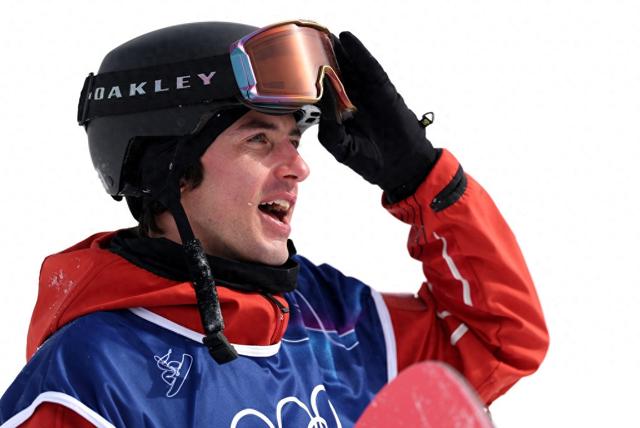
冬奥会 | 国际雪联主席评苏翊鸣冬奥再夺冠:对中国滑雪发展意义重大
Xin Lang Cai Jing· 2026-02-19 03:32
Group 1 - The victory of Su Yiming is significant for the development of skiing in China, potentially leading to increased investment and attention in the skiing industry [1][3] - The International Ski Federation (FIS) is planning to host more high-level events in China, with upcoming competitions including the freestyle and snowboard world championships to be held at the Zhangjiakou Yunding Ski Resort [3] - FIS is collaborating closely with Chinese partners to enhance training opportunities and coaching resources in alpine skiing and cross-country skiing, aiming to improve the competitive level in these areas [3] Group 2 - Su Yiming's achievement is viewed as a major event for the global skiing community, highlighting China's immense potential in the skiing sector [3] - The presence of star athletes in snowboarding and freestyle skiing indicates a significant improvement in China's overall competitive level in these sports [3] - FIS expresses confidence that China will eventually produce outstanding athletes in alpine skiing, cross-country skiing, and ski jumping, despite current challenges [3]

一次次重伤打不倒他,闯过鬼门关的麦克莫里斯还在续写传奇
Xin Lang Cai Jing· 2026-02-19 00:28
Core Viewpoint - Mark McMorris, a legendary name in snowboarding, faced significant challenges during his fourth Olympic journey at the Milan Winter Olympics, including a serious injury that prevented him from competing in the big air event, yet he demonstrated resilience by participating in the slopestyle event and reaching the finals [2][12]. Group 1: Injury and Recovery - McMorris suffered a serious injury during training for the big air event, resulting in a head injury that required medical attention, but he managed to recover in time to compete in the slopestyle event [4][14]. - His history of injuries includes a life-threatening incident before the Pyeongchang Olympics, where he sustained multiple fractures and was in critical condition, yet he made a remarkable recovery to compete and win a bronze medal [8][10]. - Despite the setbacks, McMorris has shown a strong commitment to the sport, stating that snowboarding gives him the courage to overcome challenges and that he is grateful for every moment [8][21]. Group 2: Olympic Journey - McMorris's Olympic journey began in 2014 at the Sochi Olympics, where he won a bronze medal in slopestyle despite competing with a broken rib [6][21]. - He continued to face adversity, including a severe injury before the Pyeongchang Olympics, but he returned to the competition and won another bronze medal, showcasing his determination [10][12]. - At the Beijing Olympics, he contracted COVID-19 but still managed to compete and won a bronze medal, bringing his total Olympic medal count to three [12][21]. Group 3: Personal Background and Motivation - McMorris initially pursued ice hockey before switching to snowboarding, inspired by his older brother, which fueled his passion and competitive spirit [16][19]. - His dedication to training, often traveling long distances to practice, reflects his commitment to the sport and his desire to excel [16][19]. - He has expressed a desire to be a part of snowboarding history and aims to inspire younger generations to pursue their dreams in the sport [22].
国际雪联主席评苏翊鸣冬奥再夺冠:对中国滑雪发展意义重大
Xin Hua She· 2026-02-19 00:02
Core Viewpoint - The victory of Su Yiming at the Winter Olympics is significant for the development of skiing in China, potentially leading to increased investment and attention in the skiing industry [1] Group 1: Impact on the Skiing Industry - Su Yiming's achievement is expected to enhance the investment and focus on China's skiing industry, highlighting its immense potential [1] - The International Ski Federation (FIS) plans to host more high-level skiing events in China, with upcoming competitions including the freestyle and snowboard world championships in Zhangjiakou [1] Group 2: Development of Skiing Talent - The FIS is collaborating closely with Chinese partners to provide more training opportunities and coaching resources to improve the competitive levels in alpine skiing and cross-country skiing [1] - There is confidence that China will produce outstanding athletes in alpine skiing, cross-country skiing, and ski jumping in the future, despite current challenges in these areas [1]
徐梦桃打破连冠的不可能五届老将徐梦桃超越巅峰期自己
Xin Lang Cai Jing· 2026-02-18 16:15
Group 1 - Xu Mengtao won the gold medal in women's freestyle skiing aerials with a score of 112.90, marking the second gold for the Chinese delegation at the Winter Olympics [1] - This victory makes Xu Mengtao the first athlete to successfully defend her title in women's freestyle skiing aerials at the Winter Olympics [1] - Xu Mengtao's score surpassed her previous winning score at the Beijing Winter Olympics, showcasing her performance improvement [1] Group 2 - The Chinese team also secured a gold medal in the men's slope style event, with Su Yiming winning the championship [1] - The two gold medals were achieved within two hours, highlighting the strong performance of the Chinese delegation [1]
谷爱凌:敢于尝试就是我的金牌
Xin Lang Cai Jing· 2026-02-17 06:59
Core Viewpoint - Gu Ailing secured her second silver medal at the Winter Olympics in the women's freestyle skiing big air final, becoming the first athlete in the history of freestyle skiing to win five Olympic medals [4][5]. Group 1: Competition Performance - The competition was delayed by over an hour due to adverse weather conditions, which included wind and snow [5]. - Gu Ailing's first jump scored 90 points, placing her tied for third, but she made a mistake on her second jump, scoring only 61.25 points [5]. - In her third jump, she executed a higher quality performance, achieving a total score of 179.00 points, which earned her the second place [5]. Group 2: Historical Achievement - With this silver medal, Gu Ailing temporarily holds the record for the most Olympic medals in freestyle skiing history, having previously won three medals before this event [5]. - She expressed that each medal won is increasingly challenging, and the expectations from others continue to rise [5]. Group 3: Personal Reflections - Despite missing the gold medal, Gu Ailing expressed happiness and pride in her performance, emphasizing the importance of participation and self-expression over winning [5]. - She mentioned that her upcoming participation in the U-shaped venue event is anticipated, and she looks forward to receiving special dumplings from Milan during the Lunar New Year [5].
谷爱凌摔倒后疼到难受
Xin Lang Cai Jing· 2026-02-15 08:32
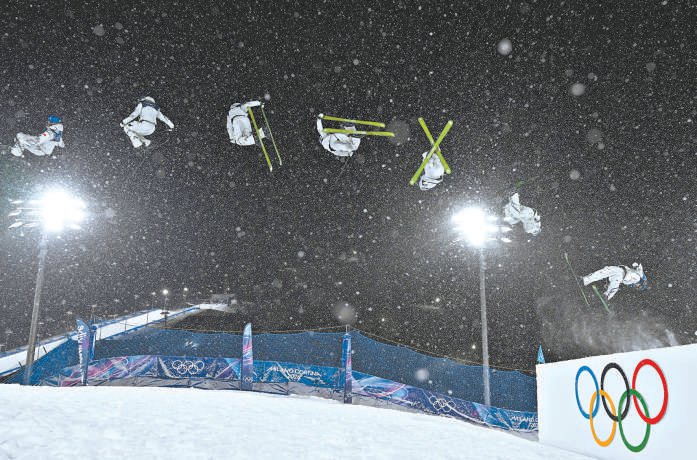
Group 1 - Gu Ailing ranked second in the women's big air preliminaries at the Milan-Cortina Winter Olympics with a total score of 170.75 points, qualifying for the finals scheduled for the evening of the 16th [1] - During the preliminaries, Gu Ailing experienced a fall in the second round and expressed discomfort due to a broken ski pole, stating that she felt pain but still enjoys competing despite the challenges [1] - Gu Ailing was forced to lose one day of training time in the U-pool due to the overlap of training schedules with the big air event, highlighting the challenges athletes face in managing their training [1]
谷爱凌:安排不公平
21世纪经济报道· 2026-02-15 03:10
Core Viewpoint - The article discusses the challenges faced by Gu Ailing, a Chinese freestyle skier, due to scheduling conflicts at the Winter Olympics, which have affected her training opportunities for different events [1][3][7]. Group 1: Event Participation and Performance - Gu Ailing participated in the women's big air qualification round at the Winter Olympics, marking her first competition in this event since winning gold in the same category at the previous Olympics [3][8]. - Despite limited training in big air, Gu Ailing scored 170.75 points in the qualification round, securing her place in the finals [8]. - She emphasized that her participation was not solely for medals but to explore her capabilities across multiple disciplines [8]. Group 2: Training Conflicts and Concerns - The schedule for the big air final coincided with the first training day for the U-shaped pool event, causing Gu Ailing to lose one-third of her training time for the latter [3][6]. - Gu Ailing expressed disappointment with the International Ski Federation's scheduling, stating that it was unfair and hindered her preparation for the U-shaped pool event [6][7]. - She highlighted the technical differences between the events, comparing them to different types of running, and noted that athletes focusing on a single event have advantages [6][7]. Group 3: Communication and Suggestions - Gu Ailing attempted to communicate with relevant authorities to find alternative training arrangements, such as training with snowboarders or securing additional training time, but was met with no changes [7]. - She believes that the Olympic spirit should encourage athletes to pursue excellence across multiple disciplines rather than penalizing them for doing so [7].
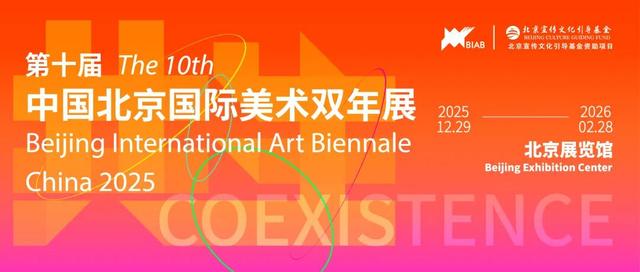
预计超7000万元!快来领惠民补贴,可用于滑雪、观影、观演、观展
Bei Jing Ri Bao Ke Hu Duan· 2026-02-10 03:43
Core Viewpoint - The 2026 Beijing Spring Festival Cultural Consumption Promotion Activity aims to enhance cultural consumption and create a festive atmosphere for residents and visitors during the Spring Festival [3] Group 1: Expansion of Benefits - The scope of the cultural consumption promotion has significantly expanded, integrating four major sectors: film, performance, exhibition, and skiing, transitioning from a single focus on film to a multi-experience model [2] - The initiative includes a collaboration with the Municipal Social Work Department to distribute 10,000 no-threshold movie discount coupons worth 30 yuan each to new employment groups in Beijing [2] Group 2: Government and Market Collaboration - The activity follows the principle of "government guidance, market leadership, and social participation," aiming to stimulate consumption potential and promote the deep integration of culture, commerce, tourism, sports, and exhibitions [2] - A total of 16.95 million yuan will be invested by the municipal government, leveraging over 55 million yuan from platforms and related enterprises, with total subsidies expected to exceed 70 million yuan [2] Group 3: Specific Activities and Discounts - From February 15 to March 3, consumers can enjoy discounts on movie tickets at 332 cinemas, with early bird discounts of 30 yuan and 15 yuan, along with cross-scenario consumption benefits [4] - From February 10 to March 3, discounts on traditional performances will be available, with a tiered discount system offering up to 160 yuan off for purchases over 400 yuan [5] - The Beijing International Art Biennale will offer various discount coupons from February 10 to February 28, allowing art enthusiasts to experience top-tier art at reduced prices [7] - Skiing activities will provide discounts from February 15 to February 23 at 16 ski resorts, with subsidies ranging from 15 yuan to 150 yuan based on purchase amounts [9]