英特尔80386处理器

Search documents
44年前的今年,英特尔286面世
半导体行业观察· 2026-02-02 01:33
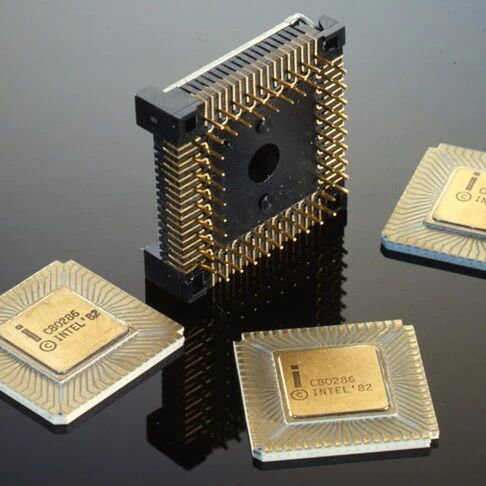
Core Insights - The Intel 80286 processor, launched in 1982, significantly improved performance and architecture compared to its predecessors, the 8086 and 8088, and became widely used in personal computer systems until the 1990s [2][6]. Group 1: Development and Features - The development of the 80286 began in 1978, following extensive customer research to determine the next generation of CPUs [2]. - The 80286 featured 134,000 transistors, a 16-bit architecture, and a 24-bit internal operation, making it the first x86 CPU with a protected mode and memory management unit (MMU) [4]. - Memory support increased from a maximum of 1MB in the 8086 to 16MB in the 80286, and it could be paired with the 80287 math coprocessor for enhanced performance in applications requiring fast floating-point calculations [6]. Group 2: Performance Improvements - The 80286 CPU achieved significant performance and energy efficiency improvements, reportedly being 100% faster than the 8086 at the same clock frequency [6]. - The operating frequency of the 80286 was higher, with Intel and AMD eventually pushing it to 25 MHz, compared to the 8086's maximum of 10 MHz, resulting in performance improvements of 300% to 500% over its predecessor [6]. Group 3: Market Impact and Legacy - The introduction of the IBM PC/AT in 1984, which utilized the 80286 processor, significantly boosted its market presence and led to a wave of clone machines [7]. - By May 1988, Intel's Fab 3 factory had produced and shipped 10 million 80286 chips, indicating its widespread adoption in personal computers [7]. - The transition to the next generation, the 80386, was gradual due to the 286's competitive pricing and sufficient performance, although the dominance of DOS limited the 386's potential [8].