
营养膳食

Search documents
线上线下年味浓 万家团圆备锦筵
Shang Hai Zheng Quan Bao· 2026-02-12 17:42
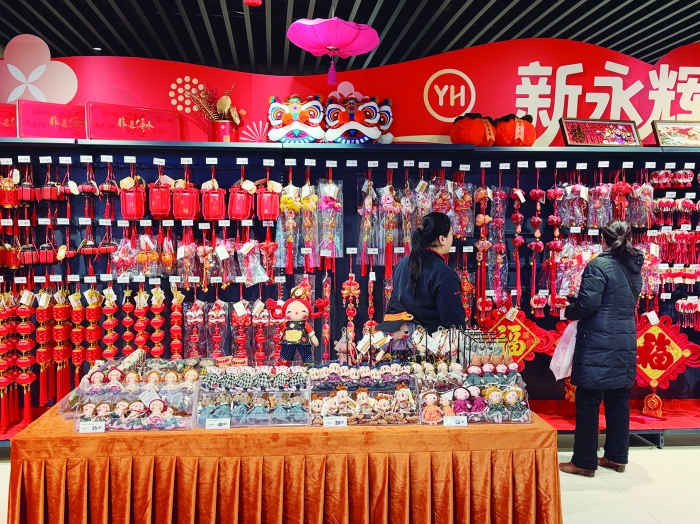
Core Insights - The article highlights the vibrant atmosphere of the upcoming Chinese New Year, emphasizing the efforts of retail companies to enhance consumer experience through innovative services and products [1] Group 1: Online Retail Strategies - Online platforms like Dongfang Zhenxuan are actively engaging with consumers to tailor their offerings for the New Year, utilizing live streaming to showcase popular products and meet specific consumer demands [2] - To ensure timely delivery of goods, Dongfang Zhenxuan has established long-term partnerships with core production areas and factories, implementing order agriculture to secure supply capacity and create emergency stock for essential goods [3] Group 2: Offline Retail Experience - In physical stores like Yonghui Supermarket, the festive atmosphere is created through decorations and product offerings, enhancing the shopping experience as a family-oriented emotional ritual [4] - Yonghui has developed a comprehensive supply strategy, planning three months in advance and selecting 30 core products based on historical data, while also adding around 120 additional items to meet diverse consumer needs [4] - The supermarket's operational efficiency is boosted by technology, with smart systems optimizing order picking and staffing adjustments to handle increased online orders during peak times [5] Group 3: Evolving Consumer Trends - The year-end market reflects changing consumer preferences, with companies like Hema Fresh introducing convenient meal options that blend traditional flavors with modern convenience, catering to the evolving demands for health and ease [6] - The article underscores the resilience of the retail market and the potential for domestic consumption, as both online and offline retailers collaborate to create a rich and engaging shopping experience for the New Year [6]



提升服务供给质量,激发更多消费新需求
2 1 Shi Ji Jing Ji Bao Dao· 2025-09-17 22:27
Group 1 - The core viewpoint of the article emphasizes the importance of expanding service consumption to stimulate economic growth and enhance domestic demand, with a focus on high-quality development [1] - The Chinese government has introduced 19 specific measures across five areas to boost service consumption, aiming to create new momentum for economic growth [1] - In 2024, domestic demand is projected to contribute 69.7% to China's economic growth, with final consumption expenditure accounting for 44.5%, indicating a gap compared to the international average [1] Group 2 - China's middle-income group is the largest and most dynamic globally, shifting their consumption needs from goods to services, yet there is a structural mismatch in service supply [2] - The service consumption supply is characterized by an oversupply of low-end and homogeneous services, while there is a lack of specialized and personalized offerings [2] - Examples include a surplus of basic housekeeping services that do not meet the demand for specialized services like nutrition and health care, and a mismatch in the supply of elderly care facilities [2] Group 3 - Enhancing the quality of service supply is crucial for stimulating new consumer demands and addressing the current issues of service consumption [3] - The unique characteristics of service consumption, such as localization and high operational costs, contribute to the challenges in meeting consumer needs [3] - The government aims to relax entry barriers and regulatory policies to attract more investment in high-quality service sectors, including healthcare and education [3] Group 4 - Addressing trust issues in service consumption is essential, as the simultaneous production and consumption of services create challenges in consumer confidence [4] - The article suggests promoting professionalization and standardization in the service industry to reduce perceived risks for consumers [4] - Long-term growth potential in service consumption is highlighted as a key driver for economic growth, necessitating systemic reforms and increased openness to foster innovation and competition [4]