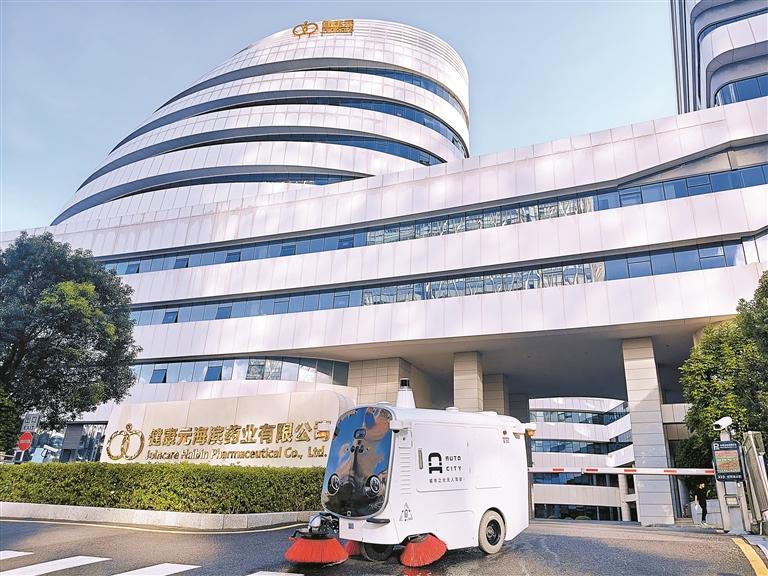
蜂群无人作业群

Search documents
无人环卫车在深规模化应用 已突破400辆,形成多元竞争格局
Shen Zhen Shang Bao· 2025-10-26 08:07
Core Insights - The article highlights the rapid development and commercialization of autonomous sanitation vehicles in Shenzhen, marking 2025 as a pivotal year for the industry [3][4][7] - The market for autonomous sanitation services in China is projected to reach 280 billion yuan by 2025, driven by technological advancements and diverse business models [5][6] Industry Overview - As of July 2025, the application scale of autonomous sanitation vehicles in Shenzhen has surpassed 400 units, transitioning from pilot demonstrations to large-scale applications [2][3] - The autonomous sanitation vehicle market is experiencing a growth rate exceeding 60% annually, addressing long-standing issues of high labor costs and low operational efficiency in the sanitation industry [7] Competitive Landscape - The market features a diverse competitive landscape, with traditional sanitation companies, new energy vehicle manufacturers, and technology firms all vying for market share [2][5] - Leading companies like Yingfeng Environment have introduced advanced systems that enhance operational efficiency by 300%, showcasing the integration of smart technologies in sanitation operations [3][6] Financial Metrics - In the first half of 2025, over 290 new projects in the autonomous driving sector were publicly announced, with a total value exceeding 6.9 billion yuan, of which sanitation projects accounted for over 5.5 billion yuan [4] - The operational costs of autonomous sanitation are estimated to be reduced by approximately 50% compared to traditional methods, with potential savings ranging from 15% to 78.57% depending on the operational model [6] Technological Advancements - Companies are focusing on developing L4-level autonomous driving algorithms and utilizing big data to optimize operations, with vehicles capable of cleaning areas exceeding 8,000 square meters [5][6] - The latest autonomous sanitation vehicles are equipped with features such as garbage recognition and edge cleaning, enhancing their operational capabilities [5] Challenges Ahead - Despite the promising outlook, the industry faces challenges related to the maturity of technology and the sustainability of business models, particularly in complex operational environments [7] - Companies that can establish stable cash flows and data-driven operational models are likely to demonstrate greater resilience in the market [7]


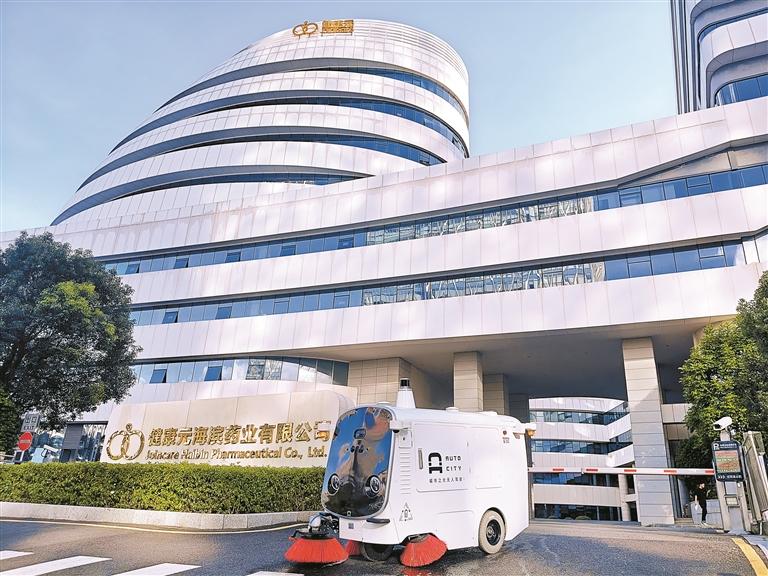
无人环卫车在深规模化应用
Shen Zhen Shang Bao· 2025-10-25 17:24
Core Insights - The development of autonomous sanitation vehicles in Shenzhen is transitioning from pilot demonstrations to large-scale commercial applications, with over 400 units deployed by July 2025 [2][3] - The market for autonomous sanitation services in China is projected to reach 280 billion yuan by 2025, driven by various companies leveraging their strengths to explore diverse development paths [5] Industry Trends - The autonomous sanitation vehicle market is experiencing rapid growth, with a year-on-year increase of 67% in new projects and a total value exceeding 6.9 billion yuan in the first half of 2025 [4] - The integration of smart technology in sanitation projects has become standard, significantly enhancing operational efficiency, as demonstrated by companies like Yingfeng Environment, which claims a 300% increase in efficiency through their integrated systems [3][6] Competitive Landscape - The market features a diverse competitive landscape, with traditional sanitation companies transitioning, new energy vehicle manufacturers entering, and tech firms providing technological support [2] - Companies like City Light and Yingfeng Environment are leveraging their technological advancements and industry experience to establish competitive advantages, with City Light focusing on L4 autonomous driving algorithms and Yingfeng emphasizing their extensive operational history [5][6] Economic Impact - The operational costs of autonomous sanitation are estimated to be reduced by approximately 50% compared to traditional methods, with varying savings depending on the operational model [6] - The shift to autonomous operations not only replaces tools but also upgrades the entire sanitation operation model, management philosophy, and industry structure [6] Challenges Ahead - Despite the promising growth, the industry faces challenges related to technology maturity and the sustainability of business models, with some companies struggling to maintain a commercial loop [7] - Key issues include operational efficiency in complex environments, system stability in adverse weather, and the development of sustainable profit models [7]