
环卫装备

Search documents
环保行业跟踪周报:固废业绩现金流双升+提分红兑现,油气资产重估下持续关注生物油板块-20260331
Soochow Securities· 2026-03-31 07:55
Investment Rating - The report maintains an "Accumulate" rating for the environmental protection industry [1] Core Insights - The environmental protection industry is experiencing dual growth in cash flow and performance, with an emphasis on increasing dividends and a continuous focus on the bio-oil sector due to the revaluation of oil and gas assets [1] - The report highlights the significant growth potential in waste-to-energy, emphasizing its unique position as a scarce green energy source with substantial cash flow increases and resource value [1][19] - The report suggests that the sector is poised for growth driven by policy support, operational efficiency improvements, and international expansion opportunities [19] Industry Performance - The report indicates a 34% increase in performance for Longjing Environmental in 2025, with a revenue of 6.548 billion yuan and a net profit of 2.245 billion yuan [1] - The report notes that the waste sector is expected to see a significant increase in cash flow and dividend potential, with a projected increase in the dividend payout ratio from 114% to 141% [19] - The report also mentions the strong performance of companies like Green Power and Yongxing Co., with notable increases in revenue and net profit [1] Key Recommendations - The report recommends focusing on companies such as Longjing Environmental, Green Power, and Hanhai Environmental for their strong growth potential and dividend capabilities [1] - It also suggests monitoring companies like Deyu Water and Xinyuan Environment for their potential in the water sector, which is expected to follow a similar growth trajectory as waste-to-energy [20] Bio-Oil Sector Insights - The report states that the prices of bio-jet fuel and waste oil remain stable, with bio-jet fuel prices in Europe averaging $2800 per ton and in China at $2250 per ton [26] - The report highlights the profitability of bio-diesel production, with domestic prices for first-generation bio-diesel at 8100 yuan per ton, reflecting a 1% increase [26][27] Sanitation Equipment Market - The report notes a 208.44% year-on-year increase in sales of new energy sanitation vehicles, with a penetration rate of 32.38% [41] - It emphasizes the growth potential in the sanitation equipment sector driven by policy support and technological advancements [41] Lithium Battery Recycling - The report indicates stable profitability in lithium battery recycling, with prices for lithium and carbonate showing slight fluctuations [53][54] - It highlights the importance of improving recycling rates to enhance profitability in the sector [53]


环保行业跟踪周报:垃圾焚烧稀缺绿电,现金流&绿色价值大增SAF级UCO价格持续抬升
Soochow Securities· 2026-03-16 05:24
Investment Rating - The report maintains an "Accumulate" rating for the environmental protection industry [1] Core Viewpoints - The environmental protection industry is experiencing significant growth due to the scarcity of green electricity from waste incineration, leading to increased cash flow and green value [1] - The report emphasizes the unique characteristics of waste-to-energy as a form of green electricity, highlighting its long-term operational stability and the increasing value of by-products such as slag and metals [1][20] - The report identifies substantial growth opportunities in overseas markets, particularly in Indonesia, where several waste incineration projects are being developed [20] Summary by Sections Industry Outlook - The 2026 "14th Five-Year Plan" focuses on a comprehensive green transition, establishing a clear roadmap for the next five years in environmental protection and carbon neutrality [10][11] - The report outlines specific targets for carbon emissions reduction and improvements in ecological quality, including a 17% reduction in carbon emissions per unit of GDP [11][12] Company Tracking - **Weiming Environmental** has signed joint venture agreements for two waste incineration projects in Indonesia, marking a significant step in its overseas expansion [19][20] - **Gaoneng Environment** reported a 73.94% increase in net profit for 2025, driven by the growth of its metal resource recycling business [20] Industry Performance - The report notes a 70.9% year-on-year increase in sales of new energy sanitation vehicles, indicating a strong trend towards electrification in the sanitation sector [1][20] - The price of SAF-grade UCO has risen to 7,900 RMB/ton, reflecting a 2.6% increase compared to pre-conflict levels, indicating a growing market for biofuels [29][30] Investment Recommendations - The report recommends focusing on companies with strong growth potential in the environmental sector, including **Huanlan Environment**, **Weiming Environmental**, and **Green Power** [1][20] - It also highlights the importance of cash flow improvements and market-driven pricing strategies in enhancing the financial performance of companies in the waste-to-energy segment [23][24]
环保行业跟踪周报:垃圾焚烧稀缺绿电,现金流、绿色价值大增,SAF级UCO价格持续抬升-20260316
Soochow Securities· 2026-03-16 04:47
Investment Rating - The report maintains an "Accumulate" rating for the environmental protection industry [1] Core Viewpoints - The environmental protection industry is experiencing significant growth due to the scarcity of green electricity from waste incineration, leading to increased cash flow and green value [1] - The report emphasizes the unique characteristics of waste-to-energy as a form of green electricity, highlighting its long-term operational stability and the increasing value of by-products such as slag and steam [1][20] - The report identifies substantial growth opportunities in overseas markets, particularly in Indonesia, where several waste incineration projects are being developed [20] Summary by Sections Industry Outlook - The 2026 "14th Five-Year Plan" focuses on a comprehensive green transition, establishing a clear roadmap for the next five years [10][11] - The plan sets ambitious targets for carbon peak and environmental quality improvement, including a 17% reduction in carbon emissions per unit of GDP [11][12] Key Recommendations - The report recommends several companies for investment, including Longjing Environmental, GaoNeng Environment, and Weiming Environmental, among others, based on their strong market positions and growth potential [1][18] - It suggests monitoring companies involved in the overseas expansion of waste-to-energy projects, particularly in Indonesia, where favorable conditions exist [20] Market Performance - The report notes a significant increase in the price of SAF-grade UCO, which has risen to 7,900 RMB/ton, reflecting a 2.6% increase compared to pre-conflict levels [29][30] - The report highlights the growth in sales of new energy sanitation vehicles, which increased by 70.9% year-on-year [1] Company Developments - Weiming Environmental has signed joint venture agreements for two waste incineration projects in Indonesia, marking a shift from winning bids to executing projects [19][20] - GaoNeng Environment reported a 73.94% increase in net profit for 2025, driven by the growth of its metal resource recycling business [20] Policy Tracking - The report outlines the government's commitment to green transformation, with significant investments planned in infrastructure and environmental projects, expected to exceed 7 trillion RMB [1][10]


福龙马2月25日获融资买入1901.56万元,融资余额5.09亿元
Xin Lang Cai Jing· 2026-02-26 01:40
Group 1 - The core point of the news is that Fulongma's stock experienced a slight increase of 0.42% on February 25, with a trading volume of 367 million yuan and a net financing outflow of 19.26 million yuan [1][2] - As of February 25, Fulongma's total margin trading balance reached 509 million yuan, which accounts for 5.17% of its circulating market value [2] - Fulongma's main business includes the research, production, and sales of environmental sanitation equipment, with revenue composition being 77.01% from environmental industry ecological operations, 20.70% from intelligent equipment, and 1.30% from other sources [2] Group 2 - For the period from January to September 2025, Fulongma reported a revenue of 3.599 billion yuan, reflecting a year-on-year decrease of 5.07%, and a net profit attributable to shareholders of 113 million yuan, down 1.83% year-on-year [2] - The company has distributed a total of 933 million yuan in dividends since its A-share listing, with 273 million yuan distributed over the past three years [3]

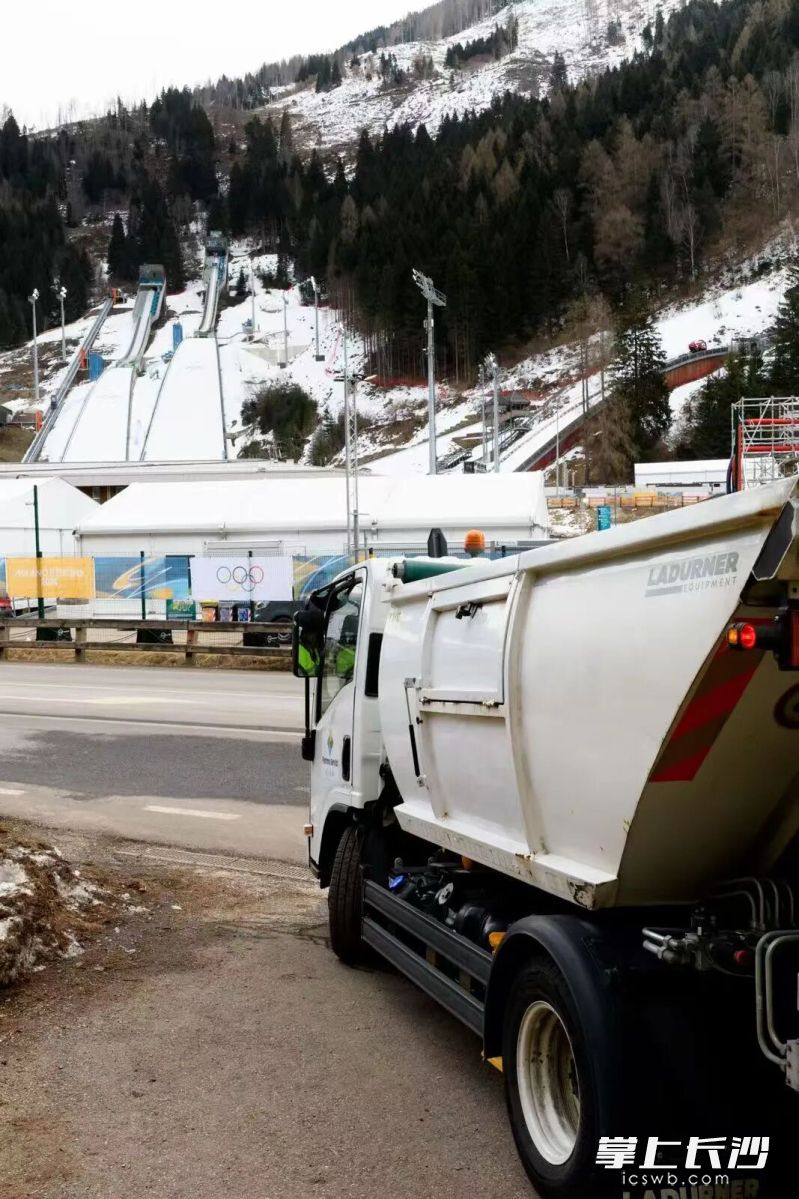
盈峰环境设备闪耀米兰冬奥
Chang Sha Wan Bao· 2026-02-20 07:09
Core Insights - The presence of Yingfeng Environment's self-loading garbage trucks at the 25th Winter Olympic Games in Milan highlights China's contribution to environmental protection during this major global event [1][6] - The event serves as a significant test for the host city's environmental management capabilities, with high demands for reliability, environmental friendliness, and efficiency in waste management equipment [1] Group 1: Product and Technology - Yingfeng Environment's flagship model, the 5040ZZZ self-loading garbage truck, known as "Little Rhino," has gained market acclaim since its launch in 2025, becoming an industry benchmark [4] - The truck features a patented "one-button fully sealed" mechanism, allowing for automatic closure and locking after loading, effectively addressing issues of spillage and odor during transport [4] Group 2: Company Experience and Global Strategy - Yingfeng Environment has extensive experience in providing environmental support for major events, having previously serviced the Beijing Olympics, Shanghai Expo, and other significant global events [6] - The company's globalization strategy is evident through the establishment of production facilities in Italy and Thailand, along with a rapidly expanding global marketing network, exporting to over 60 countries and regions [6] - The release of the ISO international standard for garbage truck terminology and specifications, led by Yingfeng Environment, signifies a shift from "product output" to "standard output" for Chinese environmental equipment [6]


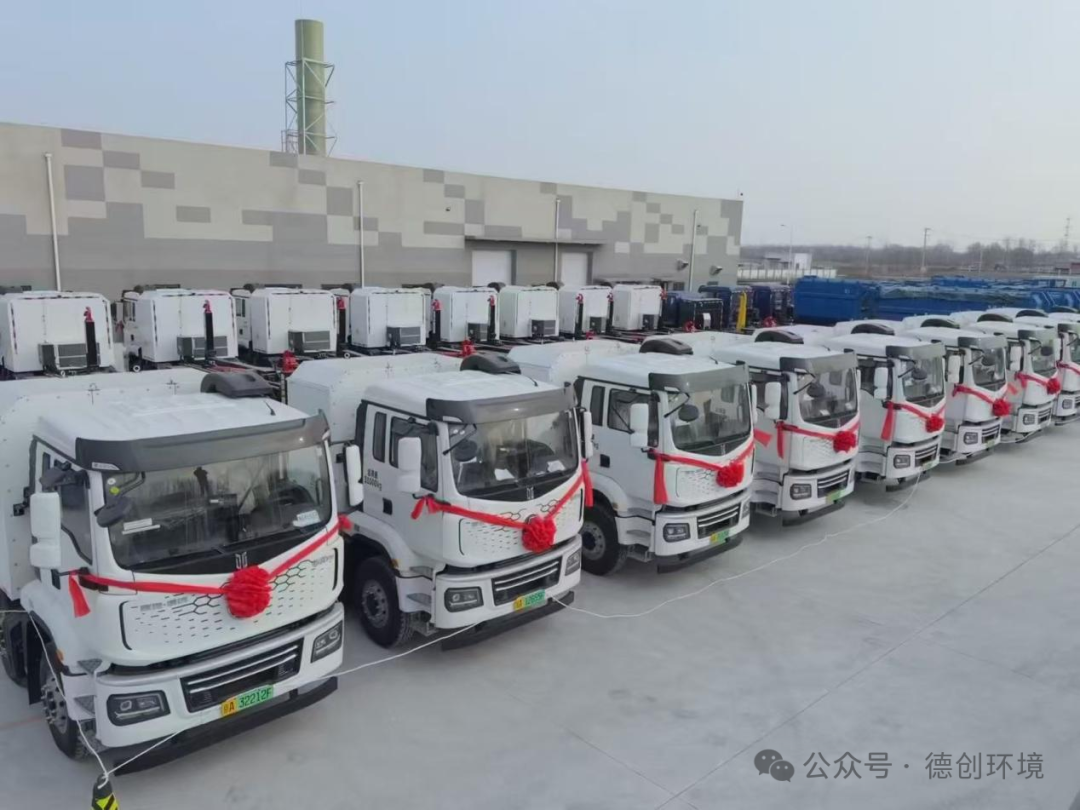
20台氢燃料环卫车批量交付房山
Xin Lang Cai Jing· 2026-02-05 12:18
Core Insights - Dechuan Environment and Yingfeng Environment have successfully delivered 20 units of 31-ton hydrogen fuel sanitation vehicles in Fangshan, Beijing, marking a significant step in their collaboration on new energy sanitation equipment and the first large-scale deployment of hydrogen fuel chassis sanitation vehicles in the region [1][6] Group 1: Vehicle Specifications and Performance - The vehicles are equipped with a Shaanxi Automobile Dechuan 31-ton hydrogen fuel-specific sanitation chassis and a high-performance hydrogen fuel cell system, "Hydrogen Quality Hydrogen Separation," with a power output of 150 kW, providing three core advantages: heavy-load adaptability, efficient refueling, and long-range capability [3][8] - Refueling efficiency has seen a revolutionary breakthrough, with hydrogen refueling taking only 10 minutes to achieve full power, covering cross-regional transfer scenarios and eliminating range anxiety associated with pure electric vehicles [3][8] - The actual operational range exceeds 400 kilometers, with operational time improved by over 70% compared to pure electric models, significantly reducing vehicle idle time and enhancing garbage transfer efficiency [3][8] Group 2: Environmental Impact and Strategic Alignment - The vehicles emit only clean water vapor during operation, effectively eliminating exhaust pollution and aligning perfectly with Fangshan District's "dual carbon" strategy for green transformation in sanitation [3][8] - The design of the vehicles, featuring a detachable cargo compartment and heavy-load performance, caters to both urban core garbage collection and long-distance transfer operations, providing an integrated solution that is efficient, environmentally friendly, and reliable [3][8] - This delivery aligns with Fangshan District's hydrogen energy industry development plan and leverages the region's comprehensive hydrogen energy infrastructure to support green development policies [4][9]
2025 年环卫装备总结:全年销量重回正增长,看好化债+降碳政策下新能源环卫装备发展
Changjiang Securities· 2026-01-30 08:31
Investment Rating - The report maintains a "Positive" investment rating for the industry [11] Core Insights - The sales volume of sanitation equipment in 2025 is projected to reach 79,000 units, representing a year-on-year growth of 11.5%, marking the first year of positive growth since 2021. Notably, sales of new energy sanitation vehicles are expected to increase by 76.8%, with a cumulative penetration rate of approximately 21.7% [3][6][18] - The recovery in sales is primarily attributed to the advancement of national debt reduction policies, which are expected to further enhance the demand for sanitation equipment. Additionally, the "14th Five-Year Plan" carbon reduction policies are anticipated to drive the penetration and economic viability of new energy sanitation equipment [3][8][9] Summary by Sections Overview - In 2025, the sanitation equipment sales are expected to grow by 11.5%, with new energy sanitation vehicles experiencing a significant increase of 76.8%. The total sales volume is projected at 79,000 units, with December alone seeing a sales figure of 10,064 units, a 45.2% increase year-on-year [6][18][21] Market Structure - The market concentration for sanitation equipment in 2025 is indicated by a CR10 of 55.4%, a decrease from 58.6% in 2024. Major players include Yingfeng Environment with a market share of 17.0%, Yutong with 3.9%, and Fulongma with 3.8%. In the new energy segment, the CR10 is higher at 67.7%, with Yingfeng Environment leading at 30.6% [7][26][30] Electrification - The penetration rate of electric sanitation equipment in pilot cities is expected to reach approximately 31.6% in 2025. Excluding Xiong'an New Area, pilot cities are projected to account for 36.2% of total sales, with cities like Zhengzhou and Shenzhen showing significant electric penetration rates of 57.3% and 48.9% respectively [7][33][34] Marginal Changes - The effects of debt reduction are gradually being transmitted, with expectations for further increases in sanitation equipment sales in 2026. The core reason for the recovery in 2025 sales is attributed to the easing of local government financial pressures due to debt reduction policies [8][9] - New energy sanitation equipment is expected to benefit from carbon reduction policies, with significant reductions in emissions compared to traditional fuel vehicles, enhancing its attractiveness in the market [8][9][21] Investment Logic - The growth rate of the sanitation equipment industry is primarily constrained by local fiscal and policy conditions. The dual logic of reduced local fiscal pressure from debt reduction and increased penetration of new energy sanitation vehicles driven by carbon reduction policies presents a favorable outlook for the industry [9][12]
福龙马1月15日获融资买入7141.48万元,融资余额6.90亿元
Xin Lang Cai Jing· 2026-01-16 01:42
Group 1 - The core point of the news is that Fulongma's stock experienced a slight increase of 0.90% on January 15, with a trading volume of 977 million yuan and a net financing buy of -3.52 million yuan for the day [1][2] - As of January 15, Fulongma's total financing and margin trading balance reached 690 million yuan, which accounts for 6.41% of its circulating market value [2] - Fulongma's main business includes the research, production, and sales of sanitation equipment, with revenue composition being 77.01% from environmental industry ecological operations, 20.70% from intelligent equipment, and 1.30% from other sources [2] Group 2 - For the period from January to September 2025, Fulongma reported a revenue of 3.599 billion yuan, reflecting a year-on-year decrease of 5.07%, while the net profit attributable to shareholders was 113 million yuan, down 1.83% year-on-year [2] - The company has distributed a total of 933 million yuan in dividends since its A-share listing, with 273 million yuan distributed over the past three years [3] - As of September 30, Fulongma had 100,000 shareholders, an increase of 33.02% from the previous period, while the average circulating shares per person decreased by 24.82% [2]
盈峰环境股价连续9天下跌累计跌幅7.2%,财通证券资管旗下1只基金持2.89万股,浮亏损失1.53万元
Xin Lang Cai Jing· 2026-01-14 07:25
Group 1 - The core point of the news is that Yingfeng Environment's stock has been declining for nine consecutive days, with a total drop of 7.2% during this period, currently trading at 6.83 CNY per share and a market capitalization of 21.63 billion CNY [1] - Yingfeng Environment Technology Group Co., Ltd. is based in Shunde District, Foshan City, Guangdong Province, and was established on November 18, 1993. The company was listed on March 30, 2000, and its main business includes electrical equipment manufacturing, ventilation equipment manufacturing, environmental comprehensive governance, sanitation equipment, and sanitation services [1] - The revenue composition of Yingfeng Environment is as follows: smart services account for 50.08%, intelligent equipment for 40.00%, and other products for 9.92% [1] Group 2 - From the perspective of major fund holdings, one fund under Caitong Securities Asset Management has a significant position in Yingfeng Environment. The Caitong Asset Management New Ju Yi 6-Month Holding Period Mixed A Fund (012052) held 28,900 shares in the third quarter, representing 0.17% of the fund's net value, ranking as the eighth largest holding [2] - The estimated floating loss for the fund today is approximately 2,312 CNY, with a total floating loss of 15,300 CNY during the nine-day decline [2] - The Caitong Asset Management New Ju Yi 6-Month Holding Period Mixed A Fund was established on December 24, 2021, with a latest scale of 85.21 million CNY. Year-to-date return is 0.64%, ranking 7,595 out of 8,838 in its category; the one-year return is 2.36%, ranking 7,751 out of 8,089; and the return since inception is 10.51% [2]

盈峰环境股价连续9天下跌累计跌幅7.2%,易方达基金旗下1只基金持3631.09万股,浮亏损失1924.48万元
Xin Lang Cai Jing· 2026-01-14 07:18
Group 1 - The core point of the news is that Yingfeng Environment's stock has been declining for nine consecutive days, with a total drop of 7.2% during this period, currently trading at 6.83 CNY per share and a market capitalization of 21.63 billion CNY [1] - Yingfeng Environment Technology Group Co., Ltd. is based in Shunde District, Foshan City, Guangdong Province, and was established on November 18, 1993, with its listing date on March 30, 2000 [1] - The company's main business includes manufacturing electrical equipment, ventilation equipment, comprehensive environmental governance, sanitation equipment, and sanitation services, with revenue composition being 50.08% from smart services, 40.00% from intelligent equipment, and 9.92% from other products [1] Group 2 - From the perspective of the top ten circulating shareholders, E Fund has a fund that entered the top ten shareholders of Yingfeng Environment, holding 36.31 million shares, which is 1.15% of the circulating shares, resulting in a floating loss of approximately 2.90 million CNY today and a total floating loss of 19.24 million CNY during the nine-day decline [2] - The E Fund National Robot Industry ETF (159530) was established on January 10, 2024, with a latest scale of 13.31 billion CNY, and has achieved a return of 4.7% this year, ranking 2576 out of 5520 in its category, and a return of 47.55% over the past year, ranking 1699 out of 4203 [2] - The fund managers, Li Shujian and Li Xu, have managed the fund for 2 years and 3 years respectively, with total assets under management of 19.76 billion CNY and 26.54 billion CNY, achieving best returns of 134.11% and 164.04% during their tenure [2]