
无人驾驶

Search documents
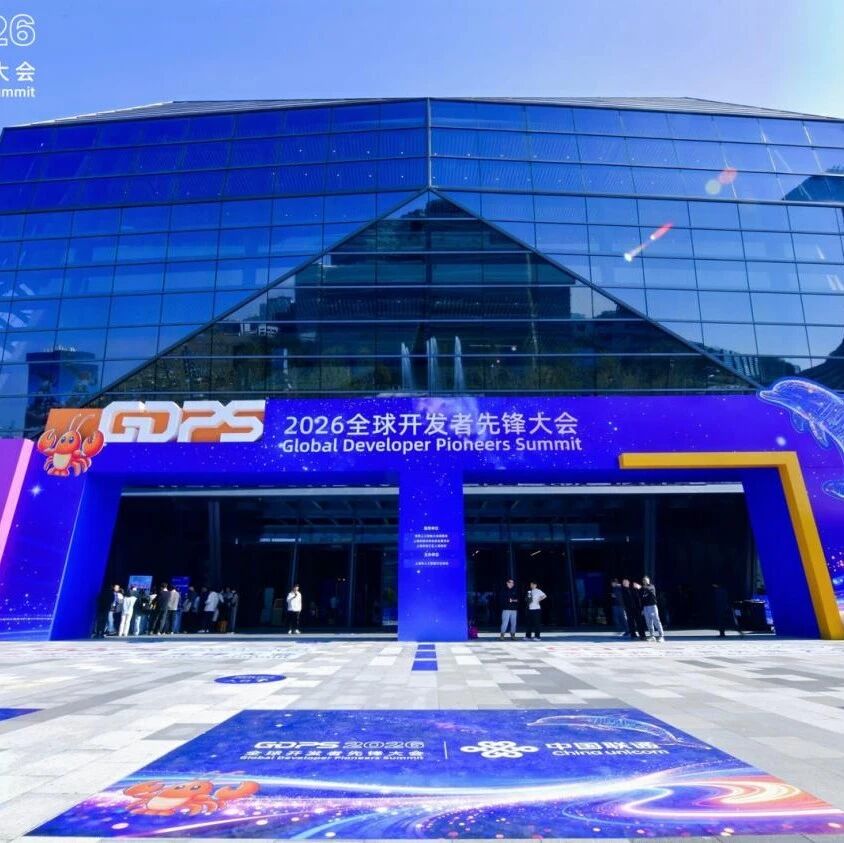
2026全球开发者先锋大会|斑陌易行把无人车的“智慧大脑”拆给你看
硬AI· 2026-03-31 09:04
Core Insights - The article discusses BanmeGo's innovative approach to autonomous vehicles, focusing on the disassembly of the "smart brain" of self-driving cars, showcasing their technology and capabilities [1] Group 1: Company Overview - BanmeGo is positioning itself as a leader in the autonomous vehicle sector by providing insights into the technology that powers self-driving cars [1] - The company emphasizes transparency in its technology, allowing developers to understand and utilize the components of autonomous driving systems [1] Group 2: Industry Trends - The article highlights the growing interest in autonomous vehicle technology among developers and the potential for collaboration in the industry [1] - It notes that advancements in AI and machine learning are critical for the evolution of self-driving technology, which is a focal point for BanmeGo [1]

国海证券晨会纪要2026年第31期-20260303
Guohai Securities· 2026-03-03 01:09
Group 1: Space Photovoltaics Industry - The report discusses the evolution of China's commercial space industry, highlighting its transition from "policy encouragement" to "strategic positioning" over the past three years, with significant developments expected in 2023-2025 [4] - The report notes that the current cost of rocket launches in China is approximately $5,000-$8,000 per kilogram, significantly higher than SpaceX's $1,500-$3,000 per kilogram, indicating a need for cost reduction to achieve scale [4] - The report predicts that by 2028, the number of commercial satellite launches will reach 10,000, driven by advancements in satellite power and deployment strategies [5] Group 2: Satellite Launch and Communication - In 2025, China is expected to conduct 92 launches, with 50 being commercial, marking a 54% share of commercial launches in the total [5] - The report highlights the rapid deployment of low Earth orbit communication satellites, with significant numbers of satellites planned for launch between 2024 and 2026 [5] - The report anticipates a substantial increase in satellite power and capabilities, with single satellite power expected to rise from 0.69 kW to 1.93 kW by 2030 [5] Group 3: Industry Ratings and Investment Opportunities - The report maintains a "recommended" rating for the space photovoltaics industry, citing increasing industry prosperity and long-term growth potential [7] - Key companies in the space photovoltaics sector include Maiwei Co., Aotwei, and others, indicating potential investment opportunities [8] Group 4: Commercial Aircraft Development - The report emphasizes the importance of the break-even point in commercial aircraft projects and reviews the development history of Boeing and Airbus to provide insights for China's aircraft industry [9] - China is expected to accelerate the internationalization of its commercial aircraft, with the C919 model gaining interest from Southeast Asian countries and progressing towards European certification [9] - The report suggests a strategic focus on domestic aircraft and related systems to enhance self-sufficiency and investment opportunities [9] Group 5: Automotive Industry Developments - The report notes that Guangzhou has officially opened all areas for autonomous driving applications, which is expected to enhance the testing and commercialization of autonomous technologies [12] - The automotive sector experienced a mixed performance, with the A-share automotive index underperforming the Shanghai Composite Index during a recent week [11] - The report highlights the introduction of financial promotions by Tesla in China, indicating competitive strategies in the automotive market [13] Group 6: Xiaomi Group's Financial Outlook - The report projects Xiaomi Group's revenue for Q4 2025 to be approximately 116.4 billion yuan, with a 7% year-on-year growth, despite a decline in smartphone and IoT revenues [26] - The smart electric vehicle segment is expected to see significant growth, with projected revenues of 38 billion yuan for Q4 2025, reflecting a 133% increase [28] - The report adjusts profit forecasts for Xiaomi, predicting net profits of 39.1 billion yuan for 2025, with a corresponding PE ratio of 19.5 [28]
矿山无人化运营方专家交流
2026-03-01 17:23
Summary of Key Points from the Conference Call Industry Overview - The conference discusses the **autonomous mining truck industry**, highlighting various collaboration models including direct purchases by mining companies, leasing partnerships between manufacturers and technology firms, and engineering operation models led by autonomous technology companies [1][3][4]. Core Insights and Arguments - **Collaboration Models**: - Mining companies or engineering contractors may purchase trucks and then procure autonomous capabilities from technology firms [3]. - Alternatively, they may opt for a leasing model where the manufacturer collaborates with technology companies [3]. - The engineering operation model allows technology firms to provide both vehicles and autonomous technology, with mining companies only issuing production tasks [3]. - **Service Fees**: - The mainstream service fee for a single truck over three years ranges from **600,000 to 650,000 CNY**, translating to approximately **0.7 CNY per ton** based on an annual transport volume of **300,000 tons** [1][4]. - Service fees have decreased from **650,000-700,000 CNY** to **600,000-650,000 CNY** due to declining hardware costs and increased competition [1][4][5]. - **Efficiency Improvements**: - The industry aims to improve transport efficiency from **70%-75% in 2023** to **90%-95% by 2025** [1][6]. - Challenges to achieving significant efficiency gains include production habits, site management, and interference from auxiliary vehicles [6]. - **Cost Structure**: - The cost of the autonomous driving kit does not include modifications for line control braking, which adds an additional **120,000-150,000 CNY** [7]. - Profit margin improvements depend on the scaling down of hardware costs and controlling delivery-related labor expenses [7]. Additional Important Insights - **Market Dynamics**: - The domestic delivery of autonomous mining trucks is expected to accelerate significantly post-2023, driven by data accumulation, technological breakthroughs, and policy directives [3][20]. - Policies require mines with capacities over **10 million tons** to meet intermediate or advanced levels of automation, enhancing the motivation for mining companies to adopt these technologies [3][20]. - **Customer Behavior**: - Customers typically prefer to work with multiple suppliers (2-3) to mitigate risks associated with production scheduling and compatibility issues [10]. - The repurchase rate among customers is approximately **44%-45%**, indicating a reliance on new customer acquisition for business growth [10]. - **Safety and Efficiency**: - The focus on achieving production efficiency of **90%-95%** is critical, as it directly impacts output and operational capacity [11]. - Safety improvements are also a significant concern, with the reduction of personnel in transport operations being a key benefit of autonomous technology [22]. - **International Market Challenges**: - The overseas market for autonomous mining trucks is projected to be about **1/5** the size of the domestic market, with significant challenges in brand recognition and adaptation to local conditions [23][24]. - **Company-Specific Insights**: - Companies like **Yikong** and **Xidi** have different operational models, with Yikong focusing on technology operations and Xidi on pure technology delivery [14][15]. - Yikong has a larger stock of vehicles due to its operational model, while Xidi's approach emphasizes partnerships with engineering firms [14][19]. This summary encapsulates the key points discussed in the conference call, providing insights into the autonomous mining truck industry, pricing models, efficiency targets, and market dynamics.
全球竞速无人驾驶,全国政协委员建言政策创新破局
Xin Lang Cai Jing· 2026-02-26 14:30
Group 1 - Autonomous driving is becoming a focal point as an important application of artificial intelligence integrated with the real economy, with significant discussions among national political advisors and industry experts [2] - The U.S. House of Representatives has passed the "Autonomous Driving Bill," establishing a national regulatory framework for autonomous vehicles at the federal level, allowing for the legalization of vehicles without steering wheels or pedals [2] - Tesla's first Cybercab, which lacks a steering wheel and pedals, has rolled off the production line and is set for mass production in April, while Waymo is expanding its market presence in the U.S. and accelerating entry into global cities like Tokyo and London [2] Group 2 - National political advisors emphasize the strategic importance of autonomous driving as a key to future industry layout, with calls for accelerated institutional supply to support its development [3] - Current pilot programs for autonomous driving are limited in scale and regional scope, which hinders large-scale industrialization; suggestions include establishing 5 to 10 regional engineering verification platforms in urban areas [3] - A collaborative mechanism involving government guidance, enterprise leadership, and research support is recommended to promote policies for new models and services in autonomous driving [3] Group 3 - User experience surveys in Wuhan, identified as the "first city for autonomous driving," show that approximately 95% of users would continue using the service, with over 70% expecting it to become a primary mode of transportation [4] - Chinese autonomous driving companies are accelerating their international expansion, with Baidu's "萝卜快跑" operating in 22 global cities, including Dubai and Abu Dhabi [4] - Recommendations have been made to include autonomous driving in the national "14th Five-Year Plan" to support broader application scenarios in various regions [4]

百度2025年营收达1291亿元 第四季度AI业务收入占比43%
Zheng Quan Ri Bao Wang· 2026-02-26 13:05
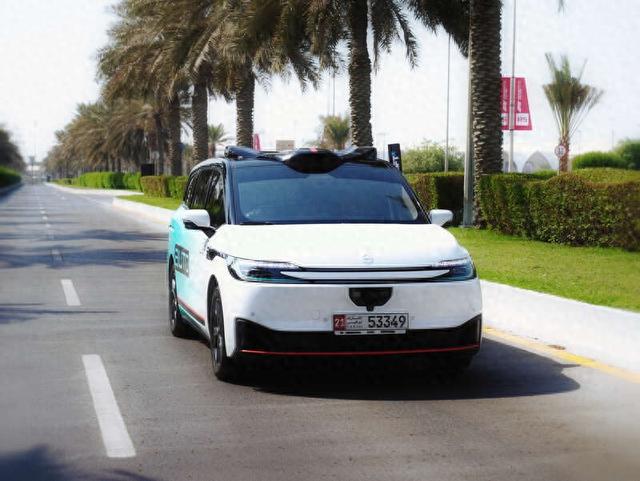
Core Insights - Baidu's total revenue for 2025 reached 129.1 billion yuan, with AI business revenue accounting for 40 billion yuan, indicating a significant shift towards AI as a core business driver [1] - The company reported that AI-related services are expanding rapidly, with AI cloud revenue growing by 34% year-on-year and AI native marketing services increasing by 301% in 2025 [2][3] Group 1: Financial Performance - In Q4 2025, Baidu's total revenue was 32.7 billion yuan, with AI business revenue constituting 43% of general business income [1] - AI cloud's subscription revenue surged by 143% year-on-year in Q4, reflecting strong demand for high-performance computing [1] - AI native marketing services revenue reached 2.7 billion yuan in Q4, marking a 110% year-on-year increase [2] Group 2: User Engagement and Application Growth - Baidu App's monthly active users reached 679 million, while Wenxin Assistant's monthly active users hit 202 million, showcasing strong user engagement [2] - The launch of the Wenxin Assistant during the Spring Festival led to a fourfold increase in active users [2] - Baidu's AI applications generated over 10 billion yuan in revenue for the year, with significant growth in various sectors [2] Group 3: Autonomous Driving and Market Expansion - In Q4 2025, Baidu's autonomous driving service, "Luobo Kuaipao," recorded over 3.4 million rides, a year-on-year increase of over 200% [3] - The service has expanded to 26 cities globally, with a total of over 20 million rides provided [3] - Baidu's autonomous driving technology has accumulated over 300 million kilometers of total driving distance, with over 190 million kilometers being fully autonomous [3] Group 4: Capitalization and Strategic Moves - Baidu's subsidiary Kunlun Chip has submitted a listing application to the Hong Kong Stock Exchange, indicating a strategic move to capitalize on its AI chip business [4] - The company announced a share buyback plan of up to 5 billion USD and plans to declare its first dividend in 2026, enhancing shareholder returns [4] - These initiatives are expected to optimize Baidu's valuation structure and open financing channels for long-term technological investments [5]
马年春节小马智行无人车成深圳“科技年货”
Zhong Guo Jing Ying Bao· 2026-02-25 09:33
Core Insights - Shenzhen experienced an unprecedentedly busy Spring Festival, with hotel bookings ranking in the top three nationwide and tourist numbers exceeding ten million [1][2] - The introduction of fully autonomous vehicles, specifically from Xiaoma Zhixing, filled the transportation gap caused by local drivers returning home for the holiday, ensuring travel needs were met for both residents and visitors [1] - Xiaoma Zhixing's operational data showed significant growth during the holiday period, with paid orders in Shenzhen surpassing the total for the entire previous year by New Year's Eve [1][2] Group 1 - The average age of Shenzhen's population is 32.5 years, contributing to its vibrant atmosphere during the Spring Festival [1] - Xiaoma Zhixing's Robotaxi service became a key attraction, alongside other tech landmarks like DJI and Huaqiangbei, highlighting Shenzhen's status as a "tech tourism" destination [1][2] - The service was operational throughout the holiday, demonstrating that autonomous vehicles are now a practical transportation option rather than a mere concept [2] Group 2 - Data from Ctrip indicated that Shenzhen ranked first among foreign tourists' preferred "New Year destinations," showcasing its transformation from a population outflow area to a cultural and tourism hub [2] - The number of hotel bookings from individuals aged 60 and above increased by 56% year-on-year, indicating a growing interest among older demographics in visiting Shenzhen [2] - Xiaoma Zhixing's autonomous vehicles have become a symbol of Shenzhen's technological advancement, serving as a means for parents to connect with their children and for tourists to experience the city's innovation [2][3]
全国政协委员建言无人驾驶:让L3以上的汽车尽快进入商用
Guan Cha Zhe Wang· 2026-02-25 08:52
Core Viewpoint - The article emphasizes the importance of autonomous driving as a strategic emerging industry in China, highlighting the need for policy innovation and the urgency for large-scale application to seize opportunities in the new technological revolution and industrial transformation [1][4][10]. Group 1: Industry Development and Trends - The 20th National Congress of the Communist Party of China calls for seizing opportunities in the new technological revolution, with autonomous driving being a key area for future industrial competition [1]. - The U.S. has made significant legislative progress with the passage of the Autonomous Driving Bill, which establishes a national regulatory framework for autonomous vehicles, facilitating the commercialization of Level 4 (L4) autonomous driving [1]. - The global competition in the autonomous driving sector is intensifying, with companies like Tesla and Waymo accelerating their commercialization efforts [1][3]. Group 2: Policy and Regulatory Environment - Experts suggest that China needs to innovate policies and open up scenarios to transition from testing to large-scale application of autonomous driving technology [4][9]. - There is a call for establishing a supportive regulatory environment that includes defining the legal status of autonomous vehicles and addressing social governance issues related to higher-level autonomous driving [5][10]. - Recommendations include expanding pilot programs and creating regional verification platforms to enhance the application of autonomous driving technologies [8][9]. Group 3: Societal Impact and Future Directions - Autonomous driving is viewed as a pathway to embodied Artificial General Intelligence (AGI), with implications that extend beyond transportation to broader economic and social contributions [3][4]. - The development of autonomous driving technologies is expected to transform logistics, transportation management, and urban space utilization, necessitating a collaborative approach among government, enterprises, and research institutions [9][10]. - User trust in autonomous driving is increasing, with surveys indicating that approximately 95% of passengers would continue to use these services, highlighting the potential for autonomous driving to become a primary mode of transportation in the future [10].
【快讯】每日快讯(2026年2月25日)
乘联分会· 2026-02-25 08:38
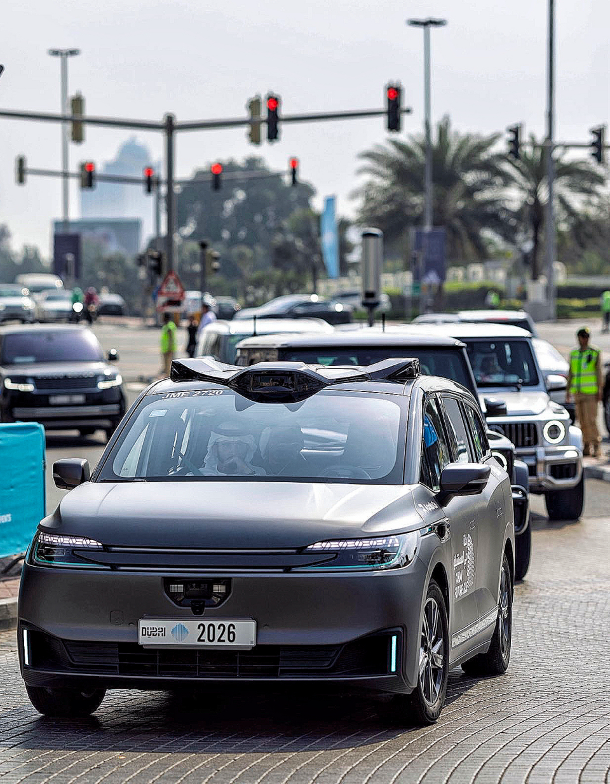
Domestic News - During the Spring Festival holiday, the number of electric vehicle charging sessions reached 6.021 million, with a total charging volume of 14,976.75 million kWh, marking a 52.01% increase in daily average charging volume compared to last year [7] - The National Energy Administration plans to implement a new energy system and sector-specific energy planning, focusing on major engineering projects and enhancing the electric vehicle charging network [8] - Henan Province aims to complete the scrapping and replacement of approximately 500,000 personal consumer vehicles and 5 million home appliances by the end of 2026 [9] - Anhui Province will promote over 300 application scenarios for the quantum information industry, providing financial incentives for new pilot areas and projects [10] - Wuhan Economic and Technological Development Zone plans to cultivate six billion-level vehicle enterprises by 2030, promoting both state-owned and private enterprises [11] - Geely will officially launch its i-HEV intelligent hybrid technology in the first half of the year, aiming for a fuel consumption as low as 3 liters per 100 km [12] - GAC Group has established a flying car manufacturing company, indicating a diversification into advanced mobility solutions [13] - The "RoboTaxi" service by Baidu has successfully expanded its autonomous driving testing network in Hong Kong, marking a significant step in smart transportation [14] International News - In January, new car registrations in Europe fell by 3.5% to 961,382 units, with France and Germany leading the decline [15] - Thailand's domestic car sales increased by 53.77% year-on-year in January, with production also rising by 10.53% [16] - The Moscow Automobile Plant has commenced mass production of the UMO brand electric vehicles, with a target of 3,000 units for the year [17] - Tesla has begun rolling out the Grok service to owners in Australia and New Zealand, enhancing the user experience with real-time information capabilities [18] Commercial Vehicles - The Wuling Yangguang family has undergone a significant upgrade, with new models offering improved range and power, priced between 69,800 to 118,800 yuan [21] - Ninebot has secured over $300 million in new financing, becoming the first unicorn in the L4 autonomous logistics vehicle sector with a valuation exceeding 10 billion [22] - Youjia Innovation has formed a strategic partnership with Di Shang Tie and Wall Gecko Technology to advance the design and production of autonomous logistics vehicles [23] - The Da Tong Da Na V1 has been launched, featuring a 50 kWh battery with a range of 350 km and fast charging capabilities [25]




未知机构:春节假期热门题材汇总1半导体A类1SK海力士今年无法满足所有客-20260224
未知机构· 2026-02-24 03:00
Summary of Key Points from the Conference Call Industry Overview - **Semiconductors (Category A)** - SK Hynix stated that it will be unable to meet all customer demands this year, with price increases expected to persist throughout the year [1] - Related companies include Zhaoyi Innovation, Puran, and Jiangbolong [1] - **Humanoid Robots (Category N)** - The Spring Festival Gala significantly boosted robot sales, with search volume for robots increasing over 300% month-on-month [1] - Official media commented on the high concentration of robots at the Spring Festival Gala, indicating that embodied intelligence is the future [1] - Related companies include Zhongding Holdings, Sanhua Intelligent Control, and Top Group [1] - **Autonomous Driving (Category N)** - Tesla announced that the first Cybercab has officially rolled off the production line at its Texas Gigafactory [1] - Related companies include Zhejiang Shibao, Wanjie Technology, and Lianchuang Electronics [1] - **Commercial Aerospace (Category N)** - Elon Musk stated that Starship will launch over 10,000 satellites annually [1] - Brazil's national telecommunications regulator Anatel has approved the launch of the Qianxin Satellite Constellation to begin operations in Brazil starting in 2026 [1] - Related companies include Shanghai Hanyun, Galaxy Electronics, and Changjiang Communication [1] - **Shipping (Category N)** - VLCC freight rates surged during the Spring Festival, with charter rates reaching historical highs, surpassing the peak levels of November 2025 and marking the highest since April 2020 [1] - Related companies include COSCO Shipping Energy, China Merchants Energy Shipping, and China Merchants Jinling [1] - **US-Iran Relations (Category N)** - According to a report, Trump is considering a strategy of "small strikes" followed by "large strikes" against Iran [1] - Related companies include Tongyuan Petroleum, Zhongman Petroleum, and Jinniu Chemical [1] - **Low-altitude Economy (Category N)** - The Ministry of Industry and Information Technology held a meeting emphasizing the need for top-level planning in the development of the low-altitude industry [1] - Related companies include Wanfeng Aowei, Zongshen Power, and Shenzhen Urban Transport [1] Additional Important Insights - The conference highlighted the significant growth potential in various sectors, particularly in technology and transportation, driven by innovation and regulatory support [1] - The emphasis on embodied intelligence and autonomous technologies indicates a shift towards more advanced and integrated systems in consumer products and services [1] - The shipping industry's recovery and rising freight rates suggest a rebound in global trade and logistics, which could present investment opportunities [1]
港股收评:恒指涨2.53% 科技股、芯片股全天强势 机器人、AI概念回落 有色金属走强
Jin Rong Jie· 2026-02-23 09:04
Market Performance - The three major indices experienced significant gains, with the Hang Seng Index rising by 2.53%, the Hang Seng China Enterprises Index increasing by 2.65%, and the Hang Seng Tech Index climbing by 3.34% [1] - A total of 83 stocks in the Hang Seng Index rose, while only 5 declined, indicating a strong market performance [2] Sector Highlights - Technology stocks saw widespread gains, with Meituan up over 5%, Alibaba and Xiaomi rising over 3%, and Tencent and JD.com increasing over 2% [1] - Semiconductor and AI chip stocks performed well, with InnoLight Technology and Wall Street Technology both rising over 9%, and Huahong Semiconductor and SMIC increasing by more than 4% [1] - The optical communication sector also showed strength, with Longi Green Energy rising by 14% and Cambridge Technology increasing by over 5% [1] Resource and Automotive Stocks - Gold, resource, and non-ferrous metal stocks gained traction, with Tongguan Gold rising over 12%, Ganfeng Lithium increasing by over 8%, and Zijin Mining rising over 5% [1] - Autonomous driving stocks surged, with Zhejiang Shibao increasing nearly 20%, and automotive stocks also performed well, with NIO rising over 5%, BYD increasing over 3%, and Li Auto rising over 4% [1] Declines in Specific Sectors - AI large model and robotics stocks faced declines, with Zhipu Technology dropping over 22%, Haizhi Technology Group falling over 21%, and MINIMAX-WP decreasing over 13% [1] - Consumer stocks showed weakness, with leading duty-free retailer China Duty Free Group declining over 8% and Mixue Group falling over 1% [1] Trading Volume - Tencent Holdings had a trading volume of HKD 11.883 billion, rising by 3.1%; Alibaba-W had a trading volume of HKD 6.820 billion, increasing by 3.5%; and Meituan-W had a trading volume of HKD 5.571 billion, rising by 5.3% [3] - Zhipu's trading volume was HKD 3.170 billion, with a significant drop of 22.8% due to a company apology regarding a version update and support for user refunds [3]
