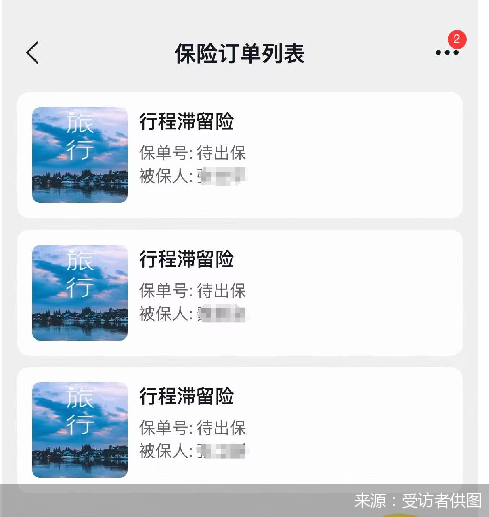
行程滞留津贴险

Search documents
买三张车票被捆绑204元保险
Bei Jing Ri Bao Ke Hu Duan· 2025-05-21 03:00
Core Viewpoint - The article highlights a case where a consumer was charged an additional 204 yuan for an insurance policy bundled with train tickets, raising concerns about the fairness and transparency of such practices in the insurance and travel industries [1] Group 1: Consumer Experience - A consumer named Zhang Xianshi purchased three train tickets for 1800 yuan but found an unexpected charge of 204 yuan for "trip delay allowance insurance" from Huatai Insurance [1] - The insurance policy included eight coverage items, such as domestic travel accident death/disability and additional costs for trip interruptions, which were deemed irrelevant to the consumer's situation [1] Group 2: Legal and Regulatory Concerns - Legal experts argue that the design of the insurance purchase interface exploits consumers' urgency, infringing on their rights to information, choice, and fair trading [1] - Huatai Insurance stated that it complies with relevant regulations and ensures that important information is clearly disclosed, although the referenced regulatory framework was abolished in 2020 [1]
一个订单三荐保险、折叠免责条款,旅行平台防不胜防的保险搭售陷阱
Bei Jing Shang Bao· 2025-05-20 07:11
Core Viewpoint - The article highlights the issue of consumers being unknowingly charged for insurance during the ticket purchasing process on travel platforms, raising concerns about transparency and consumer rights [1][10][21]. Group 1: Consumer Experience - A consumer named Zhang Xian encountered unexpected insurance charges amounting to 204 yuan when purchasing train tickets, which were not clearly disclosed during the transaction process [1][2]. - The insurance was identified as "Trip Delay Allowance Insurance," underwritten by Huatai Insurance [2][4]. - Zhang, despite being knowledgeable about insurance, felt trapped by the platform's sales tactics, indicating a lack of clarity in the purchasing process [4][10]. Group 2: Insurance Sales Process - The ticket purchasing process included multiple points where insurance options were presented, but the final insurance offer was less visible and misleadingly labeled [5][7]. - The design of the insurance sales interface exploited consumers' urgency to purchase tickets, making it easy to overlook critical information [8][14]. - Legal experts argue that such practices infringe on consumers' rights to be informed and to make fair choices [10][14]. Group 3: Regulatory Compliance - The article discusses the lack of compliance with regulations that require clear disclosure of insurance terms and conditions during the sales process [11][21]. - It notes that the insurance sales interface failed to meet the standards set by previous regulatory guidelines, which have since been repealed [17][21]. - Experts emphasize the need for platforms to ensure that essential information is not hidden and that consumers are adequately informed before making a purchase [20][21]. Group 4: Insurance Product Suitability - Concerns were raised about the appropriateness of the insurance product itself, as it included coverage for scenarios that did not match the consumer's travel plans [15][17]. - The insurance policy contained various coverage options, but many were irrelevant to Zhang's situation, leading to questions about the necessity and value of the product [15][17]. - Legal experts suggest that consumers should be able to understand the relevance of insurance products to their specific needs to avoid unnecessary expenses [20][21].