远景方舟AI能碳管理平台

Search documents
国家零碳园区呼之欲出,首批试点花落谁家?
2 1 Shi Ji Jing Ji Bao Dao· 2025-12-17 11:27
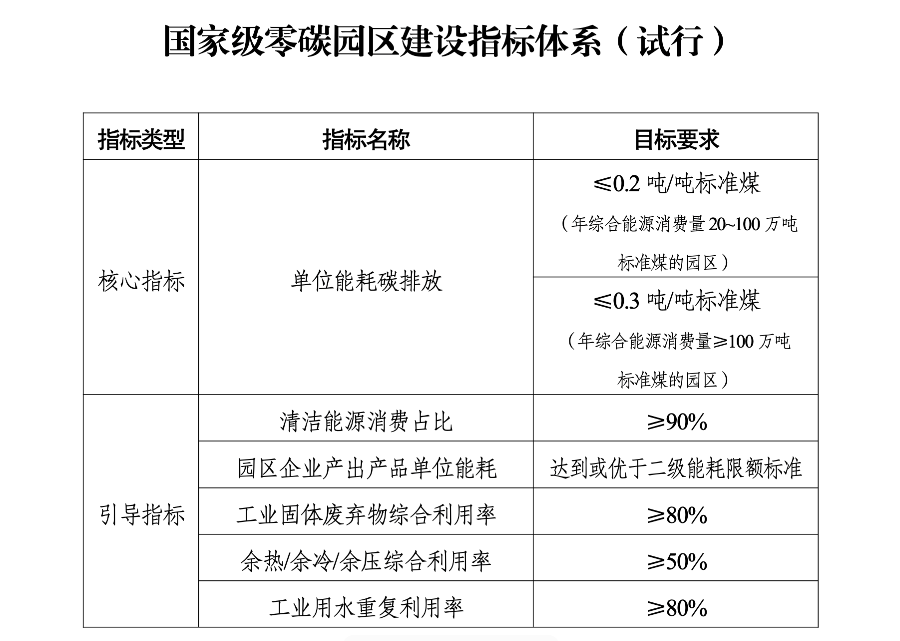
Core Insights - The first batch of national-level zero-carbon parks has completed the review process, with the final list expected to be announced soon [1] - The establishment of zero-carbon parks is a key strategic measure to achieve China's dual carbon goals, with a target of building around 100 national-level zero-carbon parks during the 14th Five-Year Plan period [2][3] - The construction of zero-carbon parks faces challenges such as high costs and the need for technological integration, despite the push for investment and construction [1][3] Policy and Regulatory Framework - The National Development and Reform Commission (NDRC) and other departments have issued guidelines on the basic conditions, indicators, and carbon emission accounting methods for zero-carbon park construction [2] - The core indicator for evaluating zero-carbon parks is "unit energy consumption carbon emissions," which aims to guide parks to achieve near-zero carbon emissions while ensuring enterprise development [3][4] Technical and Operational Standards - The "National Level Zero-Carbon Park Construction Indicator System (Trial)" specifies that parks with an annual comprehensive energy consumption of 20-100 million tons of standard coal must have unit energy consumption carbon emissions of ≤0.2 tons/ton of standard coal, while those with consumption ≥100 million tons must meet ≤0.3 tons/ton [4][5] - Additional guiding indicators include a clean energy consumption ratio of ≥90%, industrial solid waste utilization rate of ≥80%, and industrial water reuse rate of ≥80% [5][7] Regional and Industry Challenges - The construction of zero-carbon parks varies significantly across regions, with eastern regions facing high industrial demand for green electricity and western regions having abundant renewable resources but weaker industrial foundations [3] - The current average unit energy consumption carbon emissions across parks is approximately 2.1 tons/ton of standard coal, indicating a need for a 90% reduction to meet zero-carbon standards [6] Investment and Market Dynamics - Companies are motivated to engage in zero-carbon park construction due to policy incentives and market access requirements, particularly in export-oriented industries [10] - The construction of zero-carbon parks requires a stable and high proportion of green electricity supply, which poses challenges in balancing renewable energy variability with continuous industrial production needs [10][11] Collaborative Efforts and Innovations - Successful zero-carbon park projects involve collaboration among various stakeholders, including park management committees, energy investment companies, and production enterprises [12] - Innovative solutions, such as AI-powered energy management systems, are being developed to enhance energy efficiency and stability in zero-carbon parks [11][12]