郑单819玉米

Search documents
锚定农业强省目标 舒展乡村振兴画卷
He Nan Ri Bao· 2026-01-08 23:53
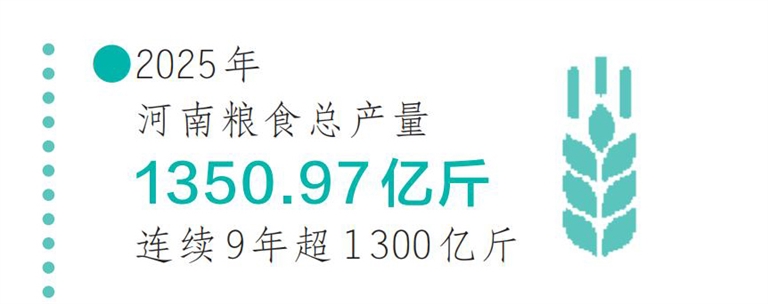
Core Viewpoint - The article emphasizes the importance of food security in China, particularly highlighting Henan Province's role as a major agricultural hub and its commitment to ensuring national food security through various initiatives and innovations in agriculture [4][20]. Group 1: Food Security and Agricultural Production - Henan Province achieved a total grain production of 1,350.97 billion jin in 2025, maintaining a stable output above 1,300 billion jin for nine consecutive years, contributing significantly to national food security [4]. - The province has implemented a systematic approach to enhance agricultural productivity through the integration of "four goods": good land, good seeds, good opportunities, and good methods, revitalizing the ancient "Central Plains Granary" [4][6]. - During the "14th Five-Year Plan" period, Henan constructed and upgraded 31.67 million mu of high-standard farmland, which has become a solid foundation for stable grain production [4][6]. Group 2: Technological Innovations in Agriculture - The adoption of smart irrigation and IoT technology in high-standard farmlands has improved resilience against extreme weather, allowing farmers to manage water usage effectively [6]. - Henan has established the Central Plains Agricultural Valley as a key area for seed innovation, with over 170 new varieties approved and 110 varieties promoted nationwide, enhancing the competitiveness of grain production [6][18]. - The mechanization of agriculture has been accelerated, with approximately 210,000 combine harvesters deployed during the wheat harvest, achieving a mechanization rate of 99.8% [7]. Group 3: Rural Development and Infrastructure - The province has initiated the construction of 16 provincial-level pilot areas for livable and workable rural communities, covering 49 towns and 1,037 administrative villages [9]. - Infrastructure improvements have transformed rural living conditions, with 100% of administrative villages and natural villages with over 20 households now having hardened roads, and 97.5% of rural households having access to safe drinking water [12][21]. - The design of rural areas has been elevated to a strategic planning level, with initiatives to enhance village aesthetics and functionality through professional design efforts [12]. Group 4: Economic Growth and Employment - Henan is a significant agricultural production base, leading in oilseed, edible fungi, and livestock production, with a focus on developing a trillion-level green food industry cluster [15][18]. - The province has seen a rise in rural residents' disposable income, projected to reach 21,330 yuan by 2024, with a narrowing income gap between urban and rural residents [19]. - The establishment of the "Yunong Youpin" brand has enhanced the market competitiveness of Henan's agricultural products, facilitating exports and increasing recognition in international markets [19]. Group 5: Poverty Alleviation and Social Welfare - Henan has implemented a robust monitoring and support mechanism to prevent poverty, ensuring that the living standards of previously impoverished populations continue to improve [20][22]. - The province has achieved a 99% insurance coverage rate for the impoverished population, with ongoing efforts to enhance housing safety and living conditions [21]. - Employment initiatives, including skill training and support for small loans, have been crucial in helping impoverished individuals achieve sustainable income growth [22].

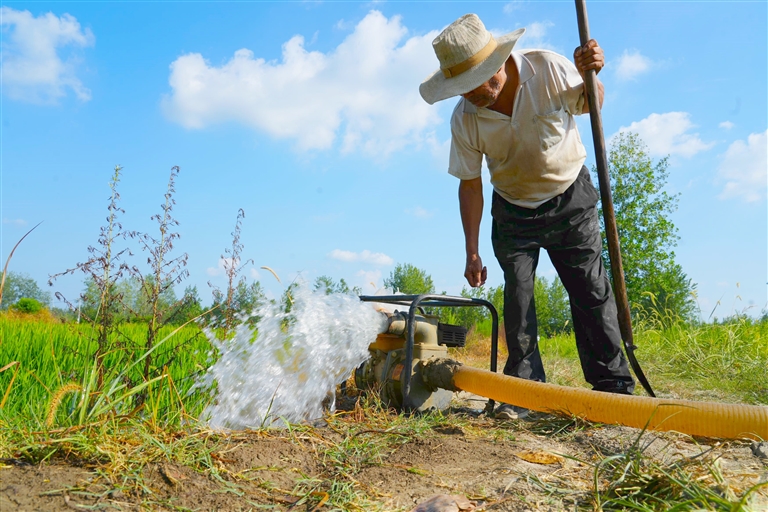
遭受六十四年一遇极端高温干旱“烤”验 抗旱保秋 河南够拼
He Nan Ri Bao· 2025-08-20 23:30
Core Viewpoint - The article highlights the severe drought conditions in Henan province, which have led to a concerted effort in agricultural technology and management to mitigate the impact on crop yields, particularly corn, during the critical growth period. Group 1: Drought Conditions and Impact - Henan province is experiencing a severe drought, with average temperatures reaching 30.5°C, 3.1°C higher than normal, and rainfall decreasing by 51.2% compared to historical averages [5][14] - The drought has prompted farmers to engage in extensive irrigation efforts, with reports of multiple rounds of watering to sustain crops [5][14] Group 2: Technological Innovations in Agriculture - Advanced irrigation techniques, such as water-fertilizer integration and drone technology, are being utilized to enhance efficiency in crop management [6][10] - The establishment of "six conditions" monitoring stations provides real-time data on soil moisture, crop growth, and pest alerts, effectively acting as a "smart brain" for agricultural management [8][9] Group 3: Breeding and Crop Resilience - Research institutions are focusing on breeding drought-resistant crop varieties, with notable successes in corn varieties like Zhengdan 819 and Qiule 368, which show strong adaptability to high temperatures and drought conditions [10][11] - The integration of molecular biology techniques in breeding programs is enhancing the resilience of crops against diseases and environmental stressors [10][11] Group 4: Collaborative Efforts and Funding - The provincial government has allocated significant funds for drought relief, including 200 million yuan for immediate drought response and additional support for irrigation infrastructure [15][16] - Agricultural experts and technicians have been deployed to provide on-the-ground support and training to farmers, with over 80,000 farmers receiving guidance [14][15] Group 5: Future Outlook and Strategy - The article emphasizes the shift from traditional farming practices to precision agriculture, highlighting the importance of data-driven decision-making in enhancing crop yields [17][18] - The ongoing efforts aim to ensure that even in adverse conditions, the agricultural sector can achieve stable or increased production through innovative practices and technologies [17][18]