酒店年会服务

Search documents
热闹的酒店年会,今年悄悄消失了
3 6 Ke· 2026-01-26 03:11
Core Insights - The corporate annual meeting orders for hotels have drastically declined this year, with a significant drop in both quantity and pricing compared to previous years [1][2] - A survey indicated that 75% of respondents reported their companies would not hold annual meetings this year, reflecting a broader trend of cancellation or reduction in such events [1][2] Group 1: Industry Trends - The demand for corporate meetings and events is decreasing, particularly in the catering sector, as highlighted by the China Tourism Hotel Industry Association's report [2] - The percentage of companies hosting large annual meetings has plummeted from 78% in 2019 to 42% in 2023, with projections suggesting it could fall to below 20% by 2026 [2] Group 2: Historical Context - The period from 2010 to 2019 was considered the golden decade for corporate annual meetings, characterized by increasing budgets and extravagant events [3][4] - The trend of "tourism-style annual meetings" emerged around 2018, where companies organized retreats combined with annual meetings, leading to high demand for hotel bookings [4] Group 3: Post-Pandemic Changes - Since 2020, the enthusiasm for corporate annual meetings has sharply declined, with many companies cutting back on budgets due to economic pressures [5][6] - State-owned enterprises are increasingly scrutinized for compliance, leading to reduced budgets for annual meetings and a shift towards simpler formats [6] Group 4: Corporate Strategies - Many private enterprises are also reducing meeting expenditures, with some reallocating annual meeting budgets to improve cash flow or provide employee benefits instead [7][9] - The perception of annual meetings among younger employees has shifted, with many viewing them as outdated and unnecessary, leading to a decline in participation [7][8] Group 5: Emerging Alternatives - New formats for annual meetings are emerging, such as smaller team-building events or casual gatherings, which align better with the preferences of younger employees [8][9] - Some companies are transforming the concept of annual meetings into direct employee benefits, such as cash rewards or additional time off, reflecting a shift towards practicality over formality [9]
酒店年会,今年悄悄消失了
投资界· 2026-01-26 01:54
Core Viewpoint - The article discusses the significant decline in corporate annual meetings in China, highlighting a shift from a decade of growth to a current trend of cancellations and reduced budgets due to economic pressures and changing employee attitudes [2][11][18]. Group 1: Decline of Corporate Annual Meetings - Corporate annual meeting orders have drastically decreased, with many hotels reporting a significant drop in bookings compared to previous years [2][3]. - The average cost per table for annual meetings has fallen from at least 1,500 yuan to around 1,000 yuan, with some companies opting for simple meals instead of formal events [4][5]. - A survey indicated that 75% of respondents reported their companies would not hold annual meetings this year, reflecting a broader trend of cancellations [4][7]. Group 2: Historical Context - The period from 2010 to 2019 was considered the "golden decade" for corporate annual meetings, characterized by lavish events and high employee engagement [8][9]. - Companies invested heavily in annual meetings, with some even booking luxury resorts and offering extravagant prizes, indicating a strong demand for such events [9][10]. Group 3: Reasons for Decline - Economic uncertainty and stricter compliance requirements for state-owned enterprises have led to budget cuts for annual meetings [13][14]. - Many private companies are also reducing expenses, with annual meeting budgets being redirected towards cash flow and employee benefits instead [15][16]. - Changing employee demographics, particularly among younger workers, have led to a perception that traditional annual meetings are outdated and unnecessary [16][17]. Group 4: Evolution of Annual Meetings - While traditional annual meetings are declining, new formats are emerging, such as smaller team-building events and informal gatherings that align better with employee preferences [20][21]. - Some companies are transforming annual meetings into direct benefits for employees, such as cash rewards or additional time off, which are more appealing to younger generations [20][21]. - This shift presents both challenges and opportunities for the hotel industry, as they must adapt to the changing needs of corporate clients [22].


又到年会季,高星酒店竟被洗浴中心“偷塔”
3 6 Ke· 2026-01-08 11:51
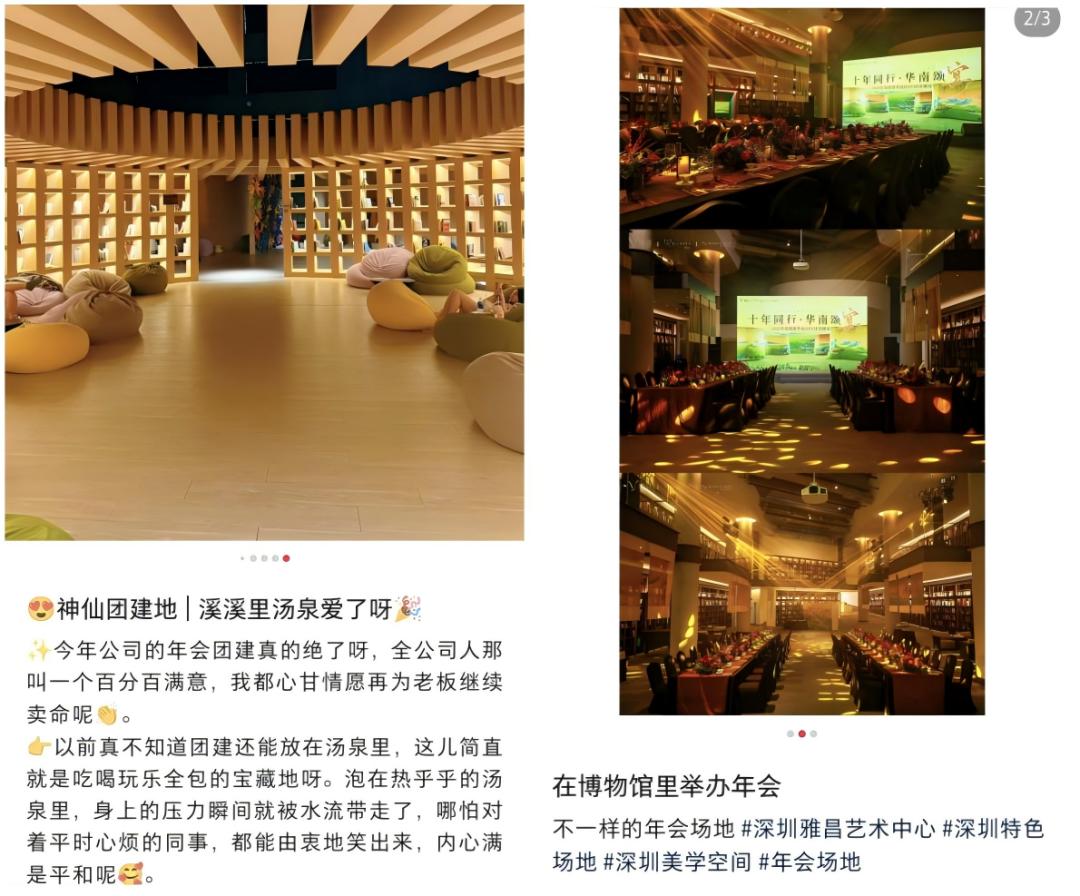
Core Insights - The traditional corporate year-end party, once a grand event held in five-star hotels, is gradually disappearing, with many companies opting for simpler, more cost-effective alternatives [1][3][10] Group 1: Changes in Corporate Year-End Events - Many companies are canceling their year-end parties, with a significant shift towards online meetings and simplified formats [2][3] - The trend indicates a decline in the number of companies hosting large-scale year-end events, with projections suggesting that by the end of 2025, less than 20% will maintain the traditional format [13][15] - The average budget for corporate year-end parties has been cut by over 40% since 2020, with more than half of small and medium-sized enterprises eliminating large gatherings altogether [13][15] Group 2: Impact on High-End Hotels - High-end hotels, which previously relied heavily on large corporate events for revenue, are facing significant challenges as demand for traditional year-end parties diminishes [6][8] - The revenue from meeting and banquet services was once a major source of income for high-end hotels, but this is now declining sharply [6][7] - Many hotels are struggling to fill their banquet halls and meeting rooms, leading to a significant reduction in their overall revenue [33][34] Group 3: Alternative Venues and Experiences - Companies are increasingly turning to alternative venues such as hot spring resorts, art galleries, and even bathing centers for their year-end activities, which offer a more relaxed and informal atmosphere [16][24] - These alternative venues provide cost-effective options that cater to the modern workforce's desire for genuine experiences rather than formalities [23][24] - The shift towards smaller, more personalized events reflects a broader trend of moving away from traditional corporate formalities to more engaging and meaningful interactions [18][24] Group 4: Future of High-End Hotels - High-end hotels are adapting by exploring new products and services, such as combining leisure and business offerings to attract a different clientele [36] - Some hotels are shifting focus to smaller events like family gatherings and birthday parties, which have shown significant revenue growth [37] - The survival strategy for high-end hotels now involves diversifying their offerings and seeking new customer segments rather than relying solely on corporate events [39][40]