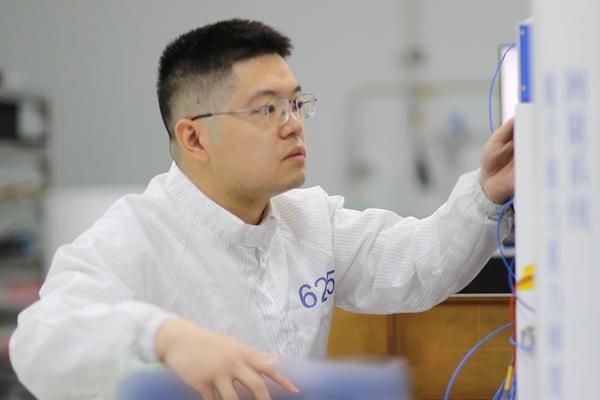
量子重力梯度仪

Search documents
90后博士沈楚洋:让量子测量从实验室走向应用
Zhong Guo Qing Nian Bao· 2026-01-03 02:15
Core Viewpoint - Quantum precision measurement technology, leveraging quantum mechanics principles, significantly enhances measurement accuracy compared to traditional high-precision gravity measurement techniques. The China Shipbuilding Group's 717 Research Institute is a pioneer in this field, successfully transitioning quantum gravity gradient technology from laboratory to application within five years, thus positioning China as a leader in quantum gravity measurement technology [1][2][3]. Group 1: Technology Overview - Quantum precision measurement technology is described as a comprehensive technology that actively manipulates quantum states to break through measurement accuracy limits [1]. - Traditional high-precision gravity measurement technology has been hindered by foreign technology blockades, making it difficult for China to advance without external dependencies [2]. - The 717 Research Institute has developed a quantum gravity gradient instrument that operates stably under various temperature conditions, overcoming significant challenges in environmental adaptability [3][4]. Group 2: Research and Development Achievements - The team, led by Shen Chuyang, has made significant advancements in quantum gravity precision measurement, achieving international leading levels in dynamic measurement performance within two years [6][7]. - The first prototype of the quantum gravity gradient instrument was developed, showcasing its ability to function effectively in real-world conditions, including extreme temperatures and environmental challenges [6][7]. - The team is also working on a shipborne quantum gravity instrument, which is crucial for marine science, resource exploration, and foundational surveying [7][9]. Group 3: Application and Future Prospects - The research team's efforts are aimed at applying quantum gravity measurement technology in various scenarios, including geological exploration and disaster warning systems [4][9]. - The team has engaged in field tests under challenging conditions, successfully gathering data that will support the practical application of the shipborne quantum gravity instrument [7][9]. - The 717 Research Institute emphasizes the importance of youth talent development, with a significant portion of its innovative teams composed of young professionals, fostering a culture of interdisciplinary collaboration [9][10].

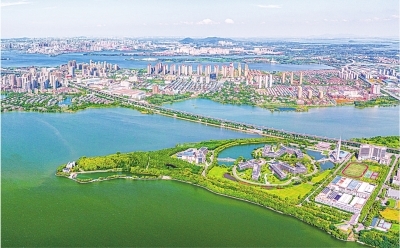
武汉之南,高新技术企业四年增长近三倍—— 10万青年逐梦汤逊湖畔
Chang Jiang Ri Bao· 2025-08-24 00:55
Core Insights - The transformation of Jiangxia District around Tangxun Lake is marked by a significant increase in high-tech enterprises and the influx of young talent, creating a vibrant innovation ecosystem [1][2][4] Group 1: Talent and Innovation - Over the past three years, more than 100,000 young talents have settled in the Tangxun Lake area, supported by research institutions, innovation platforms, and universities [2][5] - The number of effective invention patents in Jiangxia District rose from 3,743 in 2022 to 5,658 in 2024, indicating a substantial annual growth rate that exceeds provincial and municipal averages [5][6] - The establishment of the Tangxun Lake Technology Innovation Center aims to attract global innovation resources and create a collaborative environment for high-value industries [9][10] Group 2: High-Tech Enterprises Growth - The number of high-tech enterprises in the Tangxun Lake area surged from 241 in 2020 to 905 in 2024, representing an increase of nearly three times [8] - Recent projects include the establishment of headquarters for companies like Planet Wheel (Wuhan) Technology Co., Ltd. and Wolston International, with total investments of approximately 3 billion and 570 million respectively [6][8] - Jiangxia District has seen a rapid growth in headquarters economy, with nearly 20 new headquarters established in the past two years [6][7] Group 3: Educational and Research Collaboration - The number of new students in drone technology at Wuchang Vocational College exceeded 1,000 this year, reflecting the growing demand for skilled professionals in low-altitude economy-related fields [3][5] - The collaboration between educational institutions and enterprises is fostering a talent pool that meets the practical and theoretical needs of the industry [5][6] - The establishment of a technology transfer center in collaboration with Nanjing University of Science and Technology highlights the alignment of academic strengths with local industry needs [9]