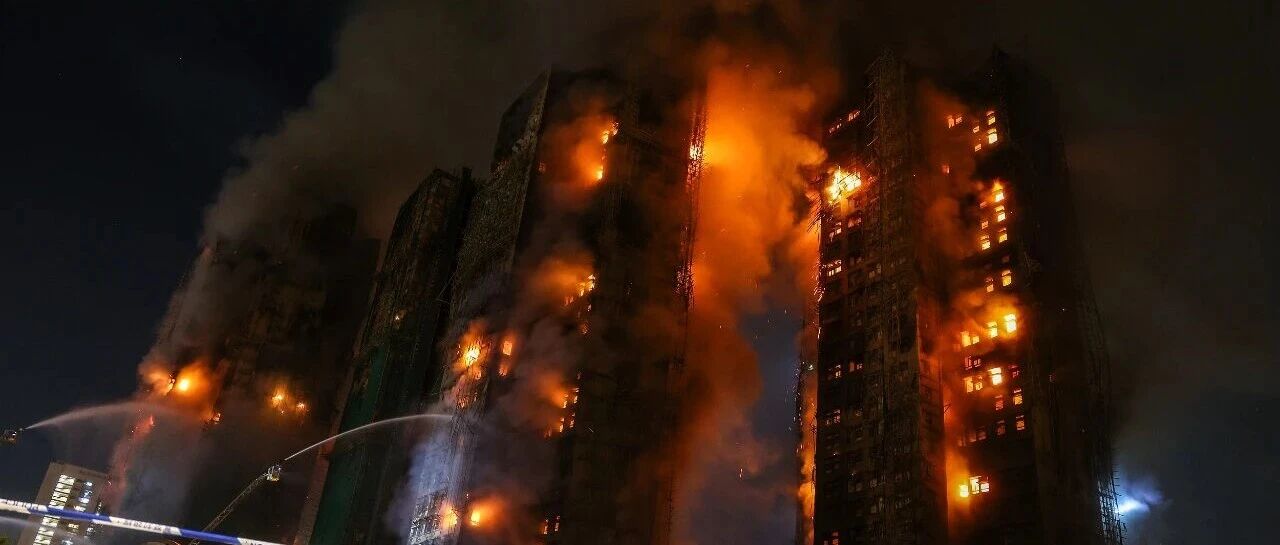
金属棚架

Search documents
“希望重建公众对香港维修楼宇安全的信心”——专访香港发展局局长甯汉豪
Zhong Guo Xin Wen Wang· 2025-12-26 06:44
Core Viewpoint - The Hong Kong Development Bureau aims to restore public confidence in building safety following a recent fire incident by implementing immediate and long-term reforms in building maintenance and safety regulations [1][3]. Group 1: Immediate Actions - The Development Bureau has initiated actions to address safety concerns, including the immediate removal of potentially fraudulent scaffolding nets used in building maintenance [3]. - A new inspection system for scaffolding nets has been introduced, requiring compliance verification before they can be used on construction sites [4][5]. Group 2: Regulatory Reforms - The Bureau is accelerating the review of the Buildings Ordinance to enhance penalties for contractors violating safety regulations, with a draft amendment expected next year [3][5]. - Current regulations for small-scale maintenance projects are less stringent than those for new constructions, prompting a commitment to tighten oversight [3]. Group 3: Industry Collaboration - The Development Bureau is collaborating with the Hong Kong Construction Industry Council to review existing building maintenance practices and identify areas for improvement [3]. - A collective procurement initiative for scaffolding nets is being organized to help contractors adapt to new safety requirements [5]. Group 4: Future Developments - Discussions are underway regarding the transition from traditional bamboo scaffolding to metal scaffolding, which offers better fire resistance and safety [5][6]. - The Bureau acknowledges challenges in this transition, including sourcing metal scaffolding and training bamboo scaffolding workers, and plans to provide support through training programs [6].


对话竹棚业香港联会理事:业界对推广金属棚架持开放态度
Nan Fang Du Shi Bao· 2025-12-02 12:43
Group 1 - The Hong Kong government is considering replacing bamboo scaffolding with metal scaffolding in construction projects, following a recent fire incident that raised safety concerns [1][2] - The bamboo scaffolding industry is open to the transition but acknowledges that metal scaffolding may not completely replace bamboo due to space and weight constraints in densely populated areas [1][3] - Currently, bamboo scaffolding holds approximately 90% of the market share in the industry, despite the higher number of registered metal scaffolding workers [3] Group 2 - The construction industry in Hong Kong operates under a subcontracting system, which limits the bargaining power of scaffolding contractors [2] - The transition to metal scaffolding may incur significant costs, and some bamboo scaffolding businesses may struggle to afford this change [3] - There is a need for cultural change in the industry to improve safety standards and reduce accidents, beyond just material changes [3]
香港大火之下,风暴眼中的竹棚工
Xin Jing Bao· 2025-12-01 00:03
Core Viewpoint - The recent fire incident at Hong Kong's Ma On Shan estate has reignited the debate over the safety of bamboo scaffolding, a traditional construction method in the region, highlighting the need for improved safety standards and potential shifts towards metal scaffolding [1][2][9]. Industry Overview - Bamboo scaffolding has been a longstanding practice in Hong Kong, valued for its low cost and flexibility, especially in narrow urban spaces. It is recognized as an intangible cultural heritage [2][12]. - As of June 2025, there were 2,534 registered bamboo scaffolders compared to 7,830 metal scaffolders, indicating a significant reliance on bamboo scaffolding in the industry [6]. Safety Concerns - The fire at Ma On Shan estate resulted in 146 fatalities and highlighted the rapid spread of flames due to the combustible nature of bamboo scaffolding and the materials used in construction, such as non-compliant protective nets [9][10][13]. - Experts have pointed out that the protective nets used in the construction did not meet fire safety standards, contributing to the fire's intensity and spread [10][11]. Regulatory Response - Following the incident, the Hong Kong government announced plans to review fire safety standards for construction sites and promote the use of metal scaffolding as a safer alternative [22]. - The government has committed to providing retraining and transition support for workers currently employed in bamboo scaffolding [22]. Economic Impact - The bamboo scaffolding industry faces challenges as younger workers are less inclined to enter the field, leading to an aging workforce. Many workers express concerns about their future job security amid potential policy changes [20][22]. - The cost of bamboo scaffolding is approximately HKD 300 per square meter, while metal scaffolding costs around HKD 600 per square meter, making bamboo scaffolding a more economically viable option for many small contractors [18]. Cultural Significance - Bamboo scaffolding is not only a construction method but also a cultural practice that supports the livelihoods of many workers in Hong Kong. The potential shift to metal scaffolding raises concerns about the preservation of this traditional craft [2][19].
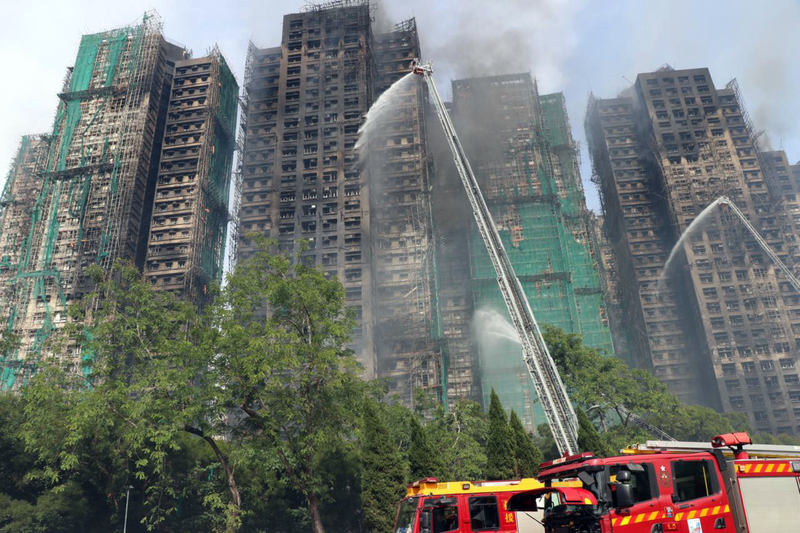
尽快推进金属棚架取代竹棚架,香港政务司司长表态
第一财经· 2025-11-27 15:36
Core Viewpoint - The Hong Kong government is moving towards replacing bamboo scaffolding with metal scaffolding due to safety concerns highlighted by a recent tragic fire incident that resulted in significant casualties [4]. Group 1: Government Response - The Secretary for Development, Chan Kwok-kee, stated that discussions with the industry are underway to create a roadmap for replacing bamboo scaffolding with metal scaffolding [3]. - Chan emphasized that while bamboo scaffolding may be convenient in narrow streets, its fire resistance is inferior to that of metal scaffolding, necessitating a shift for safety reasons [3]. - The government plans to prepare for this transition by conducting further discussions, research, and training for workers to assist in their adaptation [3]. Group 2: Industry Recommendations - National Committee member, She Decong, suggested a complete phase-out of bamboo scaffolding in favor of steel pipe scaffolding, citing its higher safety, stability, and fire resistance [3]. - She urged the government to establish a clear timeline for this transition and to provide technical and financial support to contractors to facilitate the change [3]. Group 3: Recent Incident - A fire in Tai Po, New Territories, resulted in 75 fatalities and 76 injuries, with initial investigations indicating that various materials, including bamboo scaffolding, contributed to the fire's spread [4]. - The Hong Kong Fire Services Department reported that the fire affected seven out of eight buildings in the vicinity, exacerbated by wind conditions [4].