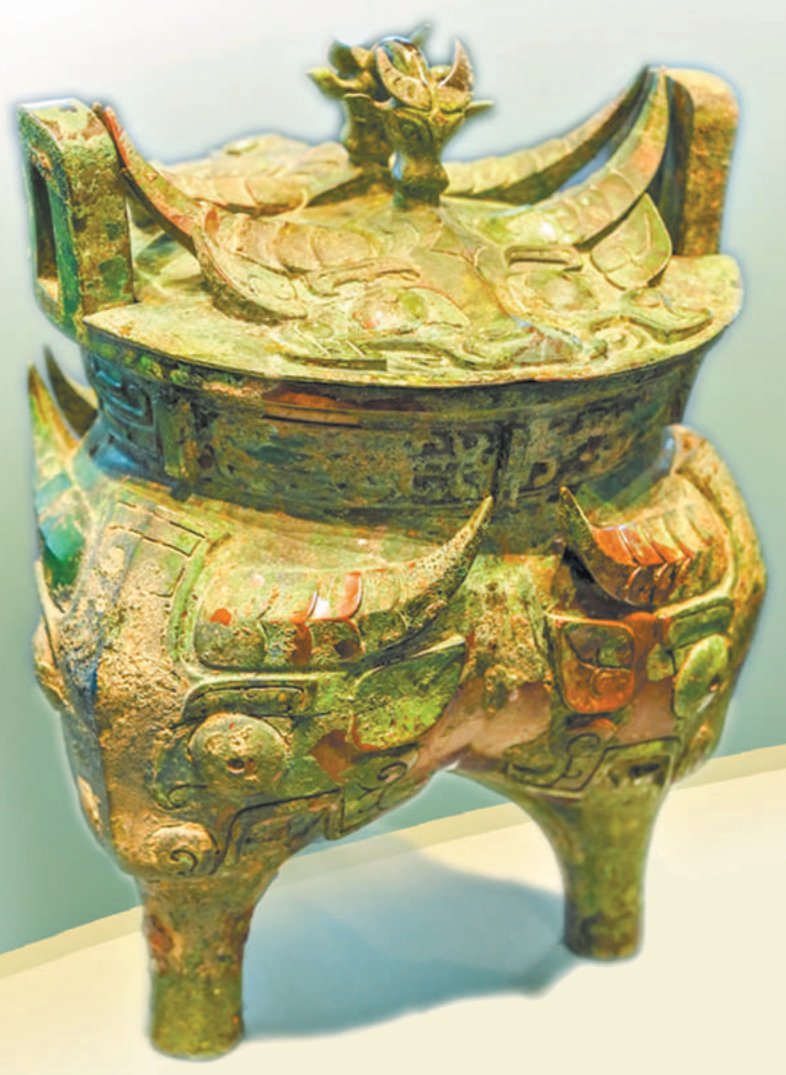
铜牛首吐舌纹钩戟

Search documents
3000多年前北京“城之源”娓娓道来
Bei Jing Wan Bao· 2025-10-20 06:50
Core Viewpoint - The Liuli River site has been recognized as one of the top ten archaeological discoveries in China for 2024, showcasing significant findings from the Western Zhou period, including bronze artifacts that highlight the cultural and historical importance of the site [1]. Exhibition Highlights - The exhibition titled "Taibao Yong Yan - Special Exhibition of Liuli River Site" features 180 precious artifacts, including the largest and heaviest bronze ritual vessel, the Jin Ding, which weighs over 40 kilograms [1][4]. - The exhibition is the first public display of the artifacts since the site received the highest award in Chinese archaeology [1]. Artifacts and Their Significance - The Jin Ding and Boju Li are highlighted as national treasures, with inscriptions that narrate stories from over 3,000 years ago, reflecting the advanced material civilization of the Beijing area during the Western Zhou period [4][5]. - The Boju Li, adorned with seven bull heads, represents the pinnacle of Western Zhou bronze art in Beijing, with inscriptions detailing royal rewards and rituals [5][6]. Historical Context - The artifacts provide insights into the spiritual world of the Yan people, emphasizing their reverence for heaven and earth, and showcasing the cultural characteristics of the Yan state [6]. - The exhibition also features a group of bronze vessels known as "Zuo Ce Huan," which document significant historical events related to the construction of the capital city, providing evidence of Beijing's urban history over 3,000 years [9][10]. New Discoveries - A set of newly discovered bronze artifacts, including a unique combination of human face-shaped decorations, adds to the understanding of Yan culture and its artistic expressions [11]. - The exhibition includes a rare reunion of two bronze gui vessels, which were found to have been mixed up during burial, providing valuable evidence for the study of naming conventions in the Western Zhou period [14][15]. Cultural Representation - The exhibition utilizes modern technology, such as 3D projections and digital sand tables, to recreate the life in the Western Zhou Yan capital, enhancing the visitor experience [10]. - The artifacts collectively illustrate a vivid picture of ancient society, showcasing the craftsmanship and cultural practices of the Yan state [10].