
银杏面

Search documents
“限量版”秋冬美景成为旅游“金名片” 各地打造文旅市场新增长点
Yang Shi Wang· 2025-11-29 04:59
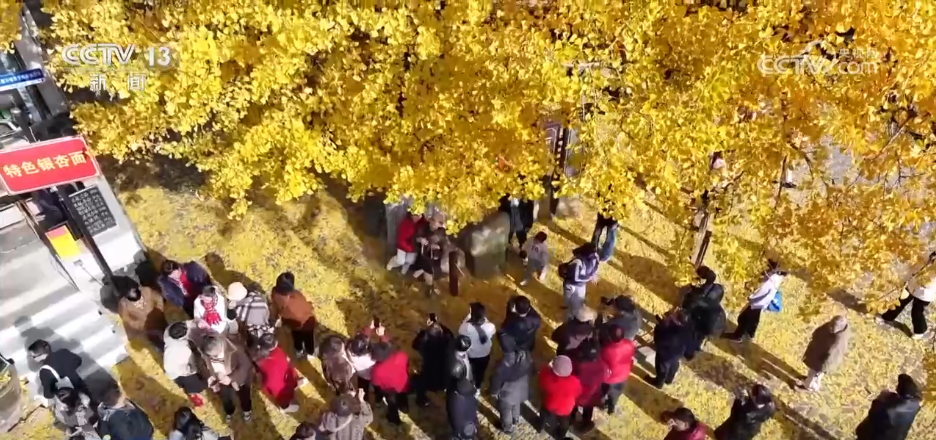
Group 1 - The article highlights the vibrant autumn and winter scenery across various regions in China, attracting numerous tourists to experience the natural beauty [1] - In Zhejiang's Changxing, over 30,000 ancient ginkgo trees are at their peak viewing period, with a 12.5-kilometer-long ginkgo corridor resembling a "golden armor" [1] - Last weekend, over 100,000 visitors flocked to the area, showcasing the popularity of local attractions and the unique ginkgo noodle dish made from processed ginkgo nuts [4][6] Group 2 - The local economy has benefited significantly from tourism, with cultural and tourism revenue exceeding 90 million yuan since November, driven by the ancient ginkgo trees [8] - In Shanghai, 44 "leaf-sweeping" scenic roads have been announced, allowing citizens and tourists to immerse themselves in the city's autumn beauty for over a month [9][11] - The "leaf-sweeping" initiative has evolved from 6 roads and 3 tree species in 2014 to 44 roads and 10 species, enhancing the experience for visitors [13] Group 3 - In Chongqing's Kaizhou District, the Hanfeng Lake's water-based colorful forest is at its most vibrant, attracting many visitors for photography [15] - The colorful forest landscape is a result of ecological management efforts, enhancing biodiversity and stabilizing the lake's banks [17] - In Xinjiang's Ili region, the Karajun Lake presents a serene winter scene, with clear blue waters reflecting the surrounding mountains, creating a picturesque environment [18]

(走进中国乡村)贵州妥乐村古树“生金”
Zhong Guo Xin Wen Wang· 2025-11-22 09:30
Core Insights - The ancient ginkgo trees in Tuo Le Village, Guizhou, are a significant cultural and economic asset, attracting a large number of tourists and generating income for local residents [1][4]. Group 1: Cultural Significance - Tuo Le Village is home to over 1,400 ancient ginkgo trees, with the oldest being over 1,500 years old, symbolizing a deep-rooted cultural heritage [1]. - The village has strict traditional rules protecting these trees, including severe penalties for harming them, and hosts ceremonial activities to honor them [3][4]. Group 2: Economic Impact - The village receives nearly 20,000 visitors daily during peak seasons, contributing to the local economy through tourism [4]. - There are currently 91 guesthouses and farm stays in the village, creating a tourism system that promotes seasonal activities [4]. - Since 2015, villagers have received a total of 1.19 million RMB in ticket revenue sharing from the scenic area [4]. Group 3: Community Engagement and Development - The village has established 150 designated stalls for residents to sell ginkgo products and handicrafts, enhancing local entrepreneurship [7]. - Educational initiatives, such as a research base and creative workshops for students, are being implemented to promote the ancient tree culture [7]. - The village is collaborating with experts to enhance tree protection through modern techniques while maintaining traditional conservation practices [7]. Group 4: Future Prospects - With the upcoming opening of the Panxing High-speed Railway, the village is preparing for an increase in tourist traffic by improving service standards and training residents [7].
