阳光闪贷保

Search documents
C位不再!个人融资性信保业务头部玩家“离场”,行业竞争3.0已至?
Xin Lang Cai Jing· 2026-02-12 00:28
Core Viewpoint - The personal financing credit guarantee insurance business, once a prominent segment in the property insurance industry, is witnessing a significant retreat from major players due to increased risk and regulatory pressures [2][3][12]. Group 1: Business Developments - Major companies such as Sunshine Property Insurance, Dadi Insurance, China Pacific Insurance, and China Ping An have either exited or transformed their personal financing credit guarantee insurance operations [3][7][12]. - Sunshine Property Insurance's platform, Sunshine Flash Loan Guarantee, has temporarily suspended new applications, while Dadi Insurance's Dadi Time Loan Insurance has stopped allowing new user registrations [2][6]. - China Ping An has shifted its focus from personal financing credit guarantee insurance to financing guarantee services, indicating a broader trend of contraction in this sector [7][12]. Group 2: Historical Context - The personal financing credit guarantee insurance business experienced significant growth in the past, with Ping An Property Insurance's premium income from guarantee insurance rising from 8.136 billion yuan in 2016 to 19.880 billion yuan in 2017, marking a 144% increase [8]. - Similarly, China People's Insurance saw its credit guarantee insurance revenue grow from 4.942 billion yuan in 2017 to 11.575 billion yuan in 2018, reflecting a 134.2% increase [8]. Group 3: Risk Factors - The shift away from personal financing credit guarantee insurance is attributed to heightened risk control challenges, particularly in a declining economic environment where credit quality is under pressure [9][10]. - The business model has been characterized as "high risk-high pricing," as it often serves clients with weaker credit profiles, leading to higher default probabilities [9][10]. Group 4: Regulatory Impact - The upcoming 2025 regulations on lending costs are expected to further compress the premium space for credit guarantee insurance, as they will classify guarantee insurance fees as part of the overall financing costs [13][14]. - Regulatory changes are tightening the operational landscape, pushing companies to adapt their business models to maintain profitability amidst rising compliance costs and competitive pressures [14][15]. Group 5: Future Outlook - Experts suggest that while the personal financing credit guarantee insurance business is not inherently unviable, it is entering a phase of structural differentiation, requiring improved risk identification, pricing, and distribution mechanisms [14][15]. - Companies with strong digital risk control capabilities and diversified business structures may still find sustainable development opportunities in this sector [15].

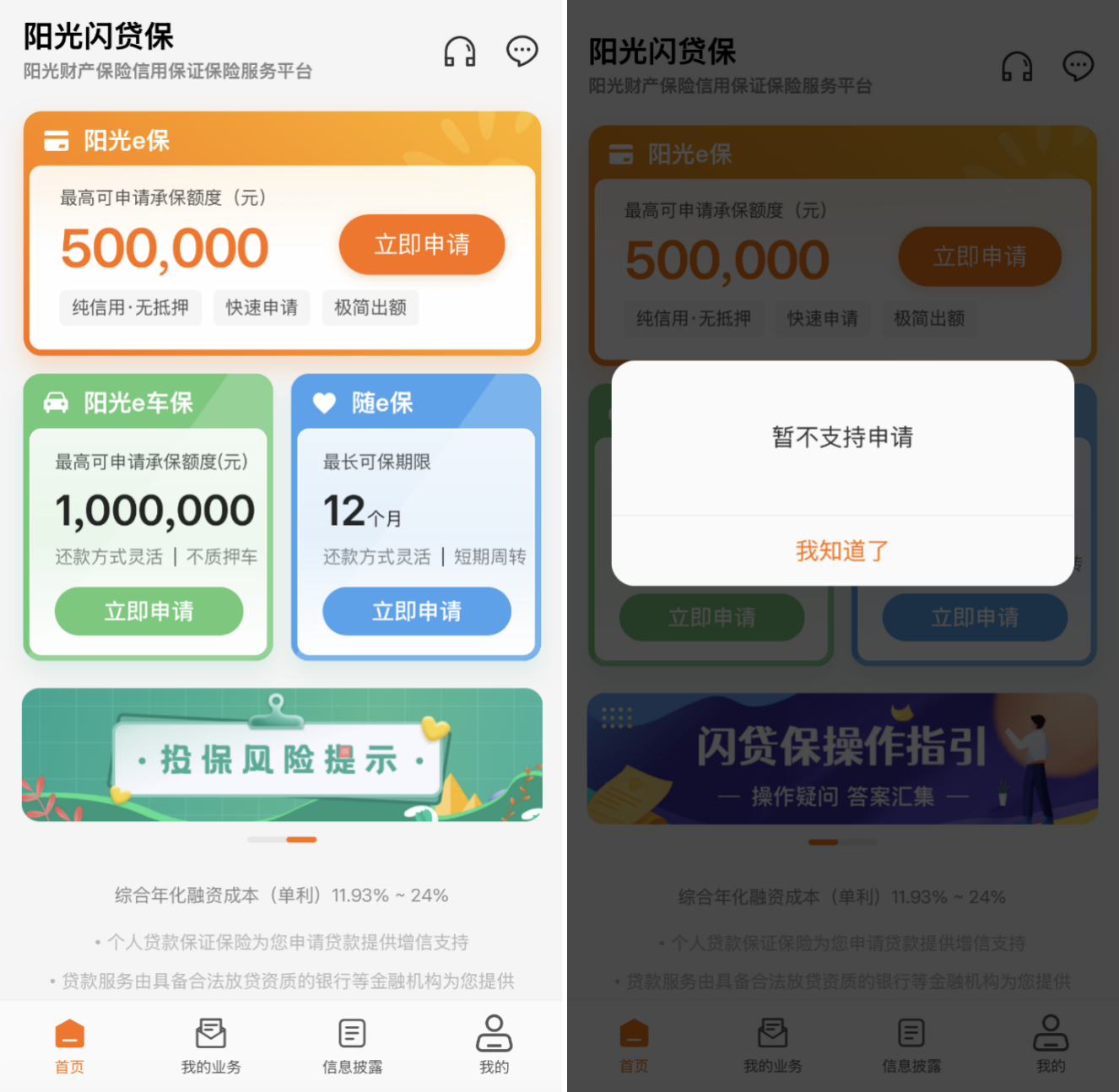
24%高息产品被叫停,两大平台业务关停退场
21世纪经济报道· 2026-01-25 12:52
Core Viewpoint - The recent regulatory changes in the small loan sector have led to significant disruptions in the credit guarantee insurance business, with major players like Dadi Insurance and Sunshine Insurance halting their financing guarantee services due to increased compliance pressures and risk management challenges [1][5][13]. Group 1: Regulatory Changes and Business Impact - The annualized interest rate cap for small loans has been set at 24%, leading to the cessation of products exceeding this rate [1][9]. - Dadi Insurance and Sunshine Insurance have announced the closure of their financing guarantee business, with Dadi stopping new business from the end of 2025 and Sunshine closing its related offline outlets and systems [1][4]. - The financing guarantee insurance business, which previously accounted for over 90% of the credit guarantee insurance market, is experiencing a significant contraction due to stricter regulations and the need for strategic focus [5][7][10]. Group 2: Industry Trends and Player Responses - Major players in the credit guarantee insurance sector, including Dadi and Sunshine, are not alone in their exit; other companies like Pacific Insurance have also withdrawn from this business segment [7][8]. - The industry has seen a clear trend of consolidation, with leading firms focusing on lower-risk insurance products such as health and auto insurance, while scaling back on high-risk financing guarantee services [8][12]. - The shift in focus is driven by the need to optimize resources and reduce capital occupation associated with high-risk financing guarantee insurance [8][14]. Group 3: Market Dynamics and Future Outlook - The financing guarantee insurance business is fundamentally linked to credit risk, which has been exacerbated by economic fluctuations and rising default rates among borrowers [8][14]. - The tightening of regulations is expected to reshape the credit landscape, leading to a potential consolidation of smaller players and a focus on high-quality borrowers [15][16]. - The overall impact of these regulatory changes is anticipated to lead to a more sustainable credit environment, aligning with the needs of the real economy [15].


2025融资性信保业务“踩刹车”,个人信保业务迎终章?
Sou Hu Cai Jing· 2026-01-13 06:19
Core Insights - The financing credit insurance industry in China is experiencing an unprecedented "exit wave" in 2025, with major players like Pacific Insurance and People’s Insurance exiting the market, while only the Ping An group remains through a transformation model [2][8] - This industry reshuffle marks the end of the era characterized by "insurance + lending," pushing the insurance sector towards compliance, refinement, and technological transformation [2][10] Industry Dynamics - The exit of Pacific Insurance at the beginning of 2025 was a significant move, as it was the first major player to completely withdraw from financing credit insurance, having previously established a benchmark in personal loan risk control [2][3] - Following Pacific Insurance, People’s Insurance also adopted a strategy of business contraction, focusing on traditional areas like trade credit insurance, reflecting a shift in risk appetite among large insurers [5][10] - By the end of 2025, both Dadi Insurance and Sunshine Insurance ceased their financing credit insurance operations, marking a collective retreat from the industry [7][8] Regulatory Environment - The tightening of regulatory policies has been a direct driver of the industry's retreat, with new regulations setting strict compliance lines for financing credit insurance, impacting profitability and operational viability [10][12] - Key regulations include the requirement for comprehensive financing costs to align with judicial protection limits and a mandate for new loans to have costs capped at four times the one-year LPR by 2027 [14][15] Business Model Transformation - The traditional financing credit insurance model, which relied on high premiums and interest rates, is becoming unsustainable due to regulatory pressures and rising operational costs [15][16] - The Ping An group has successfully transitioned to a financing guarantee model, which aligns better with regulatory expectations and reduces risk exposure through a shared risk mechanism involving banks and government [9][20] Future Outlook - The industry is expected to enter a phase of structural adjustment and high-quality development, with a focus on supporting small and micro enterprises, agricultural sectors, and technology innovation [19][22] - Financial technology is anticipated to play a crucial role in addressing risk and efficiency challenges, with the integration of big data, AI, and blockchain to enhance credit assessment and risk control [22]

大地保险、阳光财险停止新增融资性信保业务 个人信保业务落幕?
经济观察报· 2026-01-08 07:26
Core Viewpoint - The financing guarantee insurance business of China Dadi Insurance and Sunshine Property Insurance has been halted, indicating a significant shift in the insurance industry landscape as companies adapt to changing market conditions and regulatory pressures [2][11][15]. Group 1: Business Operations - Both China Dadi Insurance and Sunshine Property Insurance have ceased new applications for financing guarantee insurance, effective from the end of December 2025 [2][3]. - Employees in the financing guarantee insurance sector have received notifications regarding business shutdowns and personnel adjustments, with some signing N+1 compensation agreements [2][3][6]. - The cessation of these services is part of a broader trend, as Pacific Insurance had already stopped its financing guarantee insurance business earlier [3][14]. Group 2: Market Context - Financing guarantee insurance provides credit risk protection for financing contracts, enhancing the creditworthiness of borrowers and sharing default risks with lenders [5]. - The market for financing guarantee insurance has seen rapid growth since 2010, with revenues reaching 104.396 billion yuan in 2020, a 7.78-fold increase from 2010, and an average annual growth rate of 22.8% [13][14]. - However, the industry has faced challenges since 2019, including the impact of P2P lending failures and the COVID-19 pandemic, leading to a contraction in profits and growth rates [13][14]. Group 3: Regulatory Environment - Recent regulatory changes are pushing for a reduction in comprehensive financing costs, with new guidelines indicating that costs should not exceed four times the one-year Loan Prime Rate (LPR) [10]. - The financing guarantee insurance business is being affected by these regulatory pressures, as companies must adapt to lower profit margins and increased operational costs [9][10]. - The latest guidelines require that by the end of 2027, all new loans must have their comprehensive financing costs reduced to within four times the LPR, which currently translates to a maximum of 12% [10].
大地保险、阳光财险停止新增融资性信保业务 个人信保业务落幕?
Sou Hu Cai Jing· 2026-01-08 06:56
Core Viewpoint - Major Chinese insurance companies, including Dadi Insurance and Sunshine Property Insurance, have ceased their financing guarantee insurance business, indicating a significant shift in the industry landscape [2][3][12] Business Suspension - Financing guarantee insurance provides credit risk insurance for financing contracts, enhancing the creditworthiness of borrowers and sharing default risks with lenders [4] - Both Dadi Insurance and Sunshine Property Insurance have halted new applications for their financing guarantee insurance products, effective from late December 2025 [3][4] - The suspension of new business does not affect existing policies or repayment issues for current clients [3][4] Reasons for Suspension - The decision to stop financing guarantee insurance is attributed to policy adjustments and the need to reduce comprehensive financing costs, which have become unsustainable due to high operational costs and narrowing profit margins [7][8] - Recent regulations aim to lower the comprehensive financing costs for borrowers, which has impacted the viability of financing guarantee insurance products [7][8] - Dadi Insurance stated that the adjustment is part of a normal business decision to enhance operational efficiency and ensure sustainable development [8] Industry Context - The financing guarantee insurance sector has seen rapid growth since 2010, with a compound annual growth rate of 22.8%, but has faced challenges since 2019 due to external factors like P2P lending failures and the COVID-19 pandemic [9][10] - The overall income of the guarantee insurance industry showed signs of recovery in 2022, but the sector continues to face pressure from regulatory changes and market dynamics [10] - Other major insurers, including Pacific Insurance and People’s Insurance Company, have also stopped their financing guarantee insurance products, signaling a broader trend in the industry [11][12]

保费比利息还高!贷款捆绑高额保费,保险变身“糊涂账”?
Nan Fang Du Shi Bao· 2025-04-23 08:23
Core Viewpoint - The article highlights the issue of high insurance premiums bundled with loans from Sunshine Insurance's "Sunshine Flash Loan" product, leading to a significantly higher effective financing cost for borrowers than initially expected [2][4]. Group 1: Borrower Experiences - Borrowers like Li Hui and Zhang Li reported that the insurance premiums they were required to pay exceeded the interest on their loans, resulting in an effective annual financing cost of 18.32% for Li Hui, compared to the stated interest rate of 8% [2][6]. - Complaints on the Black Cat Complaint platform indicate that many borrowers were unaware of the high insurance fees and felt misled during the loan application process [2][4]. Group 2: Regulatory Context - Legal experts suggest that if financial institutions excessively separate interest rates and insurance fees, leading to costs exceeding the judicial protection limit for private lending, they may face regulatory scrutiny and penalties [3][5]. - The Financial Regulatory Bureau's recent notice emphasizes that banks must accurately disclose all fees associated with loans, ensuring that the total financing cost does not exceed the legal cap of 24% annual interest [3][8]. Group 3: Insurance Contract Issues - The insurance contracts associated with these loans do not clearly outline the benefits provided, leading to confusion among borrowers regarding what they are paying for [6][7]. - The lack of clarity in the insurance terms raises questions about whether the insurance companies fulfilled their obligation to inform borrowers about the costs involved [5][9]. Group 4: Consumer Awareness - The situation serves as a warning for consumers to be vigilant about their rights and to thoroughly read loan and insurance agreements, ensuring they understand all associated costs before signing [9].