
陕西柞水木耳

Search documents
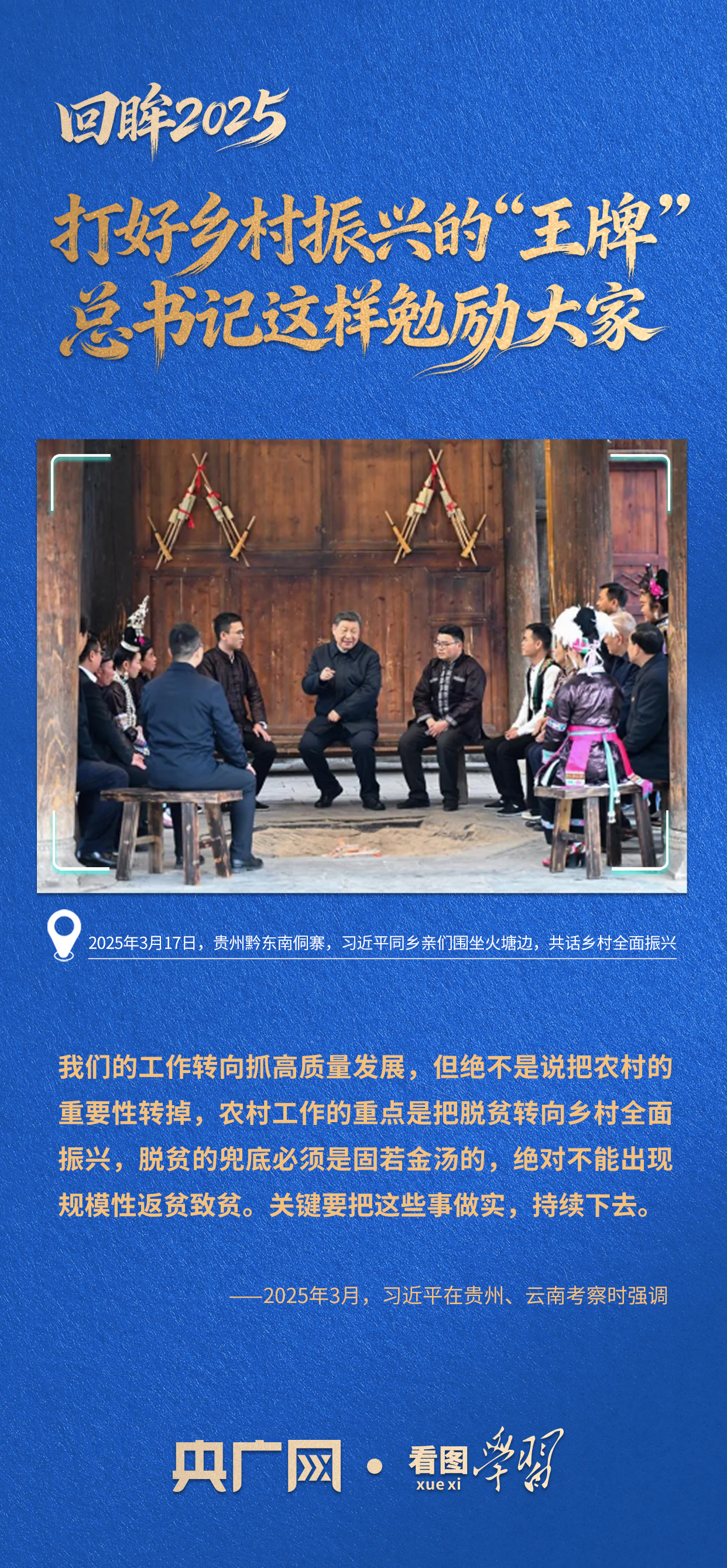
看图学习·回眸2025丨打好乡村振兴的“王牌” 总书记这样勉励大家
Yang Guang Wang· 2025-12-23 07:04
Core Viewpoint - The emphasis on developing rural characteristic industries is crucial for achieving comprehensive rural revitalization and ensuring the foundation of Chinese-style modernization [1][6]. Group 1: Rural Characteristic Industries - The importance of local specialties such as tea, medicinal herbs, coffee, and tropical fruits in Yunnan was highlighted as key assets for rural development [1]. - The need to cultivate and develop rural characteristic leading industries with lasting market competitiveness is essential for rural revitalization [1]. Group 2: Policy Directions and Initiatives - In various regions, the President has stressed the importance of new urbanization centered around county-level development, resource allocation, and agricultural modernization [3]. - The focus on enhancing agricultural industry chains and promoting urban-rural integration is vital for rural revitalization [3]. Group 3: Local Resource Utilization - The President has encouraged regions to leverage their unique resources and conditions for industrial transformation and upgrading, emphasizing the need for tailored approaches [6]. - Collaboration and coordination among different regions are necessary to promote comprehensive rural revitalization through industry chain development [6]. Group 4: Income and Welfare - The importance of finding ways for local communities to participate in the development of characteristic industries and ensuring fair sharing of benefits was emphasized [6]. - Establishing a unified monitoring and classification support mechanism for low-income rural populations is crucial to maintain a safety net for livelihoods [6].

兴农评|“文化赋值”让农产品潮起来
Nan Fang Nong Cun Bao· 2025-05-22 16:01
Core Viewpoint - The integration of cultural elements into agricultural products is enhancing their market appeal and driving economic growth in the agricultural sector [5][17][20]. Group 1: Cultural Integration - Cultural symbols are increasing the recognition of agricultural products, making them more appealing to consumers [6][7]. - Products like "Guangdong Sanbao" are leveraging local cultural symbols to attract customers, emphasizing the importance of cultural identity in marketing [8][9]. Group 2: Storytelling and Emotional Connection - The historical narratives associated with products, such as the story of Yingde black tea, are creating emotional connections with consumers, enhancing brand reputation [10][12]. - Telling compelling stories about agricultural products can significantly boost their market presence and consumer engagement [11][12]. Group 3: Value Addition through Cultural Creativity - Cultural creativity is extending the agricultural product value chain, as seen with Yunnan's tea farmers who have increased product value by 300% through cultural storytelling [13][14]. - The integration of cultural concepts, like "Qinling ecological aesthetics," is generating substantial tourism orders for products like Shaanxi's black fungus [14][15]. Group 4: Economic Transformation - The establishment of cultural zones at events like the Shenzhen Cultural Expo indicates a shift towards a model where cultural value is central to agricultural economics [17][18]. - This transformation reflects a broader trend in Chinese agriculture, moving from quantity-focused production to a model that emphasizes cultural significance and emotional resonance [18][19].

