陶片

Search documents
木兰县发现辽金古城
Xin Lang Cai Jing· 2025-12-26 19:02
Core Insights - The archaeological investigation in Mulan County has confirmed the discovery of an ancient city site from the Liao and Jin dynasties, significantly advancing the timeline of human activity in the region to approximately 7,000 years ago [1] Group 1: Archaeological Findings - The Mongol Mountain city site is located in the western mountainous area of Mulan County, featuring an inner city and outer defense layout [1] - The exploration has expanded the site area to 110,000 square meters, uncovering 115 ancient relics including house sites, kilns, and ash pits [1] - Artifacts primarily consist of pottery and porcelain fragments, with one pottery piece exhibiting characteristics of fishing and hunting culture, dated to around 7,000 years ago [1] Group 2: Technological Methods and Analysis - Carbon-14 dating techniques have confirmed that the main structure of the city site belongs to the Jin dynasty, with evidence of human activity from the mid-Qing period also discovered [1] - The project utilized low-altitude drone detection technology to clearly map the outline of the city site and the arrangement of house sites [1]
让“希腊人”讲述古希腊历史 汇聚希腊14家文博机构藏品 大展昨起免费开放
Jie Fang Ri Bao· 2025-07-10 01:47
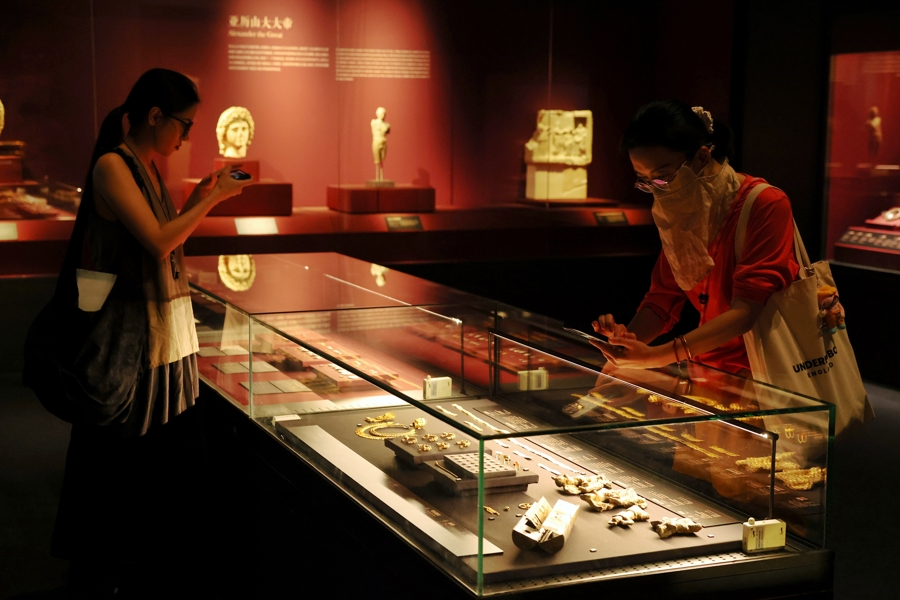
Core Viewpoint - The exhibition "Greeks: From Agamemnon to Alexander" showcases 270 precious artifacts from 14 Greek cultural institutions, providing a panoramic view of ancient Greek civilization through archaeological evidence. The exhibition is open to the public for free from July 8 to October 26 [3]. Group 1: Exhibition Overview - The exhibition features a variety of artifacts including gold, bronze, pottery, and sculptures, highlighting the richness of ancient Greek culture [3]. - A notable exhibit is the "Mask of Agamemnon," which, despite being a replica, draws significant attention and is recommended by the curator Anastasia Baraska [3]. - The exhibition is divided into six units representing different historical periods, emphasizing the human element throughout ancient Greek history [4]. Group 2: Historical Context and Artifacts - The exhibition covers six historical periods: Neolithic, Bronze Age, Homeric, Archaic, Classical, and Hellenistic, focusing on individual life stories that shaped European cultural foundations [4]. - A standout artifact is a gold crown from the time of King Philip II, used in various ceremonial occasions, showcasing the craftsmanship of ancient Greek artisans [4]. - Unique artifacts such as a marble lottery device and ostraca provide insights into the social systems of ancient Greece, including the practice of ostracism [5]. Group 3: Sports and Culture - The exhibition includes items related to the ancient Olympic Games, such as discus, oil vases, and sweat scrapers, reflecting the athletic spirit of ancient Greeks [5]. - Additional artifacts like the base of a victory monument and relief sculptures depict scenes from chariot races, further illustrating the cultural significance of sports in ancient Greek society [5].