陶碗

Search documents
土陶老手艺,这样焕发新生
Ren Min Ri Bao· 2025-12-10 22:30
Core Insights - The traditional pottery craft in Akto County, Xinjiang, is experiencing a revival through modernization and community support, transforming from a household necessity to a professional cooperative model [1] Group 1: Industry Transformation - The Akto County Milas Pottery Handicraft Cooperative has evolved from a small family workshop to a modern factory covering over 3,000 square meters, integrating production and product display [1] - The cooperative has adopted advanced technologies such as intelligent temperature-controlled kilns and electric mixing machines, significantly increasing production efficiency from 280 to 1,000 pottery bowls per day with improved quality [1] Group 2: Community and Economic Impact - The cooperative has created stable employment for over 30 villagers, contributing to local economic development [1] - Products are now sold in seven stores across Kashgar Ancient City and Yingjisha County, indicating a growing market presence and sales channels [1]
陕西发现一高等级北魏墓 墓葬“超规格”应与王朝衰微有关
Zhong Guo Xin Wen Wang· 2025-09-04 23:41
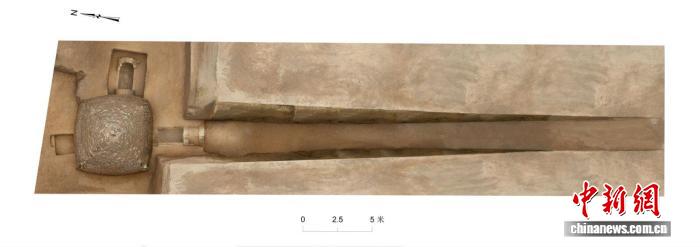
Core Viewpoint - The discovery of the high-grade Northern Wei tomb of Sun Dingren in Shaanxi reflects the declining social status and ceremonial standards of the Northern Wei dynasty during its later years [1][6]. Group 1: Tomb Characteristics - The tomb consists of a burial passage, sealed door, corridor, and main burial chamber, containing a total of 164 artifacts, including stone inscriptions, pottery figurines, pottery bowls, and pottery lamps [3][6]. - The tomb is well-preserved and features a high level of craftsmanship, indicating its significance in the context of Northern Wei burial practices [1][6]. Group 2: Historical Context - Sun Dingren, the tomb's occupant, was a governor of Binzhou and played a role in suppressing major uprisings during the late Northern Wei period, yet his burial honors do not align with the tomb's high specifications [3][6]. - The artifacts found in the tomb exhibit characteristics typical of the Western Wei period, suggesting significant changes in burial culture in the Guanzhong region during this transitional phase [6].