
陶俑

Search documents
金戈铁马 驰骋东西(上新了)
Ren Min Ri Bao· 2026-02-28 02:24
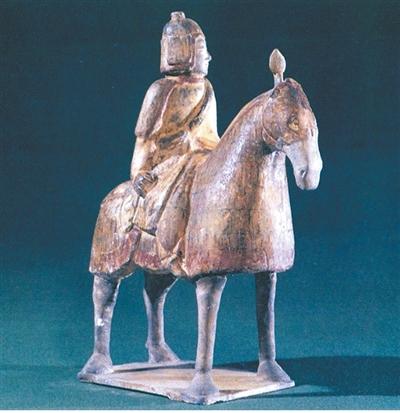
Core Insights - The new exhibition at the Chinese Archaeological Museum features 28 newly displayed ceramic figurines from the Northern Qi Dynasty, revealing insights into the royal tombs of the Eastern Wei and Northern Qi periods [2] Group 1: Archaeological Findings - The Bayang Wall Mural Tomb is the only confirmed imperial tomb among hundreds in the region, with excavation work conducted from 1987 to 1989 [2] - The tomb yielded significant artifacts, including 6 large saddles, 14 small horses, and 4 pack horses, indicating the use of horses for labor and transportation [2] - The emergence of domesticated horses in China dates back approximately 4,000 years, with evidence found in various archaeological sites [2] Group 2: Historical Context - During the pre-Qin period, horses served three main purposes: as burial and sacrificial items, as draft animals for carts, and for riding, particularly in warfare [3] - The importance of horses increased significantly from the Western Han Dynasty, with widespread ownership and use in various societal functions [3] Group 3: Military Significance - By around 600 BC, horseback riding became prevalent among Eurasian steppe peoples, leading to the development of mounted archery and a powerful military force [4] - The introduction of cavalry transformed warfare, with heavy cavalry units equipped with armor, as evidenced by the discovery of armored figurines in the Bayang Wall Mural Tomb [4] - The tomb is notable for its extensive wall murals and a large number of ceramic figurines, including over 200 cavalry figurines, reflecting the military organization of the Northern Qi Dynasty [5]

从新石器时代到北朝晚期 陕西六大考古发现串起中华文明“无字史书”
Yang Shi Wang· 2026-01-21 15:39
Core Insights - Recent archaeological discoveries in Shaanxi province highlight significant findings from six sites, showcasing the region's rich historical and cultural heritage spanning from the Neolithic era to the late Northern Dynasties [1] Group 1: Jiangjia Site - The Jiangjia site in Weinan revealed a large settlement from the Yangshao culture, featuring over 1,100 relics, including a unique ceramic human face sculpture that may represent cross-regional cultural exchanges [2][4] - Evidence of cultural integration is noted, with artifacts showing influences from the Yangtze River basin and other regions, indicating a vibrant cultural interaction during prehistoric times [6] Group 2: Luojiahe Site - The Luojiahe site in Xianyang uncovered a remarkable "granary" dating back 4,800 years, with 17 storage pits capable of holding approximately 300 tons of millet, reflecting advanced management practices [7][9] - The variety of stored grains and storage methods, along with a specialized cooking device, suggest a highly organized society focused on grain management, indicating social stratification [11][13] Group 3: Liangluping Site - The Liangluping site in Baoji, located at a crucial junction of the ancient Shu Road, yielded artifacts such as bronze helmets and copper tripods, suggesting its role as a cultural and economic corridor during the Warring States period [14][16] Group 4: Afang Palace Site - Recent findings at the Afang Palace site reveal that the palace's massive earthen foundation was built on marshy land, providing insights into ancient construction techniques and the scale of imperial projects [17] Group 5: Tongwan City Site - The Tongwan City site in Yulin showcased a unique interlocking rammed earth construction technique, enhancing the city's structural integrity, along with distinctive architectural materials from the "Daxia" period [18][20][22] Group 6: Northern Zhou Chengfu Tomb - The Chengfu tomb in Xi'an displayed a blend of Sogdian and Han burial customs, with luxurious craftsmanship that reflects the cultural fusion during the evolution of the Huaxia civilization [23][25] - The presence of ceramic figurines from the defeated Northern Qi dynasty in the tomb indicates significant cultural integration following the conquest [27][29]
文景之治:藏在西汉帝陵文物中的盛世图景
Jing Ji Guan Cha Bao· 2025-12-29 06:31
Core Insights - The article discusses the significance of the "Wen-Jing Era" during the Western Han Dynasty, highlighting its economic and cultural prosperity, which laid the foundation for future governance and military campaigns [2][3][12]. Group 1: Historical Context - The early Western Han period faced social turmoil and economic decline due to wars, leading to severe famine and suffering among the populace [1]. - The reigns of Emperor Wen and Emperor Jing marked a golden age in Chinese history, known as the "Wen-Jing Era," characterized by economic stability and cultural flourishing [2][3]. Group 2: Archaeological Findings - The exhibition "Wen-Jing Era: Scenes of Prosperity from the Depths of Imperial Tombs" showcases 184 sets of valuable artifacts from the tombs of Emperor Jing and Emperor Wen, including many items that are being displayed for the first time [4][10]. - The Han Yangling tomb complex, one of the best-preserved royal burial sites, reflects the burial customs and cultural practices of the Han Dynasty [6][7]. Group 3: Governance and Policies - The governance strategies during the Wen-Jing Era included reforms that emphasized benevolence, frugality, and a non-interventionist approach to military affairs, which contributed to national stability [12][16]. - The era saw the establishment of a more refined system of measurement and governance, which facilitated economic growth and social order [15][16]. Group 4: Cultural Achievements - The material culture of the Wen-Jing Era was marked by advancements in arts and crafts, as evidenced by the exquisite artifacts unearthed from the tombs, which reflect the aesthetic values of the time [21][22]. - The period also witnessed a rich variety of entertainment and cultural activities, indicating a vibrant social life among different classes [20][21].
陕西发现一高等级北魏墓 墓葬“超规格”应与王朝衰微有关
Zhong Guo Xin Wen Wang· 2025-09-04 23:41
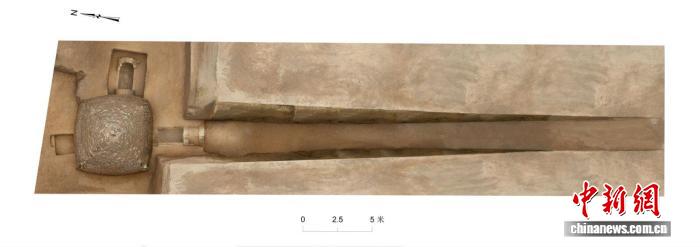
Core Viewpoint - The discovery of the high-grade Northern Wei tomb of Sun Dingren in Shaanxi reflects the declining social status and ceremonial standards of the Northern Wei dynasty during its later years [1][6]. Group 1: Tomb Characteristics - The tomb consists of a burial passage, sealed door, corridor, and main burial chamber, containing a total of 164 artifacts, including stone inscriptions, pottery figurines, pottery bowls, and pottery lamps [3][6]. - The tomb is well-preserved and features a high level of craftsmanship, indicating its significance in the context of Northern Wei burial practices [1][6]. Group 2: Historical Context - Sun Dingren, the tomb's occupant, was a governor of Binzhou and played a role in suppressing major uprisings during the late Northern Wei period, yet his burial honors do not align with the tomb's high specifications [3][6]. - The artifacts found in the tomb exhibit characteristics typical of the Western Wei period, suggesting significant changes in burial culture in the Guanzhong region during this transitional phase [6].
南唐二陵:千年前的历史悲歌|访古
Jing Ji Guan Cha Bao· 2025-06-27 00:26
Core Viewpoint - The article highlights the historical significance of the Nanjing Museum and the excavation of the Southern Tang Dynasty tombs, emphasizing the cultural and archaeological importance of these findings. Group 1: Historical Context - The Southern Tang Dynasty (937-975) was established by Li Biao in Jiangnan, lasting for 39 years with a peak population of approximately 5 million [3]. - The Southern Tang was not related to the Tang Dynasty, with its founder originally named Xu Zhigao, who later adopted the surname Li [3]. - The dynasty maintained a policy of peace and cultural development, attracting notable scholars and artists [4]. Group 2: Key Figures - Zeng Zhaoying, a pioneering female archaeologist, led the excavation of the Southern Tang tombs and made significant contributions to Chinese archaeology [2]. - Zeng faced numerous challenges and ultimately took her own life in 1964, leaving a lasting impact on the field [2]. Group 3: Archaeological Discoveries - The tombs of Li Biao (Qinling) and Li Jing (Shunling) were discovered, with significant artifacts including jade tablets and terracotta figurines [8][11]. - The Qinling tomb features elaborate structures and wall paintings, showcasing the artistic style of the Southern Tang [10]. - The Shunling tomb, while smaller, also reflects similar architectural styles and contains fewer artifacts [11]. Group 4: Cultural Significance - The artifacts from the Southern Tang tombs, including terracotta figurines of various characters and animals, illustrate the artistic trends of the period [11][12]. - The jade tablets found in the tombs serve as important historical documents, reflecting the mourning practices of the time [13][19]. Group 5: Legacy and Impact - The Southern Tang Dynasty's short reign was marked by political intrigue and cultural achievements, influencing subsequent Chinese history [15]. - The tragic stories of the last rulers, including Li Yu, highlight the personal and political turmoil of the era [22].