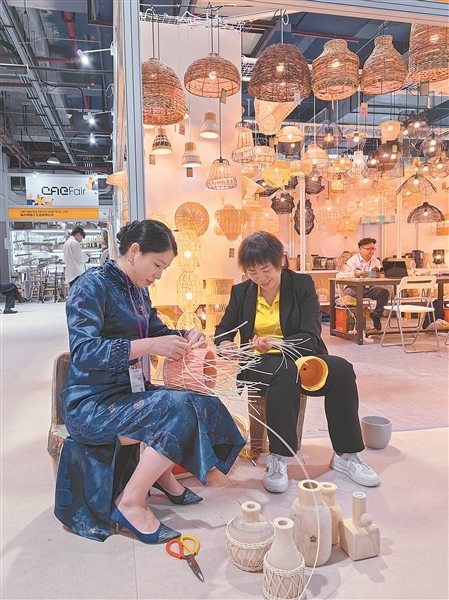
手工艺品制造

Search documents
新华视点|各地年俗百花齐放 匠心年味温暖神州
Xin Hua She· 2026-02-17 13:46
Group 1 - The article highlights various cultural activities and local traditions across different regions in China as the Spring Festival approaches, showcasing a blend of traditional customs and modern innovations [3][4][5][6][7][8] - In Shanxi Province, a cultural performance themed "Strengthening Foundations and Building Dreams" was held, featuring original programs that resonate with local life, alongside volunteer services such as free medical consultations and calligraphy [3] - In Henan Province, local artisans are innovating traditional clay sculpture techniques to create zodiac-themed products, which have gained market popularity and contributed to local economic growth [4] - Shandong's Zibo city is known for its ceramic craftsmanship, with local artisans creating zodiac-themed porcelain products that reflect high-quality production techniques and cultural significance [5] Group 2 - In Shaanxi Province, traditional New Year markets are reviving nostalgic childhood games and experiences, allowing visitors to engage in various interactive activities while purchasing festive goods [6][7] - The markets also feature themed performances and cultural displays, inviting both locals and tourists to celebrate the New Year with a sense of nostalgia and community [8]
(新春走基层)山西高平:花灯赶制忙 指尖传年味儿
Zhong Guo Xin Wen Wang· 2026-02-01 06:21
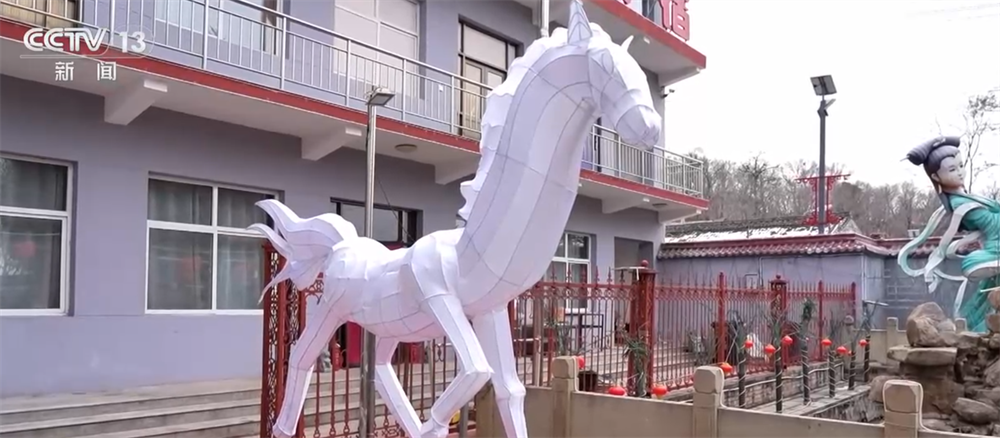
Group 1 - The article highlights the busy production of traditional lanterns in Gao Ping, Shanxi, as the Spring Festival approaches, emphasizing the cultural significance and craftsmanship involved in creating the "Jiu Lian Lanterns" [1][2] - Three artisans in Beiyang Village are meticulously crafting the lanterns, focusing on the intricate details such as the shape, decoration, and lighting, which contribute to the festive atmosphere [1] - The Yan Emperor Palace Lantern Factory, established in 2018, combines traditional techniques with modern technology to create unique lanterns that reflect local culture, with a focus on smaller, aesthetically pleasing designs [2] Group 2 - The factory has successfully completed over 3,000 lanterns since receiving its first order in November, indicating a strong demand for these culturally significant products [3] - The factory's owner, Pang Guoliang, is committed to promoting local employment by involving villagers, including the elderly and disabled, in the lantern-making process while also developing an online platform to expand market reach [2][3] - The lanterns produced are themed around local culture and traditions, such as the "Year of the Horse" lanterns, which symbolize good fortune and success, showcasing the integration of cultural elements into the products [2]
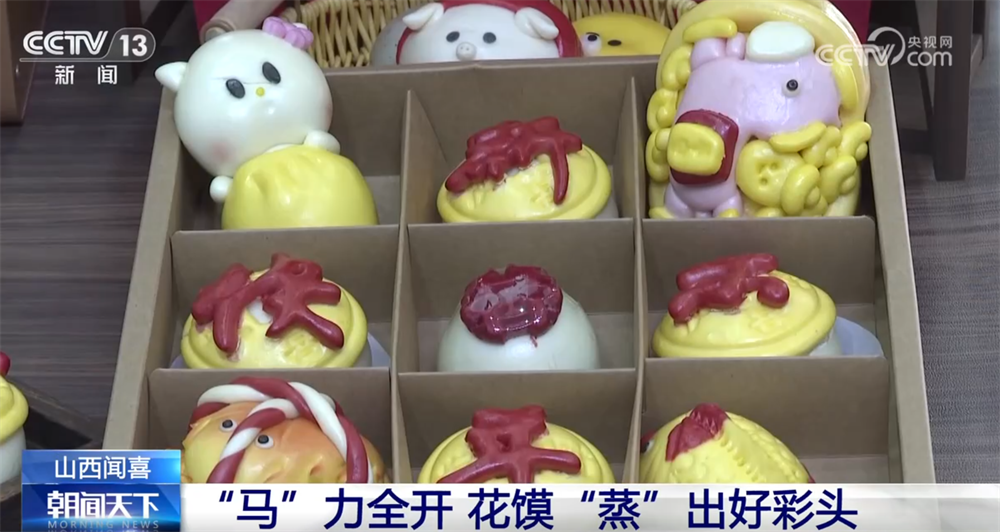
马元素年货马不停蹄“上新”拉满年味 “老手艺+非遗技艺”马力全开走俏市场
Yang Shi Wang· 2026-01-29 04:40
Group 1 - The article highlights the increasing popularity of zodiac-themed products, particularly those featuring the horse element, as the Lunar New Year approaches [1][7][12] - In Wuxi County, a workshop is producing flower buns with horse designs, reflecting traditional craftsmanship and cultural significance [4][6] - In Linquan County, Anhui, traditional gourd pyrography is gaining traction, with horse-themed artworks becoming highly sought after, leading to a backlog of 300,000 orders [9][11] Group 2 - In Xi'an, the New Year market is bustling with horse-themed goods, including couplets and decorations, which are prominently displayed to attract consumers [12][15] - The Shaanxi province plans to organize over 150 promotional activities across various sectors to enhance consumer engagement during the festive season [17] - In Pingtang County, Guizhou, artisans are creating embroidered products featuring horse motifs, blending traditional techniques with festive themes, which are well-received in the market [18][21][22]

节日消费市场“热”力十足、文化味儿浓 “菜篮子”“果盘子”供应丰富稳定
Yang Shi Wang· 2025-12-24 12:33
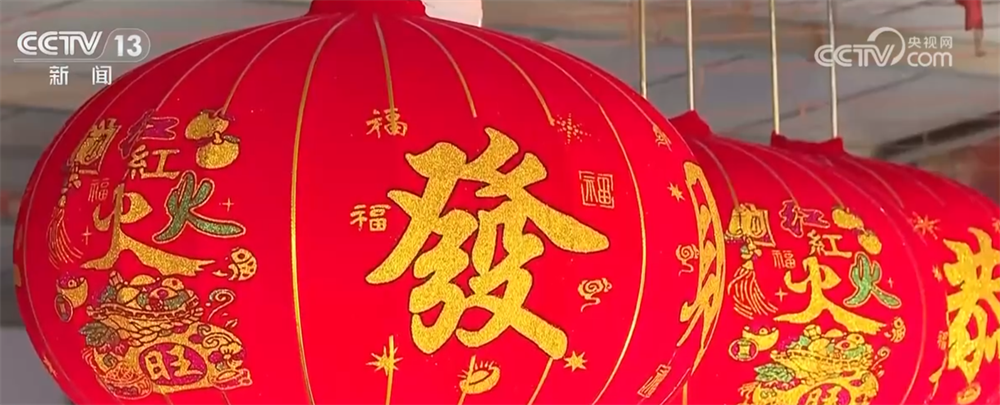
Group 1: Lantern Production in Hebei - The production of traditional palace lanterns in Tuntou Village, Shijiazhuang, Hebei, is entering a peak season as the New Year approaches, with local villagers working hard to meet market demand [1][5] - Each traditional palace lantern undergoes 56 manual processes, maintaining the core craftsmanship despite some structural changes to steel and iron materials for durability [3] - Tuntou Village is known as "China's First Lantern Village," producing 80% of the country's palace lanterns, with daily shipments reaching hundreds of thousands during the peak season [5] Group 2: Innovation in Lantern Designs - Tuntou Village is innovating by combining traditional bamboo weaving with oil paper, creating elegant retro designs, while a popular color-changing lantern that connects via Bluetooth is gaining traction in overseas markets [7] Group 3: Cultural Significance of Lanterns - Palace lanterns symbolize cultural heritage and hope, illuminating family reunions and conveying the essence of Chinese New Year, contributing to rural revitalization and common prosperity [10] Group 4: Non-Heritage Market in Guizhou - The "Xiu Li Tao" non-heritage market in Kaili, Guizhou, features over 700 vendors and has attracted more tourists, enhancing local cultural experiences [11][14] - The market has welcomed over 1.2 million visitors in two years, generating a tourism revenue of 460 million yuan [21] Group 5: Fruit and Vegetable Market in Guangzhou - The Jiangnan Fruit and Vegetable Wholesale Market in Guangzhou handles over 15,000 tons of fruits and vegetables daily, with a total annual transaction volume exceeding 5 million tons [22][24] - The market is a key distribution center for over half of the fruits in Guangdong and nearly half of the imported fruits in China, with a notable increase in imported fruit transactions recently [24][27] Group 6: Agricultural Development in Shanxi - In Shuo Zhou, Shanxi, modern agricultural techniques have enabled year-round cultivation of strawberries and vegetables in high-standard greenhouses, attracting many visitors [30][32] - The greenhouse farming area has expanded to over 270 acres, transforming from simple cultivation to a comprehensive rural tourism model [32]
兼具时代活力与文化韵味!山西高平传统手工花灯迎来生产旺季
Sou Hu Cai Jing· 2025-12-24 08:24
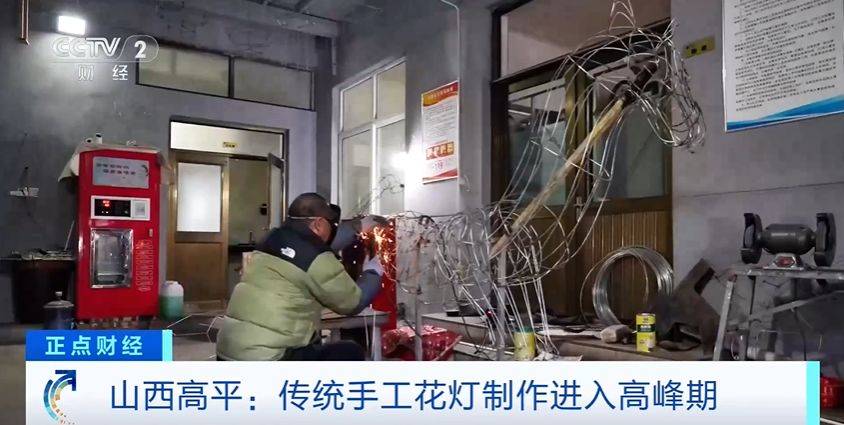
Group 1 - The production of traditional lanterns in Shanxi Gaoping is in full swing as the New Year approaches, with workers intensively preparing various lanterns to meet market demand [1][3] - The lanterns are crafted using traditional handmade techniques, with each step, including frame making, welding, pasting, and decoration, completed by skilled artisans [3] - The local industry has incorporated elements such as paper-cutting, collage, and painting into lantern design, enriching the styles, colors, and cultural connotations of the lanterns [5] Group 2 - The company has developed over 50 different styles of lanterns, with handmade production peaking since December [7]
马元素受青睐助力节日消费市场“热起来” “花灯+文创”勾勒新年新图景
Yang Shi Wang· 2025-12-24 08:18
Group 1 - The production of traditional non-heritage flower lanterns is in full swing as the New Year approaches, with artisans in Gaoping City, Shanxi Province, creating various lanterns to celebrate the festive season [1][4] - The flower lanterns are handcrafted, with each step from frame construction to decoration being done manually by skilled artisans, resulting in vibrant and culturally rich designs [4] - Local artisans have diversified the styles of flower lanterns based on market demand, introducing themes such as ancient architecture, opera, and cartoons, enhancing the cultural vitality of non-heritage flower lanterns [7] Group 2 - In Wuxi County, Shanxi Province, merchants are capitalizing on the popularity of horse-themed products, which are part of the provincial intangible cultural heritage, attracting many consumers [8] - The handmade horse-themed cultural products come in various designs, including cartoon horses and traditional Tang horses, with over thirty stores established across Shanxi, employing more than 600 artisans [13] - The products range from decorative items to gifts, all meticulously crafted by hand, showcasing the region's rich cultural heritage [11][13] Group 3 - In She County, Anhui Province, artisans in the ancient village of Changxi are busy crafting traditional flower lanterns to welcome the New Year, using bamboo and cloth to create intricate designs [14][17] - The lantern-making process is complex, especially for the zodiac lanterns, which require careful adjustments to ensure lively and dynamic displays during celebrations [14][17] - The tradition of making and dancing with flower lanterns is deeply rooted in the community, symbolizing good fortune and prosperity for the New Year [19]
【四中全会精神在基层】“爱好”生金 “手艺”兴业
Xin Lang Cai Jing· 2025-12-21 02:12
Group 1 - The article highlights the successful integration of traditional craftsmanship and modern industry in Zhuanglang County, showcasing the growth of the fishing tackle and lantern industries [1][2][3] - The墨方渔具 company has established a complete industrial chain for hand-tied fishing lines, achieving an annual revenue of over 16 million yuan, and aims to enhance its offerings through international-standard fishing competitions [2][3] - The lantern industry, led by宋小霞, has transformed local craftsmanship into a thriving business, producing 600,000 lanterns in 2024 with a projected output value of 30 million yuan, creating over a thousand jobs [3] Group 2 - The fishing line industry has benefited from local fishing competitions, which have increased visibility and sales, connecting communities and promoting tourism [2] - The lantern production has adopted a flexible work system, allowing local villagers to earn income while maintaining their agricultural activities, thus contributing to local economic stability [3] - Both industries emphasize the importance of preserving traditional techniques while innovating product designs to appeal to broader markets, including major cities and trade exhibitions [3]
以文兴业促发展
Xin Lang Cai Jing· 2025-12-20 20:03
Group 1: Cultural and Technological Integration - The performance "Night Painting Langya" combines technology and history, showcasing the cultural heritage of Langya through digital means, including laser water screens and synchronized performances [1] - The project "Dazzling Yihe" integrates historical figures like Wang Xizhi with modern urban landmarks, using large-scale light displays to create a contemporary cultural experience [1] - These initiatives form the "Water Rhythm Langya" cultural tourism complex, which serves as a core engine for the development of the cultural tourism sector in the main urban area [1] Group 2: Promotion of Traditional Crafts - The "Shandong Handmade · Produced in Linyi" initiative aims to systematically promote the protection and revitalization of intangible cultural heritage, with 297 non-heritage workshops established and 60 artisans recognized [2] - Linyi County has become a major hub for willow weaving, accounting for over 25% of the national export volume of willow products [2] - The popularity of the TV series "Life of All Things" has significantly boosted tourism in Yinan County, leading to a surge in visitors seeking to explore filming locations [2] Group 3: Innovative Cultural Experiences - The integration of film and tourism has revitalized the region, with immersive performances and interactive experiences attracting over 2 million visitors [2] - The use of technology in cultural presentations, such as "immersive small courtyards" and "village theaters," has transformed static exhibitions into dynamic participatory events [2]
土陶老手艺,这样焕发新生
Ren Min Ri Bao· 2025-12-10 22:30
Core Insights - The traditional pottery craft in Akto County, Xinjiang, is experiencing a revival through modernization and community support, transforming from a household necessity to a professional cooperative model [1] Group 1: Industry Transformation - The Akto County Milas Pottery Handicraft Cooperative has evolved from a small family workshop to a modern factory covering over 3,000 square meters, integrating production and product display [1] - The cooperative has adopted advanced technologies such as intelligent temperature-controlled kilns and electric mixing machines, significantly increasing production efficiency from 280 to 1,000 pottery bowls per day with improved quality [1] Group 2: Community and Economic Impact - The cooperative has created stable employment for over 30 villagers, contributing to local economic development [1] - Products are now sold in seven stores across Kashgar Ancient City and Yingjisha County, indicating a growing market presence and sales channels [1]
广西烟火 | 指间芒竹编乾坤
Guang Xi Ri Bao· 2025-12-10 03:11
Core Insights - The article highlights the significance of the traditional bamboo weaving craft in Bo Bai County, which has evolved into a major industry with an annual output value exceeding 4 billion yuan, employing over 200,000 people [1][5]. Industry Overview - Bo Bai bamboo weaving craftsmanship dates back to the Song Dynasty and was recognized as a representative intangible cultural heritage project in 2014 [1]. - The industry has diversified its materials, now utilizing over 20 types including bamboo, wood, and various imported rattan, enhancing the color palette and design possibilities [2]. Company Development - Huang Lianjiang, a key figure in the industry, transitioned from a regular artisan to a business founder, emphasizing the importance of mastering various weaving techniques to create competitive products [4]. - The company has expanded its operations internationally, with products being exported to over 60 countries and regions, including a significant order from the luxury brand Dior worth 2 million yuan [4]. Cultural Significance - The bamboo weaving craft is not just a livelihood but a means of cultural transmission, connecting traditional techniques with modern aesthetics, and fostering a sense of belonging among the younger generation involved in the industry [6].