青岚小筑

Search documents
家居旧改市场潜力大 政策需求共振激活行业新增长
Bei Jing Shang Bao· 2026-01-26 14:50
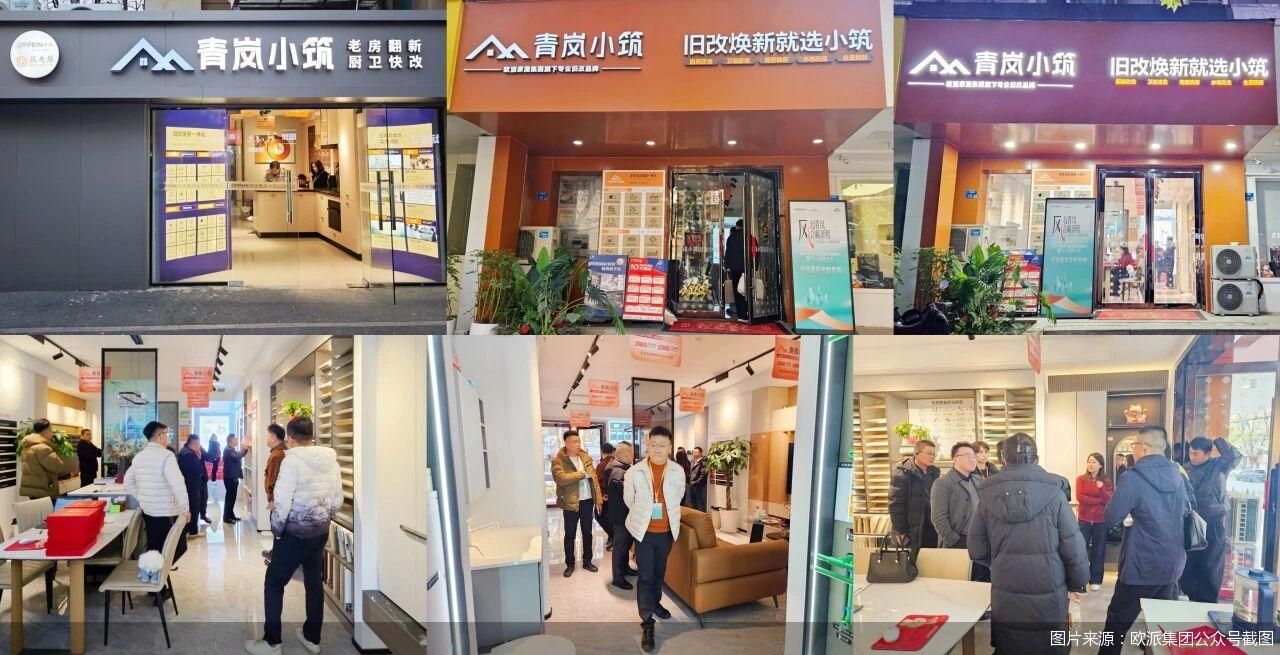
Core Insights - The current stock housing market is driving industry development, with policies like "old-for-new" and "good housing" continuously enhancing the market, leading to a trillion-level dividend in the old renovation market, which has become the core growth engine of the industry [1] - The old renovation market has entered a new stage of scaled development, with long-term policy and demand dividends expected to be released [1][7] - Companies with supply chain integration, standardized services, and localized operational capabilities will have advantages in the old renovation market [1] Company Developments - Oppein Group has launched a new brand "Qinglan Xiaozhu" to enter the old renovation market, focusing on high-frequency renovation categories such as kitchens and bathrooms, providing one-stop professional renovation services [2] - Qinglan Xiaozhu plans to implement a "Hundred Days, Hundred Stores" initiative by the end of 2025, aiming to establish over 100 stores in more than 100 cities within three months [2] - Other companies like Jindian Home and Zhibang Home are also entering the old renovation market with community-focused service models and integrated home solutions [4] Market Trends - The demand for improved living quality is shifting from "housing for all" to "quality housing," prompting a change in the home furnishing industry's development model towards quality enhancement [5] - The home furnishing industry is projected to grow at a compound annual growth rate of approximately 2.8%, reaching a market size of 5.17 trillion yuan by 2028 [5] - The old renovation market is driven by both demographic changes and policy guidance, with significant growth expected from the renovation needs of over 200 million existing homes [5] Policy Impact - Recent policies have provided substantial growth opportunities for the home furnishing industry, with the government emphasizing the need for urban renewal and the improvement of old residential areas [6] - The Ministry of Housing and Urban-Rural Development reported that from 2019 to 2024, 280,000 old residential areas have been renovated, benefiting over 48 million households [6] Challenges and Solutions - The old renovation market faces challenges such as complex project requirements, high costs, and difficulties in customer acquisition due to consumer concerns about inconvenience and costs [8] - Industry organizations are working on standardizing service contracts and pricing guidelines to provide a reference for service standards and commercial contracts [8] - The market is expected to evolve towards diversified, refined, and digital development, with segments like localized renovation, elderly-friendly modifications, and smart renovations experiencing rapid growth [8] Strategic Recommendations - Companies should shift from a traffic-oriented mindset to a user-centric approach, focusing on community engagement and trust-building for precise customer acquisition [9] - There is a need to transition from product sales to scenario-based service offerings to enhance service value and increase profit margins [9] - Collaboration within the industry and with policies is essential for moving from a fragmented market to a scaled, high-quality development [9]