韩式泡菜味王饺子

Search documents
“零添加”食品四大乱象调查:多款产品标签暗藏“雷区”
Bei Ke Cai Jing· 2025-03-27 08:20
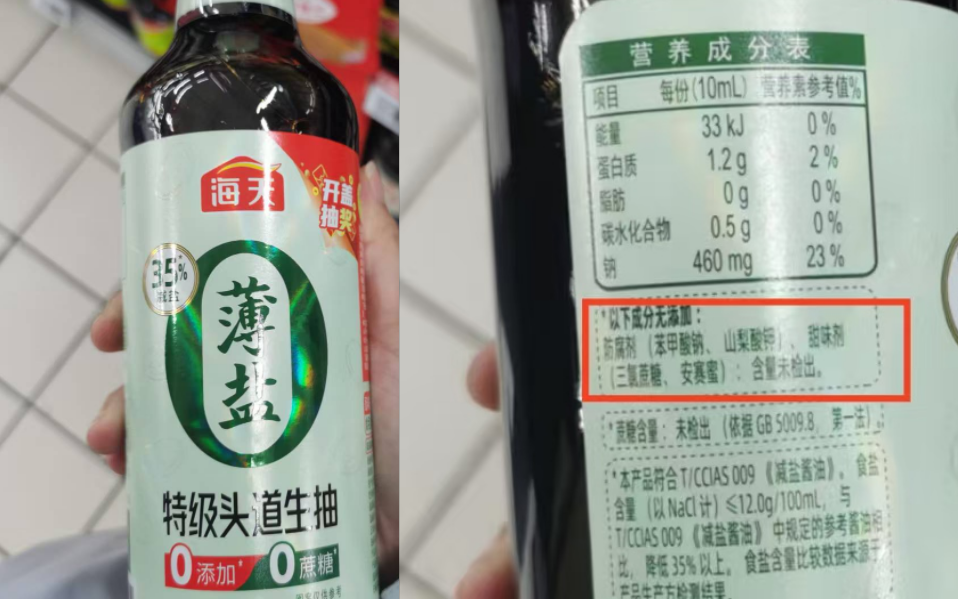
Core Viewpoint - The article highlights the misleading nature of "zero additive" and "zero sugar" claims in food products, revealing that many items labeled as such still contain various additives or sugars that can mislead consumers about their health benefits [1][2][3]. Group 1: Misleading Claims - Many food products use "zero additive" claims to attract consumers, but this does not necessarily mean they are free from all additives [2][3]. - Examples include products that claim "no added sugar" while containing other sugars with higher glycemic indices, such as maltose and glucose [7][11]. - The new food labeling standards prohibit the use of terms like "zero additive" to prevent consumer deception [18]. Group 2: Specific Product Examples - A juice drink claimed "no added sugar," but the product still contained natural sugars from the juice itself, misleading consumers [2]. - Various brands, such as "乐纯" and "必品阁," use "zero additive" claims that refer only to specific additives not detected, rather than a complete absence of additives [3][12]. - The labeling of products like "海天" soy sauce and "亨氏" ketchup as "zero additive" is similarly misleading, as they refer to specific ingredients not being present rather than the absence of all additives [3][4]. Group 3: Regulatory Changes - The implementation of the revised "Food Safety National Standard for Prepackaged Food Labels" (GB 7718-2025) aims to eliminate misleading claims about additives in food products [1][18]. - The new regulations clarify that terms like "zero" or "no" cannot be used for ingredients that are not allowed by law, thus addressing the issue of misleading labeling [18][27]. Group 4: Consumer Awareness - Consumers are often misled by the marketing of "zero" products, which can imply a healthier choice, while the actual content may not differ significantly from regular products [6][13]. - The article emphasizes the importance of understanding that "zero" claims do not equate to a complete absence of sugars or additives, as many foods naturally contain these components [11][13].