飞鹤乐高高儿童奶粉

Search documents
人均1米9?“增高”奶粉收割家长
Zhong Guo Xin Wen Wang· 2025-11-22 09:12
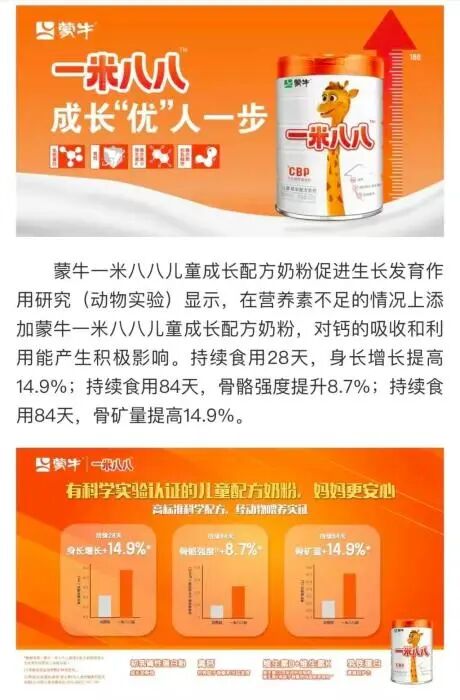
Core Viewpoint - The article highlights the controversial marketing practices of children's milk powder brands in China, particularly focusing on claims related to height growth, which are often misleading and lack scientific backing [1][2][17]. Group 1: Marketing Practices - Several brands, including Mengniu and Yipin, are promoting children's milk powder with claims such as "monthly height increase of 2 cm" and "support for tall growth," which are seen as exploiting parental height anxiety [1][7][13]. - Mengniu's "1.88m" children's milk powder has been accused of misrepresenting research data in its promotional materials, leading to public scrutiny [2][3]. - Other brands like Qigao and Original Gold also use similar height-related marketing strategies, with claims of significant height increases based on questionable research [10][11][13]. Group 2: Scientific Backing and Regulatory Concerns - The research cited by Mengniu regarding height growth was found to be misquoted, with the original report denying the claims made in the marketing [2][3][15]. - The marketing claims often reference ingredients like colostrum alkaline protein (CBP), but the scientific basis for these claims is weak, with many studies being based on animal experiments rather than human trials [15][18]. - Legal experts suggest that these marketing practices may violate multiple laws, including the Food Safety Law and Advertising Law, as they imply health benefits that are not substantiated [16][18]. Group 3: Industry Dynamics - The children's milk powder market is experiencing a surge, with brands capitalizing on the high-profit margins associated with height-related claims, often pricing products significantly higher than regular milk powder [17][18]. - The market for children's milk powder is projected to reach 50 billion yuan, prompting many brands to enter this segment and compete on height-related marketing [17][18]. - Analysts emphasize the need for stricter regulations and standards for children's milk powder to ensure that marketing claims are scientifically validated and not misleading [18].