马车

Search documents
远去的马车
Xin Lang Cai Jing· 2026-02-18 21:22
Group 1 - The narrative revolves around the relationship between the narrator's uncle and his horse, highlighting the bond and care he has for the animal, which is essential for their livelihood [1][2] - The story illustrates a moment of danger when a wolf appears, showcasing the uncle's bravery and the trust between him and the horse as they navigate through the threat [1][2] - The uncle's dedication to his horse is emphasized through his daily routines, including feeding and caring for the horse, which reflects his character and work ethic [1][2] Group 2 - The loss of the uncle's new cotton robe symbolizes the sacrifices made in daily life, as well as the emotional weight of losing something valuable [2] - The uncle's dental issues serve as a metaphor for the passage of time and the physical toll of hard work, linking his health to his experiences with the horse [2][3] - The uncle's decline in health and memory as he ages reflects the inevitable changes that come with time, evoking a sense of nostalgia for the past [3]
车马遗迹里的文明印记
Xin Lang Cai Jing· 2026-02-16 05:42
Core Viewpoint - The article highlights the significance of archaeological discoveries related to ancient chariots and horses in China, particularly at the Yin Ruins and the Eastern Zhou royal city site, showcasing the technological advancements and cultural importance of these artifacts in ancient Chinese civilization [1][4]. Group 1: Archaeological Discoveries - The Yin Ruins, a significant archaeological site, has yielded over a hundred chariots, reflecting the advanced bronze casting techniques of the Shang Dynasty [2][3]. - The chariot remains at the Yin Ruins exhibit a complex structure and were used for various purposes, including transportation, military, and ritual activities [3][4]. - The discovery of the "Heavenly Son's Six" chariot pit in Luoyang provides tangible evidence of the hierarchical structure in ancient Chinese society, as documented in historical texts [4]. Group 2: Cultural Significance - Chariots served not only as transportation and military equipment but also as symbols of social status and important elements of ritual practices in ancient China [4][5]. - The evolution of the horse's role in Chinese civilization reflects broader cultural changes, illustrating the integration of practical utility and symbolic meaning over time [3][5]. - The article emphasizes the enduring legacy of horses in Chinese culture, symbolizing perseverance and progress, which is deeply ingrained in the national ethos [5].
马车骑兵与人类文明
Xin Lang Cai Jing· 2026-02-15 06:20
Group 1 - The horse has been a significant contributor to human civilization since the late Stone Age, serving as a vital force in transportation and military from the 5th century BC to the 17th century [1][3] - The relationship between horses and humans is deeply embedded in cultural symbolism and practical life, showcasing a blend of cultural heritage and evolving roles over time [3] - Horses are recognized for their qualities such as gentleness, bravery, loyalty, and endurance, making them beloved companions and symbols of strength in various cultures [3] Group 2 - In ancient times, horses played a crucial role in agriculture, transportation, and warfare, earning their place as the foremost among livestock [3][4] - The use of horse-drawn chariots was significant in military operations during the Western Zhou period, highlighting the horse's importance in warfare [3] - The development of cavalry tactics during the Warring States period, particularly by Zhao Wuling Wang, demonstrates the strategic military value of horses [4][5] Group 3 - Throughout history, horses have been integral to warfare, with their roles evolving from primary cavalry in ancient times to logistical support in World Wars I and II [5][6] - Horses were extensively used for transportation of goods and personnel during the World Wars, with significant numbers being requisitioned for military purposes [6] - The cultural significance of horses extends to sports, with equestrian events being prominent since the Spring and Autumn period, and horse racing gaining popularity during the Han Dynasty [6][7] Group 4 - The invention of the horse-drawn carriage dates back to the Yellow Emperor era, with archaeological findings supporting the early use of horse-drawn vehicles [7][9] - The development of two-wheeled chariots during the late Shang Dynasty improved speed and suitability for long-distance travel, marking advancements in transportation technology [9][10] - By the Han Dynasty, the variety of horse-drawn vehicles increased, transitioning from military use to civilian applications, and remained significant in urban transportation until the 19th century [10]

今天我们这样纪念抗战
He Nan Ri Bao· 2025-08-14 23:24
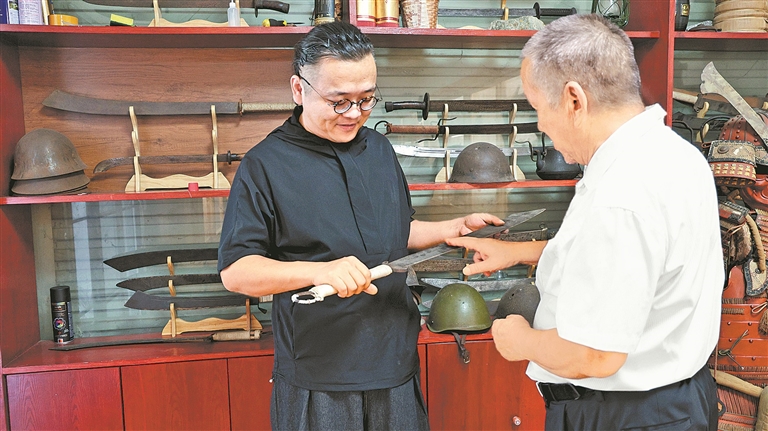
Core Viewpoint - This year marks the 80th anniversary of the victory in the Chinese People's Anti-Japanese War and the World Anti-Fascist War, commemorating the historical significance and the stories of individuals preserving this history through various means [1]. Group 1: Memorialization Efforts - Li Zhaoguo, a retired soldier, has spent over 10 years and raised more than 4 million yuan to establish a personal Anti-Japanese War museum, showcasing over 2,000 artifacts as evidence of Japanese war crimes [5][6]. - The museum has received over 26,000 visitors, including descendants of survivors from the Nanjing Massacre, and serves as a patriotic education base for local schools [7]. - Yeng Fengquan, another museum curator, has collected over 20,000 artifacts related to the Anti-Japanese War, emphasizing the importance of preserving these items for future generations [8][9]. Group 2: Personal Stories and Contributions - Hua Zhongqiang, a descendant of anti-Japanese soldiers, has dedicated himself to documenting local anti-Japanese stories, resulting in the publication of a book that captures the essence of the West Gorge battle [13][14]. - Li Donghai, the curator of the Revival Museum, has amassed over 60,000 artifacts, including rare historical documents, and has transformed the museum into a well-known patriotic education site, attracting over 200,000 visitors [16][19]. - The efforts of these individuals highlight the ongoing commitment to remembering and educating future generations about the sacrifices made during the war [11][19].