骑骆驼

Search documents
大漠深处访牧民新居
Ren Min Ri Bao Hai Wai Ban· 2025-12-05 22:03
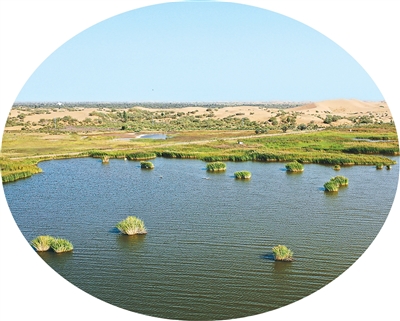
Core Viewpoint - The transformation of the Dautu Village in the Kubuqi Desert reflects the success of ecological restoration efforts, leading to improved living conditions and the development of a thriving tourism industry [2][3][4]. Group 1: Ecological Restoration and Economic Development - The Kubuqi Desert has seen over 6,000 square kilometers of land restored, achieving a governance rate of 40%, with a goal of complete restoration by 2030 [3]. - The local government initiated an ecological migration project in 2006, relocating 36 households to new villages with modern amenities, significantly improving their quality of life [3][4]. - The tourism industry has flourished, with local residents developing various attractions such as camel rides and desert off-roading, generating substantial income [4][5]. Group 2: Community Engagement and Entrepreneurship - Local residents have formed a tourism company, with 28 villagers investing in camel and horse teams, enhancing the tourism experience [5]. - Successful entrepreneurs like Mengkeda and Srenbabu have established businesses that attract numerous tourists, with annual incomes exceeding 300,000 yuan and 150,000 yuan respectively [4][5]. - The integration of tourism with local culture and ecology has created a sustainable economic model, shifting from traditional pastoralism to eco-friendly tourism [5].

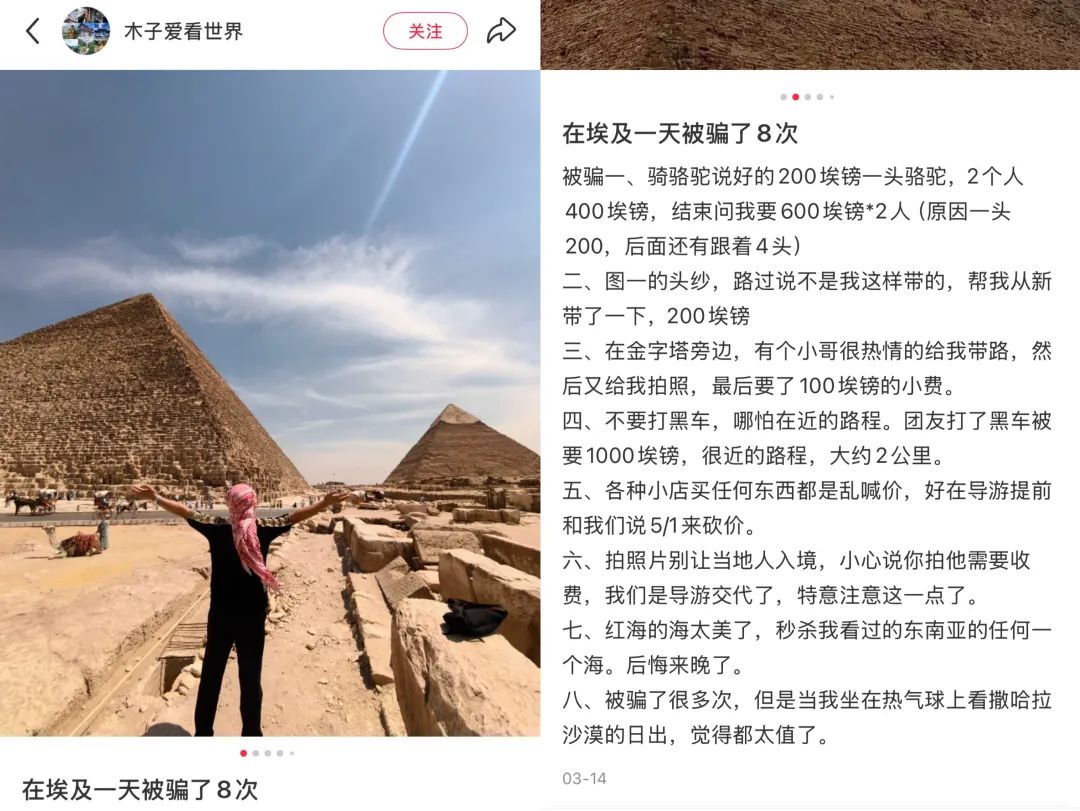
第一批去埃及旅游的年轻人, 已经被骗八百回了
3 6 Ke· 2025-05-28 11:59
Core Insights - The article highlights the rising trend of young travelers visiting Egypt, often encountering various scams during their trips, which have become a common theme shared on social media platforms like Xiaohongshu and Douyin [3][4][13] - Despite the scams, Egypt is perceived as a cost-effective travel destination, attracting a significant number of tourists, particularly from China, due to its rich cultural heritage and affordable prices [14][30] Group 1: Travel Experiences and Scams - Young travelers in Egypt often face scams related to transportation, accommodation, and popular activities like camel rides and hot air ballooning, leading to inflated prices and unexpected charges [8][10][13] - Social media influencers document their experiences, sharing tips on how to avoid scams, such as verifying prices before accepting services and being cautious with local vendors [11][13] - The phenomenon of "getting scammed" has become a viral topic, with many users sharing their stories and advice, contributing to a growing narrative around travel in Egypt [4][6][13] Group 2: Economic Context and Tourism Growth - Egypt's economy has faced challenges, including a significant depreciation of the Egyptian pound, which has increased the cost of living for locals and made tourism more lucrative [13][14] - The Egyptian tourism sector is projected to attract over 150 million visitors in 2024, with Chinese tourists contributing significantly to the revenue, estimated at over $1.2 billion [14][30] - The affordability of travel in Egypt, with low costs for food and accommodation compared to Western countries, has made it an attractive destination for young travelers seeking budget-friendly options [17][20][25]