高铁现炒粤菜和湘菜套餐

Search documents
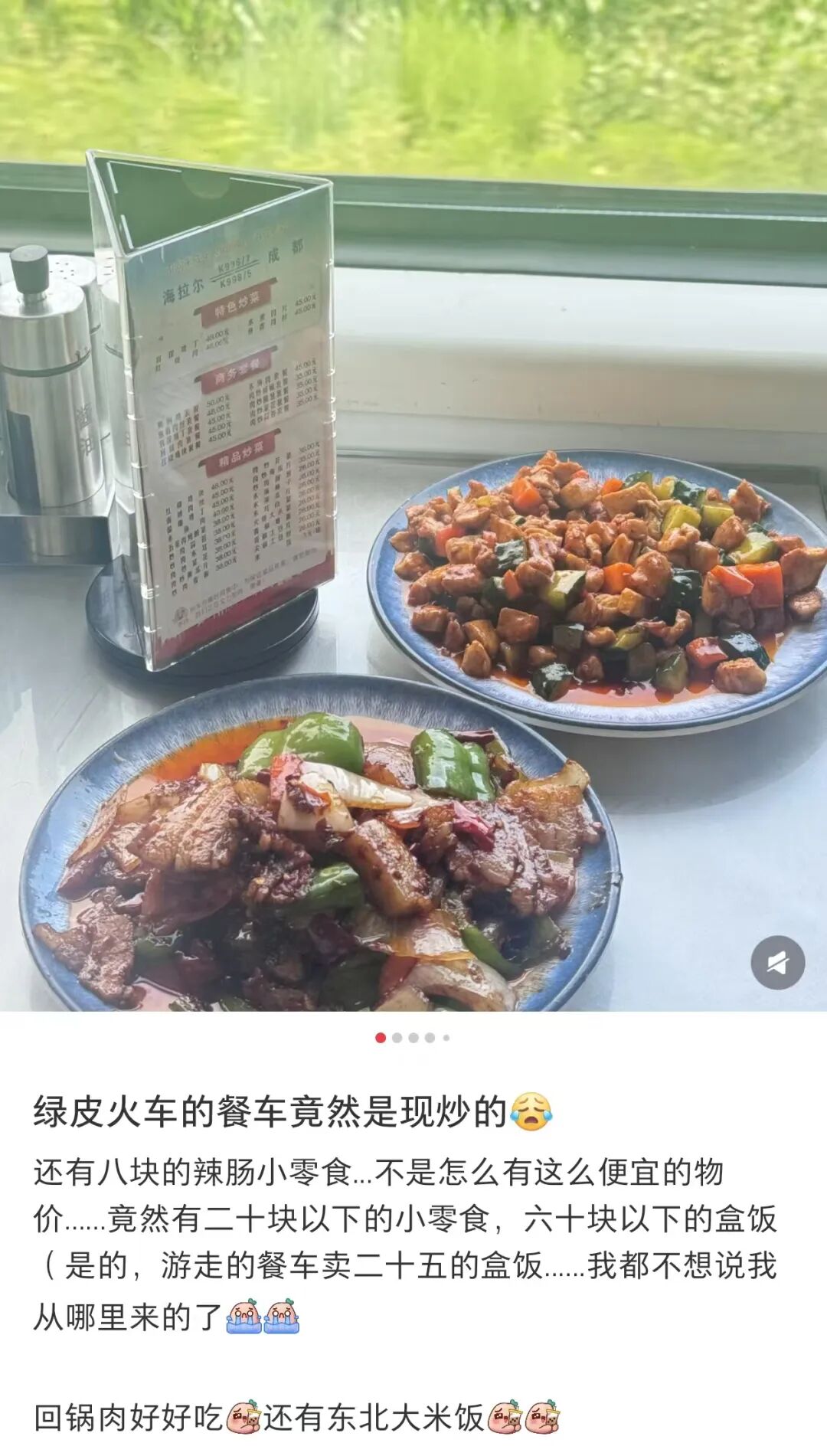
15元一份的现炒绿皮火车餐,正在春运路上消失
3 6 Ke· 2026-02-02 01:56
Core Viewpoint - The nostalgic appeal of traditional green train dining experiences is fading as high-speed rail becomes the dominant mode of travel, leading to a decline in the availability of affordable and freshly prepared meals on trains [1][2][11]. Group 1: Changes in Train Dining Experience - The recent railway schedule adjustments have led to the phasing out of green trains, which are known for their affordable and freshly cooked meals, in favor of high-speed trains [1][5]. - Passengers have reported finding meals on green trains, such as freshly stir-fried dishes priced below 60 yuan, which contrasts sharply with the more expensive and less appealing pre-packaged meals offered on high-speed trains [5][20]. - The green train dining experience is characterized by a sense of community and shared enjoyment, which is often absent in the high-speed rail environment where passengers are more isolated [21]. Group 2: Quality and Variety of Meals - The most renowned green train dining service is on the Z99/100 route between Shanghai and Guangzhou, which has maintained a reputation for quality home-style dishes despite changes in train service [5][6]. - The introduction of self-service dining options on certain routes, such as the K128/125 train, has provided passengers with a unique dining experience that is not typically available on high-speed trains [6][8]. - The quality of meals on green trains has been noted to be superior to the pre-packaged options found on high-speed trains, with many passengers expressing a preference for the freshly prepared dishes [10][20]. Group 3: Cultural and Emotional Significance - The decline of green trains and their dining services represents a loss of a slower, more communal travel experience that many passengers cherish [11][21]. - The nostalgia associated with green train meals reflects a broader longing for simpler, more authentic experiences in a fast-paced world [1][11]. - The exploration of traditional food and the appreciation for local flavors on green trains contrasts with the impersonal nature of high-speed rail dining, highlighting a cultural shift in travel experiences [21][22].