高阶程序(HOP)

Search documents
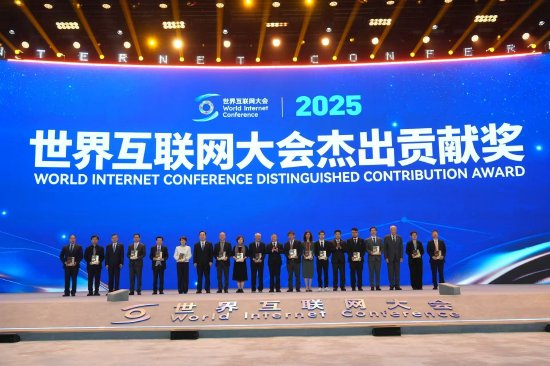
数据安全、破解大模型“幻觉”!蚂蚁密算获世界互联网大会杰出贡献奖
Xin Lang Ke Ji· 2025-11-07 06:55
Core Insights - Ant Group's subsidiary, Ant Misan, received the "Outstanding Contribution Award (Growth Potential Category)" at the 2025 World Internet Conference for its innovative privacy-preserving computing technology [1][3] - The technology enables low-cost, trustworthy data circulation at scale, currently serving over 10 million users [1][3] Technology Overview - Ant Misan's computing technology is based on cryptography, trusted hardware, and system security, allowing data to be "usable but invisible" during processing [3] - The cost of data processing is reduced to within 1.5 times that of plaintext distributed computing, laying the foundation for large-scale applications [3] Application and Impact - The technology has been implemented in various scenarios, including the "Medical Insurance + Commercial Insurance" settlement center in Beijing and the "Instant Loan for Farmers" project [3] - In the auto insurance project, 75% of new energy vehicle owners experienced an average premium reduction of 8% [3] Future Directions - Ant Group's Vice President and Chief Technology Security Officer, Wei Tao, emphasized the challenges of high-sensitivity data integration in the AI era, advocating for a new paradigm of "data-model integration" [3] - The company is addressing reliability issues in large model applications with the launch of High-Order Programs (HOP) and has introduced the first trusted data space in the industry [3] - Ant Misan is promoting a comprehensive transformation of its "chip, system, and platform" to achieve a low-cost transition to privacy-preserving intelligent computing [3]

高阶程序,让AI从技术可行到商业可信的最后一公里
机器之心· 2025-09-16 11:57
Core Viewpoint - The article discusses the transition to the "second half" of AI, emphasizing the need for reliability and engineering frameworks to ensure AI applications are trustworthy and effective [1][4][57]. Group 1: Importance of Data and Reliability - Data is crucial for AI application capabilities, but it does not automatically create value without a reliable processing engine [3][4]. - Reliability encompasses various metrics, including accuracy, speed, and the ability to avoid "hallucinations," which are misleading outputs generated by AI models [4][8]. Group 2: Transition from Model Competition to Engineering Competition - The shift in focus from "what AI can do" to "how to make AI do it correctly" marks a significant change in the industry [4][5]. - Various frameworks, such as LangChain and DSPy, are emerging to address these challenges, but they often lack robust reliability guarantees [4][9]. Group 3: High-Order Programs (HOP) - HOP is introduced as a new paradigm that integrates engineering principles into AI applications, aiming to mitigate hallucinations and enhance reliability [6][20]. - HOP is not a new programming language but a framework that combines symbolic logic with neural networks to create a reliable control system for AI [22][25]. Group 4: Mechanisms of HOP - HOP utilizes a structured approach to express business logic in programming languages, ensuring clarity and reducing ambiguity [23]. - The HopLogic execution framework within HOP allows for the breakdown of complex tasks into verifiable steps, enhancing reliability to over 99% in professional applications [28][37]. Group 5: Practical Applications and Industry Impact - HOP has demonstrated its potential in sectors like finance and healthcare, significantly improving reliability and reducing development time [39][43]. - The framework allows for agile iterations without the need for extensive retraining of models, making it a cost-effective solution for businesses [52][53]. Group 6: Future of AI Engineering - The article concludes that the future of AI will depend on high-quality data and reliable engineering frameworks, with HOP serving as a key driver for scalable professional productivity [54][64]. - The establishment of a reliable framework and the development of high-quality data will enable AI to evolve from a supportive role to a core driver of industry transformation [64][65].