工程化

Search documents
别只盯着春晚机器人,这股AI力量已悄然接管生活
Sou Hu Cai Jing· 2026-02-22 18:33
Core Insights - The article discusses the significant integration of AI into everyday life during the Chinese New Year, highlighting its rapid advancements and public engagement with AI technologies [2][4] - It emphasizes the transition of AI from a high-tech concept to a practical tool that enhances cultural experiences and personal interactions [5][6] Group 1: AI Adoption and Market Trends - The AI industry is expected to transition from a phase of heavy investment to profitability by 2026, marking a pivotal year for revenue generation [5] - Human-like robots gained immense popularity during the Spring Festival, with a reported 150% increase in orders within two hours of a major event [5] - The global AI agent market is projected to grow at over 40% annually, potentially exceeding $50 billion by 2030, indicating a robust demand for digital employees across various sectors [9] Group 2: Digital Employees and Their Impact - Digital employees are becoming a prominent form of AI that is easily accessible and usable, with applications in tourism, retail, and customer service [6][8] - The integration of digital employees in various industries is expected to enhance operational efficiency, with examples such as AI customer service handling over 150,000 inquiries daily with a 90% resolution rate [8] - The emergence of platforms like OpenAI is anticipated to accelerate the development of multi-agent systems and digital employees, pushing the industry towards comprehensive integration and systematic implementation [8][9] Group 3: Engineering and Implementation Challenges - The successful deployment of digital employees requires overcoming significant engineering challenges, including the need for advanced understanding and processing of complex data [11][13] - Companies like Baidu are leading the way in developing digital employees that can effectively engage with users, providing emotional value and operational efficiency [13][14] - The article highlights the importance of safety, cost-effectiveness, and the ability to deliver tangible results as critical factors for the successful implementation of digital employees in businesses [15]



工程化的长期主义:OceanBase十五年沉淀,如何成为AI时代的数据基石
Tai Mei Ti A P P· 2025-12-01 10:20
Core Insights - The rapid development of artificial intelligence (AI) is transforming the role of databases from passive data storage to active business decision-making centers [3][5] - OceanBase has achieved significant growth, with over 4,000 clients and an annual growth rate of over 100% in client numbers for five consecutive years [3][5][18] - The company emphasizes engineering capabilities as a critical factor for success in the AI era, focusing on practical problem-solving rather than superficial technological showcases [8][12] Engineering Capabilities - OceanBase's engineering culture is deeply rooted in its founder's vision of creating a world-class database, emphasizing meticulous attention to detail [6][8] - The company has developed a unique engineering gene through real business pressures, leading to significant technological advancements over its 15-year history [5][9] - Key technological milestones include the establishment of a native distributed architecture and the breakthrough of an integrated architecture in version 4.0, which allows for distributed capabilities in a single-machine environment [9][10] Product Innovations - OceanBase has launched the first AI-native hybrid search database, seekdb, aimed at transitioning databases from traditional business support systems to AI-native data entry points [5][14] - The new version 4.4 integrates transaction processing (TP), analytical processing (AP), and AI capabilities into a single core, allowing for simultaneous handling of high-concurrency transactions and complex data analysis [9][12] - The seekdb database features a four-dimensional hybrid search capability, achieving millisecond-level responses at a scale of billions of data [14][16] Market Position and Expansion - OceanBase holds the leading market share in the financial sector, with major institutions like Ping An Life migrating their core systems to its platform [18][20] - The company is expanding its presence in government and telecommunications sectors, with significant implementations in social security systems and unified AI knowledge bases [20] - OceanBase aims to increase its overseas revenue share to 20%, focusing on emerging markets in Southeast Asia, Latin America, and the Middle East [20][21] Future Outlook - The database market is projected to reach $218 billion by 2028, driven by the integration of generative AI capabilities [21] - OceanBase's strategy to embed AI capabilities into its database architecture positions it to capitalize on this market potential and move closer to its goal of becoming a world-class database [21]
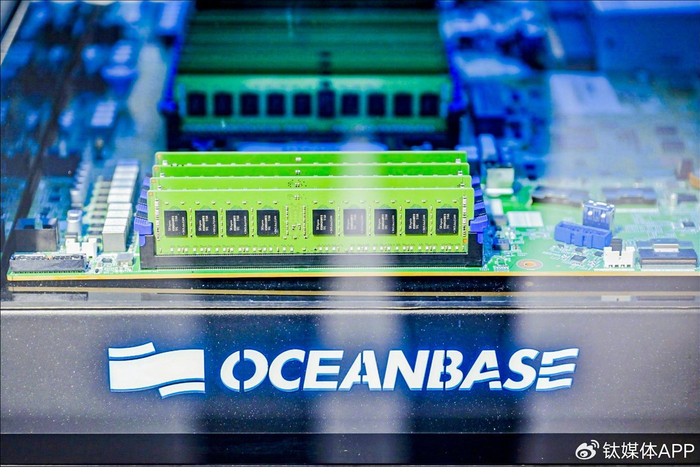
工程化的长期主义:OceanBase十五年沉淀,如何成为AI时代的数据基石?
Tai Mei Ti A P P· 2025-11-20 12:26
Core Insights - The rapid development of artificial intelligence (AI) is transforming databases from passive "data warehouses" to active "intelligent hubs" that drive business decisions [2] - OceanBase has launched its first AI-native hybrid search database, seekdb, aiming to transition databases from traditional "business support systems" to "AI-native data entry points" [4] - OceanBase's engineering capabilities are a key factor in its success, with over 4,000 clients and an average annual growth rate of over 100% in client numbers for five consecutive years [2][4] Engineering Evolution - OceanBase's 15-year journey has been driven by real business pressures, leading to a unique engineering culture focused on solving practical problems [5][7] - The company has achieved several key technological milestones, including the establishment of a native distributed architecture and the breakthrough of a single-node distributed integrated architecture [8] - The latest version, 4.4, integrates transaction processing (TP), analytical processing (AP), and AI capabilities into a single core, allowing businesses to handle high-concurrency transactions, complex data analysis, and AI-driven hybrid searches within one database [8][11] Architectural Innovations - OceanBase emphasizes data correctness as a core principle, implementing a comprehensive system for end-to-end control from code to hardware [10] - The architecture supports multi-modal data integration and workload fusion, addressing challenges posed by traditional database systems in the AI era [11][12] - The introduction of a shared storage architecture in version 4.4 significantly reduces storage costs by 50%-90% compared to traditional solutions, enhancing the efficiency of data storage for AI applications [12] AI-Native Capabilities - The seekdb database is designed with a focus on lightweight, agile, and open-source principles, featuring a four-dimensional hybrid search capability [13][15] - OceanBase's AI architecture allows for direct SQL calls to embedding models, creating a closed loop for data writing, vectorization, retrieval, and inference [16] - The company aims to redefine the standards for AI data bases, moving beyond traditional data storage to databases that can "understand" data semantics [16] Market Position and Future Outlook - OceanBase holds the leading market share in the financial sector, with significant deployments in government and telecommunications [17][19] - The company is actively pursuing global expansion, targeting emerging markets in Southeast Asia, Latin America, and the Middle East, with a goal of increasing overseas revenue to 20% [19] - According to Gartner, spending on databases supporting generative AI is projected to reach $218 billion by 2028, indicating a significant market opportunity for OceanBase [20]
高阶程序,让AI从技术可行到商业可信的最后一公里
机器之心· 2025-09-16 11:57
Core Viewpoint - The article discusses the transition to the "second half" of AI, emphasizing the need for reliability and engineering frameworks to ensure AI applications are trustworthy and effective [1][4][57]. Group 1: Importance of Data and Reliability - Data is crucial for AI application capabilities, but it does not automatically create value without a reliable processing engine [3][4]. - Reliability encompasses various metrics, including accuracy, speed, and the ability to avoid "hallucinations," which are misleading outputs generated by AI models [4][8]. Group 2: Transition from Model Competition to Engineering Competition - The shift in focus from "what AI can do" to "how to make AI do it correctly" marks a significant change in the industry [4][5]. - Various frameworks, such as LangChain and DSPy, are emerging to address these challenges, but they often lack robust reliability guarantees [4][9]. Group 3: High-Order Programs (HOP) - HOP is introduced as a new paradigm that integrates engineering principles into AI applications, aiming to mitigate hallucinations and enhance reliability [6][20]. - HOP is not a new programming language but a framework that combines symbolic logic with neural networks to create a reliable control system for AI [22][25]. Group 4: Mechanisms of HOP - HOP utilizes a structured approach to express business logic in programming languages, ensuring clarity and reducing ambiguity [23]. - The HopLogic execution framework within HOP allows for the breakdown of complex tasks into verifiable steps, enhancing reliability to over 99% in professional applications [28][37]. Group 5: Practical Applications and Industry Impact - HOP has demonstrated its potential in sectors like finance and healthcare, significantly improving reliability and reducing development time [39][43]. - The framework allows for agile iterations without the need for extensive retraining of models, making it a cost-effective solution for businesses [52][53]. Group 6: Future of AI Engineering - The article concludes that the future of AI will depend on high-quality data and reliable engineering frameworks, with HOP serving as a key driver for scalable professional productivity [54][64]. - The establishment of a reliable framework and the development of high-quality data will enable AI to evolve from a supportive role to a core driver of industry transformation [64][65].