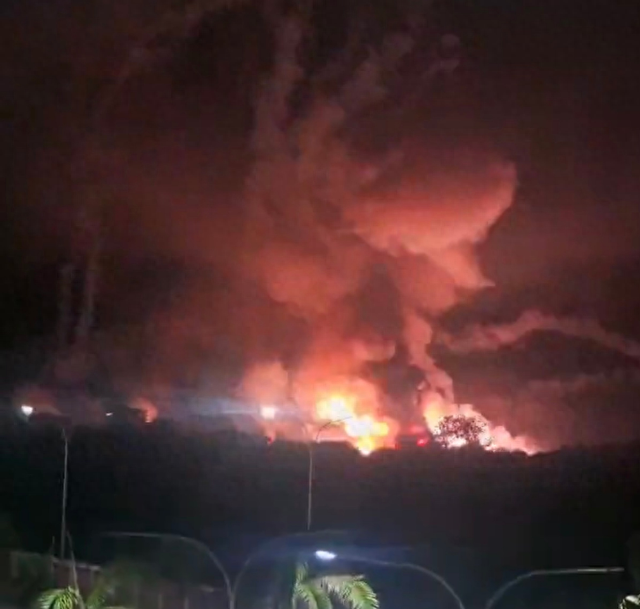
鱼鹰倾转旋翼机

Search documents
美国重兵集结中东 要对伊朗动手?
Xin Lang Cai Jing· 2026-01-30 11:27
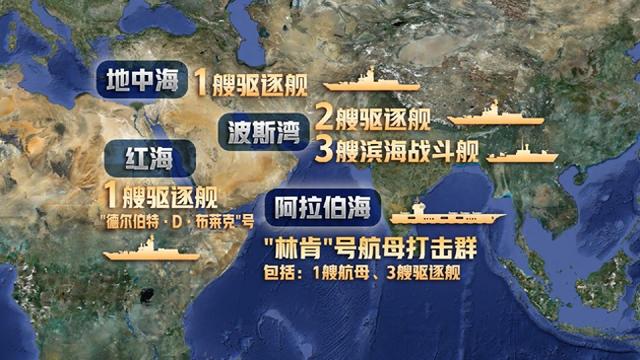
Group 1 - The core viewpoint of the article highlights the significant military buildup by the United States around Iran, indicating a potential for increased military action in the region [1][3] - As of January 28, the U.S. has deployed at least one aircraft carrier, three coastal combat ships, and seven destroyers near Iran, matching the naval presence during military actions in Venezuela earlier in January [1] - The U.S. military presence includes advanced aircraft such as the Osprey tiltrotor aircraft, capable of supporting ground assault forces, and long-range rescue planes heading to the Middle East [1] Group 2 - Analysis from Wang Jin, director of the Northwestern University Israel Research Center, suggests that the likelihood of a U.S. attack on Iran is high, with military bases in the region prepared for action [3] - The current military posture indicates that the U.S. may be waiting for a more opportune moment to escalate its military presence, as it assesses the situation around Iran [3] - The potential for rapid escalation in conflict is noted, especially considering Iran's capabilities to retaliate against U.S. naval forces and allies in the region [3]

刚刚!特朗普宣布,国家紧急状态!
券商中国· 2026-01-30 00:35
Core Viewpoint - The article discusses recent actions taken by the Trump administration, including the declaration of a national emergency and military deployments in the Middle East, indicating heightened tensions with Cuba and Iran [1][3][7]. Group 1: U.S. Actions Against Cuba - On January 29, President Trump signed an executive order declaring a national emergency, threatening to impose tariffs on goods from countries supplying oil to Cuba [2][3]. - The U.S. government is reportedly seeking "insiders" within the Cuban government to potentially destabilize the regime by cutting off oil supplies from Venezuela, which is crucial for Cuba's economy [3][4]. - Trump has indicated that if Venezuela's oil supply is lost, Cuba will struggle to sustain itself, suggesting a direct link between U.S. actions in Venezuela and the Cuban economy [4]. Group 2: U.S.-Canada Trade Tensions - Trump accused Canada of unfair treatment regarding the certification of U.S. aircraft and threatened to impose a 50% tariff on all Canadian aircraft exports to the U.S. if the issue is not resolved [6][4]. - In response, the U.S. will suspend the certification of Bombardier's Global series and all Canadian-made aircraft until the certification of Gulfstream aircraft is fully resolved [5][6]. Group 3: U.S. Military Deployment in the Middle East - The U.S. is significantly increasing its military presence in the Middle East, deploying at least ten naval vessels, including six destroyers and an aircraft carrier, amid rising tensions with Iran [7][8]. - The USS Delbert D. Black, a guided-missile destroyer, has arrived in the region, and additional military assets, including HC-130J search and rescue aircraft, are being sent, indicating preparations for potential military action against Iran [7][8]. - Iran has announced military exercises in the Strait of Hormuz, which may disrupt shipping activities, reflecting the escalating military readiness in the region [9][10].

又一艘驱逐舰抵达,美国在中东部署至少10艘军舰
Xin Hua Cai Jing· 2026-01-29 23:49
Group 1 - The core point of the article is the increased military presence of the United States in the Middle East, with at least 10 naval vessels deployed amid speculation of potential airstrikes against Iran [1] - The USS Delbert D. Black, a guided-missile destroyer, arrived in the Persian Gulf on the 28th, contributing to the total of 10 U.S. naval ships in the region, including the USS Abraham Lincoln aircraft carrier [1] - The U.S. naval deployment consists of 6 destroyers and 3 littoral combat ships, which are capable of both land strike missions and defense against missile and drone attacks [1] Group 2 - The littoral combat ships have extensive land strike capabilities that can cover a wide range from the coastline to inland areas [1] - A U.S. Navy Osprey tiltrotor aircraft was tracked heading to Oman, indicating support for special operations and the ability to deploy ground assault forces [1] - Reports also indicate that HC-130J long-range rescue aircraft are being sent to the Middle East, which could signify preparations for potential airstrikes against Iran [1]
又一艘驱逐舰抵达 美国在中东部署至少10艘军舰
Xin Hua She· 2026-01-29 22:57
Core Viewpoint - The article discusses the increased military presence of the United States in the Middle East, particularly in relation to potential actions against Iran, with at least 10 naval vessels deployed in the region [1]. Military Deployment - The U.S. Navy has deployed at least 10 ships in the Middle East, including the aircraft carrier USS Abraham Lincoln and 6 destroyers along with 3 littoral combat ships [1]. - The USS Delbert D. Black, a guided-missile destroyer, passed through the Suez Canal to the Persian Gulf on January 28 [1]. Capabilities of Naval Forces - Destroyers are capable of supporting aircraft carriers in land strike missions and defending against missile and drone attacks [1]. - Littoral combat ships have extensive land strike capabilities that can cover a wide range from the coastline to inland areas [1]. Air Support and Operations - A U.S. Navy Osprey tiltrotor aircraft was tracked flying towards Oman, which is equipped on the USS Lincoln, indicating support for special operations [1]. - Reports indicate that HC-130J long-range rescue aircraft are also being sent to the Middle East, which can quickly rescue downed pilots within enemy territory, suggesting preparations for potential airstrikes against Iran [1].
美国在中东部署至少10艘军舰
Xin Hua She· 2026-01-29 22:43
Group 1 - The core viewpoint of the article highlights the increased military presence of the United States in the Middle East, with at least 10 naval vessels deployed amid speculation of potential attacks on Iran [1] Group 2 - The USS Delbert D. Black, a guided-missile destroyer, has arrived in the Persian Gulf, contributing to the total of 10 U.S. naval ships in the region, including the USS Abraham Lincoln aircraft carrier [1] - The U.S. naval deployment consists of 6 destroyers and 3 littoral combat ships, which are capable of both land strike missions and defense against missile and drone attacks [1] - The littoral combat ships have extensive land strike capabilities that can cover a wide range from the coastline to inland areas [1] Group 3 - A U.S. Navy Osprey tiltrotor aircraft was tracked flying towards Oman, indicating support for special operations and the ability to deploy ground assault forces [1] - Reports indicate that U.S. HC-130J long-range rescue aircraft are also heading to the Middle East, which may suggest preparations for potential airstrikes against Iran [1]
美军是怎么抓走马杜罗的
Xin Lang Cai Jing· 2026-01-03 17:12
Core Viewpoint - The news reports that U.S. military forces, specifically Delta Force, have captured Venezuelan President Maduro and his wife during a surprise operation, leading to significant geopolitical implications in the region [1][9][11]. Military Action Summary - The U.S. military launched airstrikes on Venezuela at approximately 2 AM local time, targeting multiple locations in Caracas, including military bases and communication facilities, resulting in explosions and power outages in the area [2][4]. - The operation involved a combination of airstrikes and special operations, utilizing cruise missiles, electronic warfare, and various aircraft to suppress Venezuelan defenses before deploying ground forces [5][6][10]. - The Delta Force, known for its rigorous selection process and specialized training, executed the operation with a high level of preparation and support from a comprehensive military presence in the Caribbean [9][10]. Tactical Details - The airstrikes targeted key military installations, including the Tiuana Air Force Base and other strategic sites, indicating a well-coordinated effort to neutralize Venezuelan military capabilities [4][10]. - The use of advanced electronic warfare aircraft, such as the EA-18G Growler, played a crucial role in disrupting Venezuelan radar and communication systems, facilitating the success of the operation [8][6]. - The operation was characterized by a rapid execution strategy, where special forces were able to infiltrate and extract targets quickly, minimizing the risk of engagement with Venezuelan forces [5][9]. Geopolitical Implications - The Venezuelan government has condemned the U.S. actions as military aggression, calling for international support and a meeting of the United Nations Security Council to address the situation [1][2]. - The operation reflects a broader U.S. strategy in the region, showcasing military readiness and the willingness to engage in direct action against perceived threats [10][11].