
林肯号航母

Search documents
美伊,要打了吗?
Xin Lang Cai Jing· 2026-02-28 02:44
Core Viewpoint - The risk of war between the U.S. and Iran has significantly increased, prompting multiple countries to evacuate their citizens from the region, particularly Israel and Iran [1][3][4]. Group 1: U.S. Actions - The U.S. State Department approved the evacuation of non-essential personnel and their families from Israel due to security risks, urging them to leave immediately while commercial flights are still available [1][4]. - The U.S. has deployed its largest aircraft carrier, the USS Ford, to Israel, indicating a heightened military presence in the region [1][4]. - The U.S. military has also sent nearly 20 refueling aircraft to Israel, further increasing its operational capabilities in the area [4]. Group 2: International Responses - Canada and India have advised their citizens to leave Iran immediately due to escalating tensions and the potential for hostile actions [3]. - The Canadian government reiterated its travel warnings, emphasizing the need for citizens in Iran to depart as soon as it is safe to do so [3]. Group 3: Iranian Military Stance - The Iranian military has stated it is closely monitoring U.S. and Israeli movements and is prepared to respond decisively to any acts of aggression [5]. - Iran's military leadership has characterized the U.S. presence in the region as psychological warfare and has warned that any reckless actions could lead to large-scale conflict [5]. Group 4: Diplomatic Developments - U.S. President Trump expressed dissatisfaction with the progress of nuclear negotiations with Iran but has not made a final decision regarding military action [6][8]. - Ongoing indirect negotiations between the U.S. and Iran have not yet yielded an agreement, but discussions are set to continue in March [9].

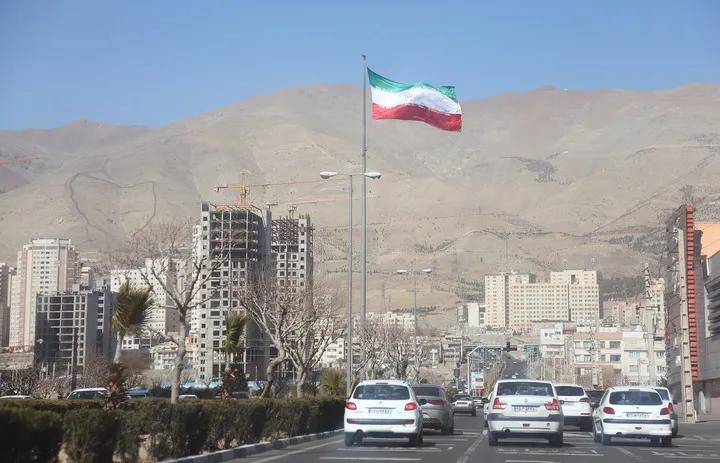
美国、英国、加拿大、印度等国紧急撤离使团非紧急必要人员及其家属、公民、使馆人员
Xin Lang Cai Jing· 2026-02-27 23:35
Group 1 - The U.S. State Department approved the evacuation of non-essential personnel and their families from Israel due to security risks, urging them to leave immediately while commercial flights are still available [1][3] - The U.S. Embassy in Israel indicated that further restrictions on U.S. government employees and their families may be implemented without prior notice, particularly in certain areas of Israel and the West Bank [1] - The arrival of the U.S. aircraft carrier "Ford" in Israel has heightened concerns about the risk of conflict between the U.S. and Iran, with military pressure from the U.S. increasing in the region [3][6] Group 2 - Other countries, including Canada and India, have also advised their citizens to leave Iran immediately due to escalating tensions and potential hostile actions [3] - The Iranian military has warned of a "devastating" response to any U.S. aggression, emphasizing their readiness to defend national interests and the potential for large-scale conflict in the region [6] - The U.K. government has temporarily withdrawn embassy staff from Iran for security reasons, reflecting the broader concerns about safety in the region [6]
多国撤人、航母抵以 美伊战争风险急剧升高
Xin Hua Wang· 2026-02-27 14:20
Group 1 - The U.S. State Department has approved the evacuation of non-essential personnel and their families from Israel due to security risks, with the U.S. Ambassador urging immediate departure [1] - The U.S. military has increased its presence in the region, with the arrival of the USS Ford aircraft carrier in Israel, raising concerns about the risk of conflict between the U.S. and Iran [2] - Other countries, including Canada and India, have also advised their citizens to leave Iran amid escalating tensions and potential military actions [2] Group 2 - Iran's military has warned of a "devastating" response to any U.S. aggression, emphasizing their readiness to defend national interests and the potential for large-scale conflict in the region [3] - The Iranian military is closely monitoring U.S. and Israeli movements, asserting that the U.S. presence is part of psychological warfare and intimidation tactics [3]
美国国务院:已批准撤离
Xin Lang Cai Jing· 2026-02-27 12:16
Group 1 - The U.S. Embassy in Israel announced the evacuation of non-emergency government employees and their families due to heightened security risks [1] - The embassy may impose further restrictions or bans on U.S. government employees and their families traveling to certain areas in Israel, including the Old City of Jerusalem and the West Bank, without prior warning [1] - U.S. citizens in Israel are advised to leave as soon as possible while commercial flights are still available [1] Group 2 - The USS Ford aircraft carrier arrived in Israeli waters on February 27, indicating a simultaneous deployment of both the USS Ford and USS Lincoln in the Middle East [3] - The USS Ford departed from the U.S. naval base in Crete, Greece, where it had previously stopped for supplies [5] - Approximately 20 U.S. military refueling aircraft arrived at Ben Gurion Airport in Israel on the evening of February 26 [6]
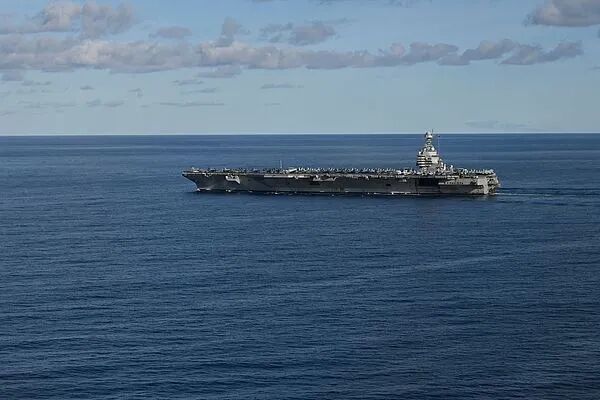
美“福特”号航母抵达以色列水域,美军在中东地区同时部署两艘航母
Xin Lang Cai Jing· 2026-02-27 10:13
Core Viewpoint - The deployment of the USS Ford aircraft carrier to Israeli waters signifies a significant military presence by the U.S. in the Middle East, alongside the USS Lincoln, amidst ongoing indirect negotiations with Iran [2]. Military Deployment - The USS Ford arrived in Israeli waters on February 27, having set sail from Crete, Greece, where it had previously resupplied at a U.S. Navy base [2]. - Approximately 20 U.S. military refueling aircraft arrived at Ben Gurion Airport in Israel on the evening of February 26 [2]. Diplomatic Negotiations - Indirect negotiations between Iran and the U.S. took place in Muscat, Oman, and Geneva, Switzerland, on February 6 and 17, respectively [2]. - The third round of indirect talks occurred on February 26 in Geneva, which did not result in an agreement but was positively evaluated by the parties involved [2]. - A plan was announced to continue technical discussions on March 2 in Vienna, Austria [2]. Military Strategy - U.S. President Trump acknowledged considerations for a "limited military strike" against Iran, indicating a potential escalation in military strategy [2].
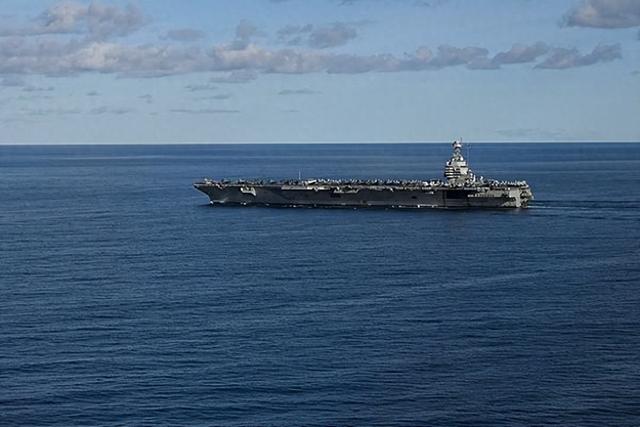
美军在中东地区同时部署两艘航母
2 1 Shi Ji Jing Ji Bao Dao· 2026-02-27 10:05
Core Viewpoint - The deployment of the USS Ford aircraft carrier to Israeli waters signifies a strengthened military presence of the U.S. in the Middle East, with two aircraft carriers now stationed in the region [1] Group 1: Military Deployment - The USS Ford arrived in Israeli waters on February 27, indicating a significant military maneuver by the U.S. [1] - The USS Ford set sail from the U.S. Navy base in Crete, Greece, on February 26, after resupplying [1] - The USS Lincoln is also deployed in the region, marking a dual aircraft carrier presence [1] Group 2: Additional Military Assets - Approximately 20 U.S. military refueling aircraft arrived at Ben Gurion Airport in Israel on the evening of February 26 [1]
美军最大航母驶向中东 预计很快抵达以色列海域
Zhong Guo Xin Wen Wang· 2026-02-27 02:30
Core Viewpoint - The deployment of the USS Gerald R. Ford aircraft carrier to the Eastern Mediterranean signifies a strategic military move by the U.S. amid rising tensions with Iran, potentially impacting regional stability and military dynamics [1] Group 1: Military Deployment - The USS Gerald R. Ford departed from Souda Bay, Greece, after a four-day resupply, heading towards the Eastern Mediterranean and is expected to reach the vicinity of Israel within 24 hours [1] - The USS Gerald R. Ford, which entered service in 2017, measures 334 meters in length and has a displacement of over 100,000 tons, with a crew of nearly 4,600 personnel [1] Group 2: Historical Context - The last time the U.S. deployed two aircraft carriers in the Middle East was in June 2025, coinciding with military actions against Iranian nuclear facilities [1] - The current military buildup follows the third round of indirect negotiations between the U.S. and Iran, indicating a heightened state of military readiness and pressure from the U.S. on Iran [1] Group 3: Strategic Implications - The USS Gerald R. Ford's deployment is viewed as the final piece in the U.S. military strategy in the region, complementing the presence of the USS Abraham Lincoln carrier strike group to establish a "dual-carrier" presence in the Middle East [1]
美军“福特”号航母驶离希腊前往中东
Xin Hua Wang· 2026-02-26 12:46
Core Viewpoint - The deployment of the USS Gerald R. Ford aircraft carrier to the Middle East is a significant move by the U.S. military, indicating increased military pressure on Iran amid ongoing indirect negotiations [1] Group 1: Military Deployment - The USS Gerald R. Ford departed from the naval base in Souda Bay, Crete, and is expected to arrive in Israel within 24 hours [1] - The deployment of the Ford is seen as the final piece of the U.S. military strategy in the region, complementing the existing presence of the USS Abraham Lincoln carrier strike group to create a "dual carrier" presence in the Middle East [1] Group 2: Diplomatic Context - The U.S. is engaged in a third round of indirect negotiations with Iran, taking place in Geneva, Switzerland [1] - President Trump has acknowledged that he is considering a "limited military strike" against Iran, reflecting the heightened tensions and military readiness in the region [1]
美军最大航母驶离希腊开往中东 向伊朗施加压力
Xin Jing Bao· 2026-02-26 11:39
Group 1 - The U.S. Navy's largest aircraft carrier, USS Gerald R. Ford, has departed from Crete, Greece, heading towards the Middle East to exert pressure on Iran [1] - The White House has ordered the deployment of a second aircraft carrier to the Middle East, with USS Ford joining the USS Lincoln strike group in the Persian Gulf [1] - Reports indicate that USS Ford is facing a significant operational issue, with approximately 90% of its 650 toilets out of order, causing over 4,600 sailors to wait in line for restroom access [1]
美国重兵集结中东背后到底有何盘算
Xin Lang Cai Jing· 2026-02-25 22:05
Core Viewpoint - The article discusses the significant military buildup by the United States in the Middle East, indicating a potential shift towards military action against Iran, coinciding with upcoming negotiations in Geneva. Military Deployment - The U.S. has deployed 11 F-22 fighter jets to an airbase in southern Israel and is completing a "dual aircraft carrier" deployment in the Eastern Mediterranean with the USS Ford and USS Lincoln, which together carry nearly 100 F-35 and F-18 aircraft, supported by multiple destroyers [1][2] - This is described as the largest military deployment in the Middle East since the Iraq War in 2003, with a total of two aircraft carriers and 14 surface vessels [2] Military Strategy and Objectives - The U.S. military buildup serves two main objectives: to exert extreme pressure on Iran before negotiations and to prepare for potential military action [3] - President Trump has indicated a willingness to consider a "limited military strike" against Iran, with reports suggesting he may favor initiating such action in the coming days [3][4] Potential Military Actions - Analysts have identified three possible military strategies: 1. "Limited strikes" targeting key Iranian military and security forces to establish deterrence [4] 2. "Long-term weakening" through periodic strikes on Iran's nuclear facilities and military capabilities [4] 3. "Regime change" aimed at directly targeting Iranian leadership, though this faces logistical challenges [4] Concerns and Reactions - There are concerns within the U.S. government regarding the potential for prolonged conflict and the risks associated with military action against Iran [6] - Experts warn that military action could lead to significant casualties among U.S. personnel stationed in the region and could escalate into broader regional conflicts involving Iran's allies [7] Economic Implications - The potential for conflict could disrupt global energy markets, particularly if Iran were to close the Strait of Hormuz, leading to a spike in oil prices and broader economic repercussions [7]