鸿蒙电脑专业版操作系统

Search documents
比替换ERP还复杂,华为自己是如何鸿蒙化的?
Guan Cha Zhe Wang· 2025-12-16 03:20
Core Viewpoint - Huawei is advancing its internal operations towards a fully integrated HarmonyOS ecosystem, aiming to enhance digitalization and intelligence within the company [1][2]. Group 1: Internal Implementation of HarmonyOS - Huawei has initiated a comprehensive push for HarmonyOS integration, with a decision made by the company's board to prioritize internal applications supporting HarmonyOS [1]. - The company has over 1 million devices, including mobile phones, PCs, and tablets, and more than 50,000 applications, making the transition to a new operating system complex [1]. - The internal implementation of HarmonyOS is seen as more complex than previous ERP system replacements, with a broad impact across the organization [1]. Group 2: Progress and Achievements - As of now, Huawei's mobile and tablet devices have fully transitioned to HarmonyOS, with significant capabilities achieved in document handling, meetings, emails, images, and videos [2]. - The company has developed strategies for internal HarmonyOS implementation, including optimizing applications and leveraging cloud-edge collaboration to reduce complexity [4]. Group 3: New Product Launches - Huawei introduced the new commercial computer, the Huawei Qingyun HM740, designed for government and enterprise markets, featuring a 2.8K OLED screen and a 21-hour battery life [5]. - The HarmonyOS Professional Edition has been released, providing enhanced IT management and security solutions for enterprises [5]. Group 4: Market Position and Competition - The launch of HarmonyOS-based products raises questions about Huawei's entry into the domestic "Xinchuang" market, where it previously used other operating systems [7]. - If HarmonyOS enters the Xinchuang market, it will compete with existing domestic operating systems like Tongxin and Kirin, potentially disrupting the current market landscape [9]. Group 5: Ecosystem Development - The success of HarmonyOS in broader markets hinges on building a robust ecosystem, with partnerships established with various companies to support HarmonyOS applications [11]. - As of December, over 1,500 devices, including keyboards and mice, have been adapted to support HarmonyOS, indicating a growing ecosystem [11].


华为发布擎云HM740鸿蒙电脑 搭载麒麟X90双版本面向政企市场
Xin Lang Cai Jing· 2025-12-12 14:19
Core Insights - Huawei has launched a new HarmonyOS computer, the Qingyun HM740, targeting the government and enterprise market with two configurations: standard and high-performance [2][3] Product Specifications - The Qingyun HM740 is equipped with the Kirin X90 processor, with the standard version featuring an 8-core design and the high-performance version upgraded to a 10-core architecture [2][3] - The 8-core model corresponds to the Kirin X90A, while a recently released 2-in-1 tablet also utilizes the same series of chips, with the liquid-cooled version using the Kirin X90 and the soft light and standard versions using the Kirin X90A [2][3] Certification and Security - In March 2025, a national authority will release security and reliability assessment results indicating that the Kirin X90 has successfully passed core technology evaluation and received a Level II security certification [2][3] - This certification confirms that the processor meets national standards for core technology autonomy, supply chain security, and intellectual property compliance, providing a high level of information security assurance [2][3] Target Market and Features - The Qingyun HM740 is designed specifically for government and enterprise users, achieving full autonomy from the core processor to the operating system [2][3] - The device comes pre-installed with the HarmonyOS Professional Edition, and organizations with higher management needs can apply for an upgrade to the HarmonyOS Enterprise Edition Beta system, which includes a complete feature set such as enterprise digital dual space [2][3]
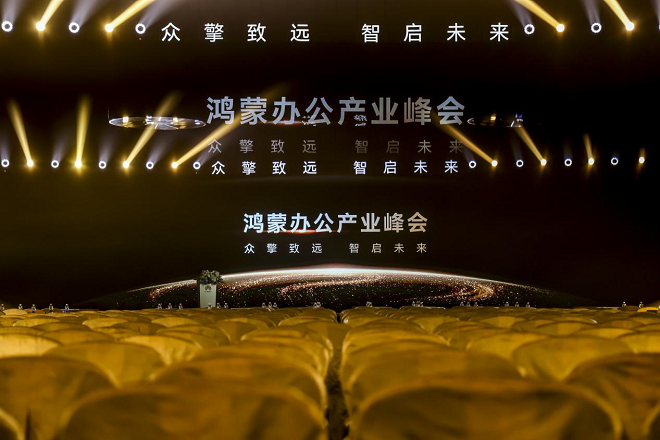
鸿蒙办公产业峰会召开 多维构建生态引力场 共建鸿蒙商用新生态
Xin Lang Cai Jing· 2025-12-12 01:37
Core Insights - The article highlights the launch of the HarmonyOS-based Huawei Qingyun HM740 and the professional version of the HarmonyOS, marking a significant step in Huawei's expansion from consumer to commercial applications [1][22][24] - Huawei's ecosystem has rapidly grown from over 2,000 applications to more than 12,000 since its release in May, indicating a substantial increase in ecosystem richness [1][17] - The Huawei Qingyun HM740 is designed for enterprise use, featuring a dual-space system for secure data management and a long battery life, emphasizing safety and efficiency for business users [24][22] Ecosystem Development - The Harmony ecosystem is transitioning towards commercial applications, aiming to empower various industries and create a more secure and intelligent productivity platform [1][17] - The Huawei Harmony Innovation Center in Wuhan serves as a hub for industry integration, offering six core functions to support the ecosystem [19] - The OpenHarmony system has matured, with over 1.3 billion lines of code and more than 1,400 products certified for compatibility across key industries [27] Product Features - The Huawei Qingyun HM740 features a 70Wh battery, capable of playing local 1080p videos for 21 hours or supporting 15 hours of continuous voice meetings, making it Huawei's longest-lasting laptop to date [24][22] - The device includes a 2.8K OLED screen with a 120Hz refresh rate and advanced eye protection capabilities, enhancing user experience [24] - Innovative features like the Star Flash connection technology provide additional security measures, such as remote data erasure and device tracking [24] Strategic Initiatives - The launch of the Qingyun Star River Plan aims to invite government and enterprise users to join the Harmony ecosystem, focusing on smart, secure, and efficient digital office solutions [25][29] - Collaborations with industry leaders, such as the Industrial and Commercial Bank of China and Beijing Urban Construction Group, showcase the practical applications of HarmonyOS in various sectors [25][26] - The summit included discussions on accelerating ecosystem adaptation and creating differentiated industry solutions, fostering a collaborative environment for innovation [30][32]