麻质面料

Search documents
四中全会精神在基层丨千年麻编工艺如何走俏国内外市场?
Xin Hua Wang· 2025-12-05 09:41
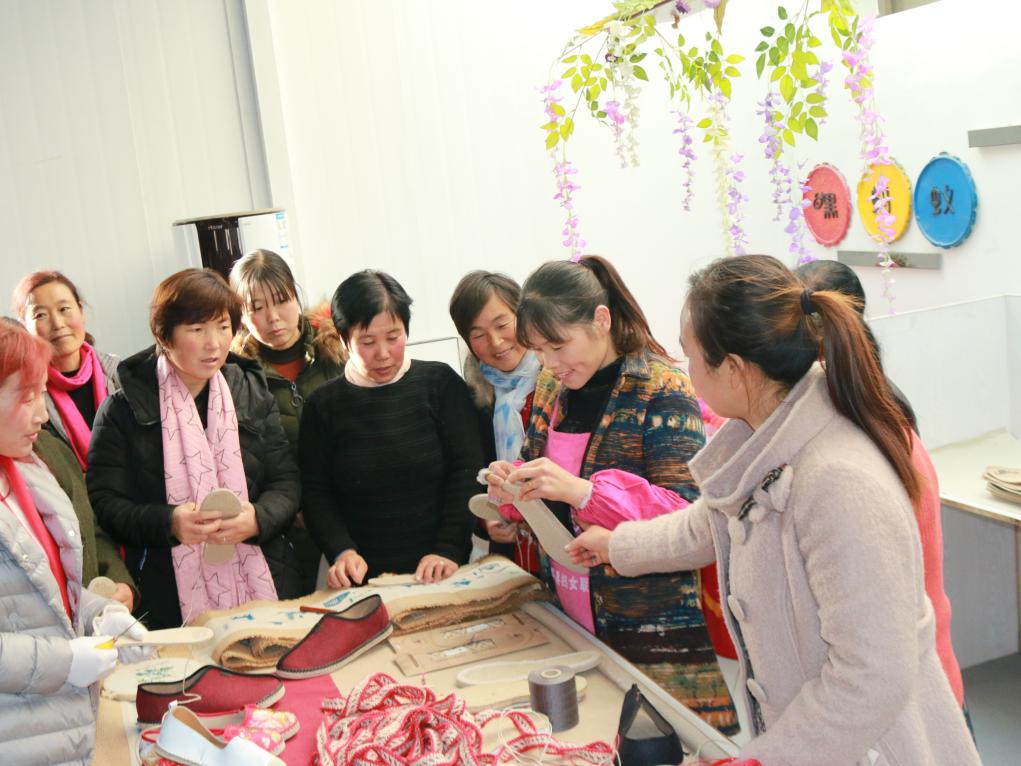
Core Insights - The article discusses the revival and commercialization of traditional hemp weaving craftsmanship in Gansu Province, China, particularly focusing on the production of hemp shoes that are gaining popularity in both domestic and international markets [1][3]. Group 1: Industry Development - The hemp shoe weaving technique has a history of over a thousand years in the Weihe River basin, and it was recognized as a representative project of intangible cultural heritage in Gansu Province in 2017 [3]. - The local government has been supportive of the hemp weaving industry, leading to the establishment of numerous local enterprises and small workshops, which have contributed to product upgrades and technological transformations [6][7]. Group 2: Company Initiatives - Gansu Yaluren Hemp Weaving Craft Products Development Co., Ltd. was founded by a local entrepreneur who integrated traditional techniques with modern designs, resulting in over 200 styles of hemp shoes and sales exceeding 200,000 pairs annually [3][4]. - The company has collaborated with renowned brands in the U.S., Italy, and Spain for large-scale orders, enhancing employment opportunities and increasing the international recognition of hemp weaving craftsmanship [4][6]. Group 3: Training and Employment - Since 2015, the company has trained over 10,000 individuals, with more than 3,000 being local women, thereby transforming them into skilled artisans capable of earning 2,000 to 3,000 yuan per month [6][7]. - The training programs have not only promoted the transmission of skills but also stimulated production, contributing to the local economy [4][6]. Group 4: Future Prospects - The hemp weaving industry in Gangu County is projected to reach an output value of 50 million yuan by 2024, with plans to further integrate cultural heritage training with industry and e-commerce training [7]. - The company is expanding its product range to include not just shoes but also clothing and home decor, thereby creating a comprehensive industrial chain from cultivation to sales [7].