3i扫地机器人

Search documents
吃下iRobot的深圳隐形王者浮出水面
机器人大讲堂· 2025-12-16 09:30
Core Viewpoint - The acquisition of iRobot by Shenzhen-based company Shanjun is seen as a strategic move to revitalize the brand and leverage its legacy, despite skepticism regarding Shanjun's ability to manage a historically significant brand with substantial debt [2][4][10]. Group 1: iRobot's Decline - iRobot, founded in 1990, was a pioneer in the robotic vacuum industry, achieving over 80% market share at its peak with the Roomba model [5][6]. - The company faced challenges as Chinese brands advanced in technology, leading to a significant decline in market share, dropping to 7.9% by 2025 [9][10]. - Financially, iRobot was in dire straits with only $24.8 million in cash against $508 million in debt by September 2025, ultimately leading to its bankruptcy filing [9][10]. Group 2: Shanjun's Strengths - Shanjun, backed by strategic investments from major firms, has evolved from a contract manufacturer to a "hidden champion" with a valuation exceeding $1 billion and a revenue of 4.06 billion yuan in 2024 [12][14]. - The company boasts over 1,100 patents and a strong R&D team, allowing it to produce core components in-house, reducing costs by approximately 30% compared to iRobot [12][14]. - Shanjun's successful partnerships with international brands like Dyson and its rapid growth in the domestic market highlight its competitive position [14][18]. Group 3: Strategic Acquisition Benefits - The acquisition provides Shanjun access to iRobot's extensive patent portfolio, which includes over 2,000 patents, facilitating quicker product development and legal protection in international markets [15][16]. - iRobot's established brand and distribution channels in the U.S. and Japan offer Shanjun a valuable platform to expand its own brand, 3i, into global markets [16][18]. - The integration of Shanjun's advanced technology into iRobot's product line is expected to enhance product competitiveness and reduce costs, allowing for more aggressive pricing strategies [19][20]. Group 4: Future Outlook - Shanjun aims to revitalize iRobot through technological upgrades, cost-effective manufacturing, and a dual-brand strategy targeting different market segments [22][23]. - The acquisition signifies a shift in global manufacturing power, with Chinese companies increasingly taking control of technology and brand integration, as seen in Shanjun's strategic moves [24][25]. - The evolving landscape of the robotic vacuum market indicates that companies with core technology and supply chain advantages will emerge as leaders in the future [28][29].

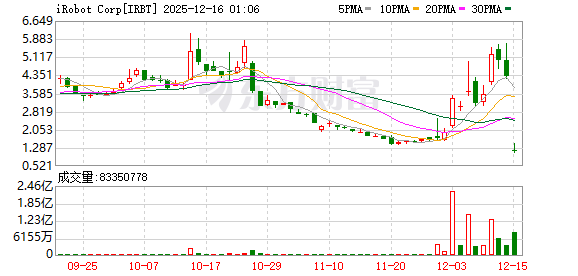
股价暴跌 触发熔断!美国知名机器人公司申请破产:负债35亿元 账上现金仅1.75亿元!中国代工厂将获其100%股权
Mei Ri Jing Ji Xin Wen· 2025-12-15 17:06
Core Viewpoint - iRobot has filed for Chapter 11 bankruptcy protection, aiming for a restructuring that will lead to its acquisition by Chinese manufacturer Picea, allowing it to optimize its balance sheet and maintain operations while exiting the public market [2][3][4]. Group 1: Bankruptcy Filing and Restructuring - iRobot submitted a Chapter 11 bankruptcy protection application on December 14, 2023, with plans to complete the process by February 2026 [2]. - The company has reached a Restructuring Support Agreement (RSA) with its secured creditors and major manufacturing partner Picea, which will acquire 100% of iRobot's shares [2]. - The restructuring aims to significantly improve iRobot's balance sheet and ensure the continuation of its global operations [2][4]. Group 2: Financial Performance and Market Position - iRobot's revenue for 2022 fell by 24% to $1.1834 billion (approximately 8.118 billion RMB), with a net loss of $286.3 million [7]. - The company experienced a sharp decline in revenue across various regions, with a 43% drop in Europe, the Middle East, and Africa, an 18% decrease in the U.S., and a 6% decline in Japan [7]. - iRobot's market share has diminished significantly, with its share dropping to 7.9% in 2025, having been pushed out of the top five global brands [11]. Group 3: Competitive Landscape - iRobot has struggled to keep pace with competitors, particularly Chinese brands that have adopted advanced technologies like laser navigation and automatic mopping, while iRobot has been slow to innovate [5][7]. - The company faced intense competition from local brands such as Roborock and Ecovacs, which have rapidly evolved and captured market share during the pandemic [7]. - iRobot's flagship products remain priced significantly higher than those of competitors, with some models costing over $1,000, three times the price of similar Chinese products [5]. Group 4: Impact of Acquisition Attempts - iRobot's potential acquisition by Amazon for approximately $1.7 billion was blocked by regulatory scrutiny, leading to significant operational challenges for the company [8][9]. - Following the failed acquisition, iRobot laid off about 350 employees, representing 31% of its workforce, and refocused on core floor care innovations [9]. - The company has been heavily reliant on Picea for its manufacturing needs, with Picea becoming its largest creditor, holding over $350 million in debts [10][11].