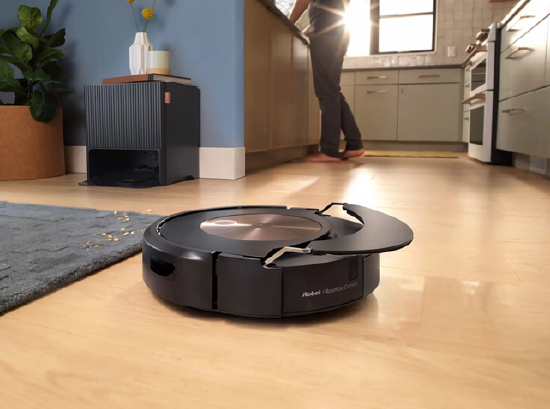
Roomba扫地机器人

Search documents
看世界 | 制造业掉队拖了美国设计后腿
Xin Lang Cai Jing· 2026-01-11 02:48
Core Insights - iRobot, once a leading consumer robotics company, filed for bankruptcy protection and agreed to be acquired by its Chinese supplier, highlighting its decline from a market leader to a marginalized entity [1] - The fall of iRobot and 3D Robotics illustrates a broader issue within the U.S. consumer hardware industry, where reliance on the "U.S. design + offshore manufacturing" model has become a structural problem [2][3] Company Overview - iRobot was founded in 1990 and launched the Roomba vacuum cleaner in 2002, achieving significant sales milestones, including 50,000 units in its first year and over 2 million by 2005 [1] - The company maintained a strong market presence and profitability for years, even attracting a $17 billion acquisition offer from Amazon four to five years ago [1] Industry Dynamics - The initial success of companies like iRobot and 3D Robotics was due to their ability to convert concepts into products during the early market exploration phase, where competition was based on product existence rather than refinement [3] - As the market matured, competition shifted towards supply chain efficiency and product reliability, requiring companies to innovate closely aligned with manufacturing and real-world usage [3][4] Competitive Landscape - New entrants in the market have adopted a rapid iteration model, allowing them to quickly improve their products based on user feedback and real-world data, leading to significant advancements in features and performance [4][5] - U.S. companies continue to rely on patent protection and brand premium, resulting in longer product iteration cycles and widening competitive gaps [5] Policy Implications - The U.S. government's protective measures, such as tariffs and export controls, may hinder the competitive drive of domestic companies, ultimately leading to a decline in innovation and market position [5][6] - A shift towards providing an open and fair competitive environment is necessary for U.S. consumer hardware companies to maintain their leading status in the global market [6]
制造业掉队拖了美国设计后腿
Jing Ji Ri Bao· 2026-01-10 21:52
Core Viewpoint - iRobot, once a leading consumer robotics company, has filed for bankruptcy protection and agreed to be acquired by its Chinese supplier, highlighting its decline from a market leader to a marginalized player in the industry [1] Group 1: Company Overview - iRobot was founded in 1990 and gained prominence with the launch of the Roomba vacuum cleaner in 2002, selling 50,000 units in its first year and over 2 million by 2005 [1] - The company was synonymous with robotic vacuum cleaners, defining the category and maintaining a strong profit margin through patent protection and brand premium [1] - Despite its past success, iRobot has faced increasing operational pressures, leading to continuous losses and mounting debt over the last two years [1] Group 2: Industry Dynamics - The decline of iRobot and 3D Robotics reflects a broader issue within the U.S. consumer hardware industry, which has relied on the "American design + offshore manufacturing" model [2][3] - Initially, this model was effective during the early stages of market development, where the focus was on product existence rather than optimization [3] - As the market matured, competition shifted from individual products to entire supply chain systems, necessitating closer alignment with manufacturing and real-world usage [3] Group 3: Competitive Landscape - New entrants in the market have adopted a rapid iteration approach, allowing them to quickly improve their products based on user feedback and real-world data [4][5] - This approach has led to significant advancements in features and performance for both robotic vacuums and drones, creating a competitive edge over traditional U.S. companies [4][5] - U.S. companies continue to rely on patent protection and brand premium, resulting in longer product iteration cycles and widening competitive gaps [5] Group 4: Policy Implications - U.S. government policies aimed at protecting domestic companies, such as tariffs and export controls, may hinder innovation and competitiveness by reducing market pressure [5] - For U.S. consumer hardware companies to maintain their leading positions, they must engage in real market competition rather than relying solely on protective measures [5]
美国巨头,彻底输了
Sou Hu Cai Jing· 2025-12-28 10:13
Core Viewpoint - iRobot, the pioneer of the robotic vacuum industry, has filed for Chapter 11 bankruptcy and will be acquired by its Chinese manufacturer, Shanjun Robotics, marking the end of an era for the company [1][5]. Financial Performance - iRobot's revenue peaked at $1.565 billion in 2021 but has since declined by over 20% annually, projected to be $682 million in 2024 [5]. - The company has reported net losses ranging from $100 million to $300 million each year from 2022 to 2024, with a net loss of $130 million in the first three quarters of this year [5]. - As of September 27, iRobot's total liabilities reached $508 million, with only $24.7 million in cash and equivalents remaining [6]. Acquisition Details - Shanjun Robotics will convert its debt into 100% equity of iRobot through a court-supervised process, expected to be completed by February 2026 [1]. - Shanjun became iRobot's largest creditor after acquiring approximately $190 million of its outstanding debt from various investment firms [6]. - The acquisition is seen as a strategic move for both companies, with Shanjun aiming to leverage iRobot's brand and market presence while iRobot seeks to stabilize its operations [7][8]. Market Dynamics - The shift in the robotic vacuum industry is indicative of a broader trend of manufacturing and innovation moving towards China, with local companies rapidly gaining market share [3][10]. - iRobot's failure to innovate and respond to competitive pressures from Chinese manufacturers has contributed to its decline, with significant technological advancements made by competitors [10][11]. - The global smart robotic vacuum market saw a shipment of 17.424 million units in the first three quarters of this year, with Chinese brands capturing nearly 70% of the market share [11]. Future Challenges - Post-acquisition, Shanjun faces the challenge of revitalizing iRobot and competing effectively against established Chinese brands that have already penetrated both online and offline markets [15]. - The competitive landscape remains intense, with brands like Roborock and Ecovacs leading in market share and innovation, necessitating a focus on price, technology, and ecosystem development for iRobot's resurgence [16][18].

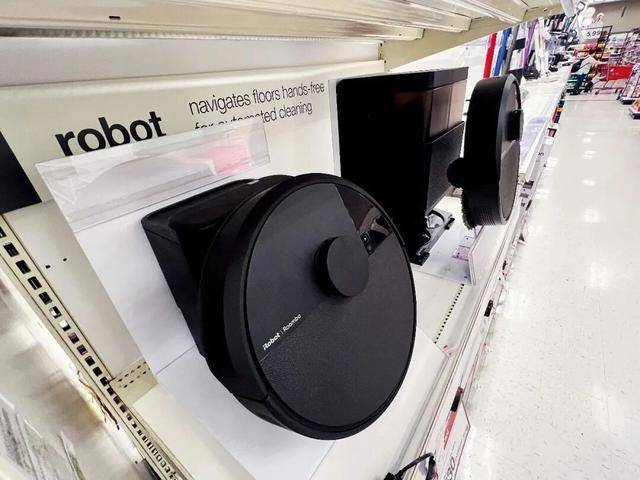
扫地机器人鼻祖iRobot的终结:一场从代工到反向收购的产业权力转移
Xin Lang Cai Jing· 2025-12-25 10:07
Core Insights - iRobot has filed for Chapter 11 bankruptcy protection and agreed to be fully acquired by its main supplier, Shenzhen Santrum Robotics, which will take over all shares and cancel outstanding debts [1][9] - Following the announcement, iRobot's stock plummeted over 70%, with its market value dropping to under $25 million, closing at $0.76 per share, resulting in significant losses for original shareholders [1][9] Group 1: Decline of iRobot - iRobot's decline is attributed to years of technological stagnation, strategic missteps, and the rise of Chinese brands [2][10] - Founded in 1990, iRobot initially focused on defense and rescue robots, achieving commercial success with the Roomba in 2002, capturing 70% of the global market at its peak [2][11] - A turning point occurred in 2022 when iRobot's revenue fell by 24% year-over-year, and it reported a net loss of $286.3 million due to stagnant core technology [2][11] - While Chinese brands adopted advanced navigation technologies, iRobot remained reliant on a single visual navigation system, leading to poor performance in complex environments and high R&D costs [2][11] - The price disparity between iRobot and Chinese brands exacerbated its crisis, with iRobot's products often costing two to three times more for similar features [2][11] - In April 2025, the U.S. imposed a 46% tariff on home appliances imported from Vietnam, increasing iRobot's operational costs by approximately $23 million [3][11] Group 2: Debt Crisis - As of Q3 2025, iRobot's cash reserves had dwindled to $24.8 million, with total liabilities exceeding $350 million and negative equity of $26.8 million, indicating insolvency [3][12] - A significant portion of iRobot's debt was owed to Shenzhen Santrum, its largest creditor, which had acquired $190.7 million in unpaid loans from the original creditor, Carlyle Group [4][13] - iRobot's total debt to Santrum exceeded $350 million, accounting for over 70% of its total liabilities, giving Santrum leverage over iRobot's production [4][13] Group 3: Acquisition by Shenzhen Santrum - The acquisition of iRobot by Shenzhen Santrum is seen as a strategic move to gain control over a well-established brand and its global sales channels [5][14] - Santrum's motivation for the acquisition includes leveraging iRobot as a platform to enter the North American market without the lengthy process of brand building [6][14] - This transition from supplier and creditor to owner signifies a profound shift in the power dynamics within the global robotic vacuum industry [6][14] Group 4: Market Dynamics - The acquisition marks a pivotal shift in the global robotic vacuum market, with Chinese brands now dominating the landscape [7][15] - By Q3 2025, iRobot's market share had plummeted to 7.9%, falling out of the top five, which are now all Chinese brands [7][16] - In North America, where iRobot once held over 80% market share, it is rapidly losing ground to Chinese competitors, who are expanding aggressively both online and offline [7][16] - The European market has become increasingly challenging for iRobot, which has downgraded its priority there, allowing Chinese brands to fill the void [7][16] - Japan, previously a stronghold for iRobot, is also under threat from the new ownership and competitive pressure from local brands [7][16] Group 5: Lessons from iRobot's Fall - iRobot's failure highlights the harsh realities of global tech competition, emphasizing the need for continuous innovation and adaptation [8][17] - The company's decline serves as a warning to other traditional giants that reliance on a single market model and slow technological evolution can lead to rapid obsolescence [8][17] - Post-acquisition, the branding of iRobot's Roomba products will be integrated with Santrum's brand, indicating a significant shift in profit flow and industry power [8][17]

扫地机器人鼻祖iRobot破产了,但它死得一点都不冤
3 6 Ke· 2025-12-24 23:45
Core Viewpoint - iRobot, once a leader in the consumer robotics industry, has filed for bankruptcy restructuring and agreed to sell 100% of its shares to its major manufacturing partner, Shenzhen Sijuan Robotics Co., Ltd, in order to reduce its debt and continue operations [1][4]. Group 1: Company Performance and Financial Situation - iRobot's revenue peaked at nearly $1.57 billion in 2021 but has since declined significantly, with revenues of $1.18 billion, $891 million, and $682 million projected for 2022, 2023, and 2024 respectively, alongside substantial losses [5][30]. - The company faced a debt crisis, accumulating $350 million in debt, including $161.5 million owed to Sijuan and a $190.7 million loan from Carlyle Group [7][8]. - iRobot's market share has plummeted from over 60% to being surpassed by competitors like Roborock, with its market share dropping to 13.7% in 2024 [30][31]. Group 2: Acquisition and Strategic Moves - The acquisition by Sijuan is seen as a strategic move to preserve assets and mitigate losses, allowing Sijuan to leverage iRobot's brand and patents while integrating its own advanced technologies [8][17]. - Sijuan, a leading manufacturer in the cleaning appliance sector, aims to revitalize iRobot by combining its manufacturing capabilities with iRobot's established market presence [10][17]. Group 3: Historical Context and Innovation - iRobot was founded in 1990 and gained fame with the launch of the Roomba in 2002, which revolutionized the home cleaning robot market [18][22]. - The company initially focused on government and defense applications, but over time shifted its focus to consumer products, leading to a decline in innovation and market competitiveness [20][29]. - iRobot's failure to adapt to new technological advancements, such as laser navigation and AI integration, has contributed to its decline, as competitors have successfully adopted these innovations [34][35].
大摩重磅机器人年鉴(七):脑机接口将是AI的终极物理体现
Hua Er Jie Jian Wen· 2025-12-23 08:24
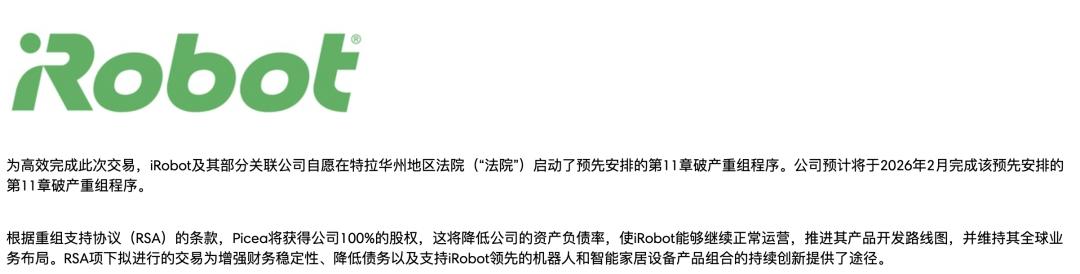
Core Insights - Brain-Computer Interface (BCI) technology is emerging as the "ultimate physical embodiment" of artificial intelligence, aimed at addressing medical challenges and serving as a key bridge for human-AI coexistence, with significant long-term market potential attracting global capital and enterprises [1][4] Market Potential - Morgan Stanley's report estimates that the total addressable market (TAM) for BCI implant devices in the U.S. could reach $80 billion by 2035 and soar to $320 billion by 2045, primarily targeting treatments for various neurological disorders such as ALS, stroke, spinal cord injuries, epilepsy, and depression [1][12] Competitive Landscape - A global competitive landscape is forming, with key players including Neuralink, Synchron, Precision, and Paradromics. China has announced a BCI technology development roadmap aiming for key breakthroughs by 2027 and to become a global leader by 2030 [4][12] Historical Context - The development of BCI is not new, tracing back to the discovery of brain electrical activity by Hans Berger in 1924, with significant advancements occurring in the early 21st century, such as the demonstration by Duke University's Miguel Nicolelis in 2003, where a monkey controlled a robotic arm via BCI [5] Technological Pathways - Current BCI implantation techniques include Neuralink's robotic surgery to insert threads into the motor cortex, Synchron's vascular electrode array implantation, and micro-invasive techniques from Precision and Paradromics [5] Neuralink's Vision - Elon Musk has set a four-tiered vision for Neuralink: first, to alleviate human suffering (e.g., "mind-reading" implants for paralyzed patients); second, to enhance human capabilities (e.g., future "blindness" implants); third, to understand and expand consciousness; and finally, to achieve human coexistence with AI/robots to mitigate existential risks posed by AI [9][11] Investment Trends - Investment in neurotechnology, including BCI, surged to approximately $1.8 billion by the end of 2025, indicating high capital interest. Neuralink leads with a valuation of $9 billion and over $1.3 billion in funding [12] Future Outlook - The report outlines a shift from technological exploration to commercialization and large-scale application of embodied AI, redefining productivity and human capabilities, and presenting a vast, multi-layered market landscape for investors [23]
280亿,扫地机器人鼻祖宣布破产
虎嗅APP· 2025-12-21 10:08
Core Viewpoint - The collapse of iRobot, a pioneer in the robotic vacuum industry, highlights the consequences of regulatory paradoxes, trade policy conflicts, and competition from Chinese firms, ultimately leading to its bankruptcy and acquisition by a Chinese supplier [4][9]. Group 1: Company Background and Market Position - iRobot was founded in 1990 by MIT roboticists and initially focused on defense and space applications, but gained fame with the launch of the Roomba vacuum in 2002, which became a household name in the U.S. [6][7]. - By 2021, iRobot's valuation peaked at $35.6 billion, with Roomba capturing 42% of the U.S. market and 65% in Japan, selling over 50 million units [7][8]. Group 2: Competitive Landscape and Challenges - The pandemic-induced boom masked structural issues, as competitors like Ecovacs and Roborock emerged with significantly higher R&D investments and aggressive pricing strategies, leading to a loss of market share for iRobot [7][8]. - iRobot's reliance on manufacturing in Vietnam became a liability when punitive tariffs were imposed, increasing costs by $23 million and squeezing profit margins [8][9]. Group 3: Acquisition Attempt and Regulatory Impact - In August 2022, Amazon proposed a $17 billion acquisition of iRobot, which was seen as a lifeline for the struggling company, but regulatory bodies in the U.S. and EU blocked the deal, citing antitrust concerns [8][12]. - Following the failed acquisition, iRobot's stock plummeted by 80%, leading to significant layoffs and a halt in non-core R&D projects, marking the beginning of its decline [9][12]. Group 4: Bankruptcy and Acquisition by Chinese Supplier - iRobot filed for Chapter 11 bankruptcy and sold its assets to Shenzhen Picea Robotics for $190 million, a move that ironically resulted in the foreign control that regulators sought to prevent [9][10]. - The failure of iRobot serves as a cautionary tale about the consequences of regulatory overreach and the need for a more nuanced understanding of global competition [12][14]. Group 5: Industry Implications and Future Trends - The bankruptcy of iRobot signals a significant shift in the smart home industry, moving from single-product successes to a focus on integrated smart home ecosystems [18][19]. - Companies must adapt to the new reality where ecosystem integration and technological innovation are crucial for survival, as evidenced by the struggles of other smart home brands facing similar growth challenges [19][23].

280亿,扫地机器人鼻祖宣布破产
Sou Hu Cai Jing· 2025-12-20 04:17
Core Insights - The collapse of iRobot, a pioneer in the robotic vacuum industry, is attributed to regulatory failures, trade policy conflicts, and competition from Chinese firms, leading to its bankruptcy filing and subsequent acquisition by a Chinese supplier [2][6][9]. Company Overview - iRobot was founded in 1990 by three MIT roboticists and initially focused on defense and space applications before launching the Roomba vacuum in 2002, which became a household name [3][4]. - At its peak in 2021, iRobot's valuation reached $3.56 billion, with Roomba capturing 42% of the U.S. market and 65% in Japan, totaling over 50 million units sold [3][4]. Competitive Landscape - iRobot faced increasing competition from Chinese companies like Ecovacs and Roborock, which invested 2-3 times more in R&D and adopted aggressive pricing strategies, undermining iRobot's market position [4][5]. - The introduction of advanced technologies by competitors, such as laser navigation and AI visual recognition, rendered iRobot's existing technology outdated [4][5]. Financial Challenges - iRobot's reliance on manufacturing in Vietnam led to a significant cost increase when punitive tariffs were imposed, resulting in a $23 million rise in expenses [4]. - The cooling real estate market, exacerbated by rising interest rates, negatively impacted sales of home appliances, including robotic vacuums [4]. Acquisition Attempt and Regulatory Impact - In August 2022, Amazon announced a $1.7 billion acquisition of iRobot, which was seen as a lifeline for the struggling company [5]. - Regulatory bodies in the EU and the U.S. blocked the acquisition, citing potential anti-competitive concerns, which ultimately led to iRobot's stock plummeting by 80% and significant layoffs [5][7]. Bankruptcy and Acquisition - iRobot filed for Chapter 11 bankruptcy and sold its assets to Chinese supplier Picea Robotics for $190 million, marking a significant shift in ownership from a U.S. company to foreign control [6][9]. - The regulatory actions intended to protect competition inadvertently facilitated the loss of a key American technology firm to foreign ownership [6][9]. Industry Implications - iRobot's downfall highlights the structural flaws in Western regulatory frameworks, which focus on domestic competition while neglecting the competitive threats posed by foreign firms [9][10]. - The case serves as a cautionary tale for the smart home industry, indicating a shift from single-product success to the necessity of ecosystem integration for survival [11][12]. Future Outlook - The smart home market is transitioning from individual product sales to comprehensive smart home ecosystems, with companies needing to adapt or risk obsolescence [11][12]. - Firms must establish a clear position within the ecosystem, deepen their technological advantages, and maintain financial health to navigate the evolving landscape [15][16].
鹰和龙:iRobot,被惊醒的美国梦
Tai Mei Ti A P P· 2025-12-19 00:52
Core Insights - iRobot, founded in 1990 by Colin Angle, Helen Greiner, and Rodney Brooks, aimed to bring practical robots into everyday life, inspired by science fiction [1] - The company transitioned from military and industrial applications to consumer robotics, achieving significant market success with its Roomba vacuum cleaner [5][8] - iRobot's market dominance has been challenged by Chinese competitors, leading to a dramatic decline in market share and financial performance [10][11] Company History - iRobot was initially focused on military and space exploration robotics, relying on government contracts and specialized orders, with revenues peaking at $15 million before 2002 [4][5] - The launch of Roomba in 2002 marked a pivotal shift, with sales exceeding 1 million units within three years and revenues soaring to $140 million [6][8] - By 2021, iRobot had sold over 40 million Roombas, achieving a market share of nearly 90% in the robotic vacuum sector [8] Market Dynamics - The entry of Chinese brands like Ecovacs and Roborock into the U.S. market began in 2017, rapidly increasing their market share from less than 2% to over 70% by 2025 [10][11] - iRobot's market share declined from 85% in 2017 to an estimated 6% by 2025, with revenues projected to fall below $600 million and losses exceeding $200 million [11] Strategic Decisions - iRobot sold its military robotics division in 2016 to focus entirely on the consumer market, positioning itself as a leading consumer robotics company [8] - The failure of a proposed acquisition by Amazon, due to regulatory concerns, led to significant layoffs and a deterioration of iRobot's financial health [12][13] Technological Innovation - iRobot has been recognized for its innovations in mapping, navigation, and human-robot interaction, maintaining a reputation as an industry leader [8] - Despite efforts to expand its product line, including the introduction of mopping robots and air purifiers, iRobot struggled to keep pace with competitors [8] Leadership and Future Directions - Founders Colin Angle, Helen Greiner, and Rodney Brooks have pursued new ventures after leaving iRobot, focusing on various aspects of robotics and technology [14][15] - The company's decline raises questions about the role of government support in fostering competitive advantages for U.S. companies in the global market [12][13]
欧盟出手阻止亚马逊,促成美国老牌扫地机器人被中企收购 | 欧陆志
Xin Lang Cai Jing· 2025-12-18 06:39
Core Insights - iRobot, a pioneer in the robotic vacuum industry, has filed for bankruptcy protection and will be restructured as a subsidiary of Shenzhen Picea Group after failing to secure a merger with Amazon due to EU antitrust regulations [1][15][20]. Company Background - iRobot was founded in 1990 by Rodney Brooks, Colin Angle, and Helen Greiner, with the revolutionary Roomba vacuum launched in 2002, selling over 50 million units globally [4][18]. - The company raised $38 million from investors, went public in 2005, and achieved revenues exceeding $400 million by 2010 [5][19]. Market Challenges - iRobot has faced declining sales in recent years, with increasing competition from Chinese brands and innovative companies like Dyson, leading to a loss of its technological edge [6][19]. - Supply chain issues have compounded these challenges since 2021, with criticisms regarding the declining quality of iRobot products [6][19]. Acquisition Attempt - Amazon announced a $1.7 billion acquisition of iRobot in 2022, which would have been its fourth-largest acquisition, aimed at enhancing its smart home product line [8][20]. - The acquisition was blocked by EU regulators due to antitrust concerns, which argued it could unfairly limit competition on Amazon's platform [9][21]. Financial Status - iRobot reported a loss of over $145 million last year, with its valuation dropping from over $3 billion in 2021 to $137 million [10][22]. - The company is in significant debt, owing $161 million to Picea, and has exhausted its funding sources, necessitating the acquisition by Picea to avoid total collapse [10][22][24]. Strategic Shift - Following the acquisition, iRobot will operate as a wholly-owned subsidiary of Picea, with its stock being delisted from U.S. markets [12][24]. - The deal is seen as a last-ditch effort to maintain some operational continuity after a series of failures and losses in the competitive landscape [12][24].