4D打印机

Search documents
新春走基层丨4D打印实验室里的“变形金刚”是怎样炼成的?
Yang Guang Wang· 2026-02-10 01:59
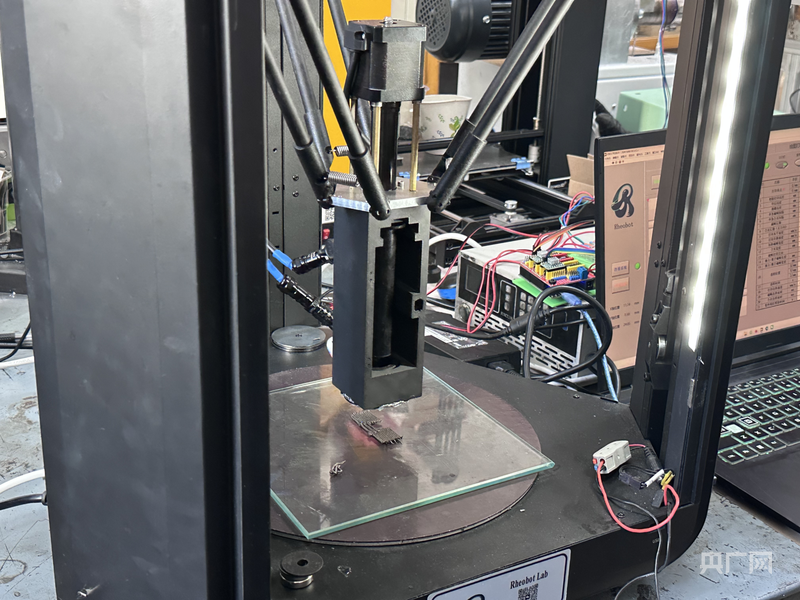
Core Viewpoint - The article discusses the advancements in 4D printing technology, particularly focusing on the development of a new type of "rheological robot" by the Rheobot team at Beijing Jiaotong University, which can autonomously change shape using magnetic control materials [1][2][4]. Group 1: 4D Printing Technology - 4D printing is an evolution of 3D printing that incorporates time as a dimension, allowing for materials to change shape and function dynamically based on environmental stimuli [3][4]. - The Rheobot team has developed the world's first rheological robot, which utilizes a new magnetic control material that can respond dynamically to magnetic fields, enabling it to perform tasks in extreme environments [2][3]. - The technology allows for precise control over the deformation of objects, enabling applications such as a flower that opens when it encounters moisture [3][4]. Group 2: Applications and Innovations - The 4D printing technology is expected to be applied in emerging industries such as low-altitude economy, with potential uses in aircraft components that can adapt their shape to improve aerodynamics and reduce fuel consumption [4][6]. - The development of new materials through 4D printing could lead to significant advancements in the strength and functionality of plastic, allowing for lighter and safer humanoid robots [6][7]. - The first desktop 4D printer, Mag 4D Printer, is set to be launched in 2024, aiming to bring this advanced technology into practical use and enhance public engagement with science [9][11]. Group 3: Research and Development - The Rheobot team is focused on simplifying the complex processes involved in 4D printing by integrating magnetic charging and programming into a single workflow, which has been recognized internationally [7][9]. - The team emphasizes the importance of translating research into practical applications that can improve everyday life, with plans to showcase their technology in science museums for educational purposes [9][11]. - The ongoing research aims to refine the technology further, with aspirations for widespread adoption similar to that of 3D printers, allowing individuals to create their own 4D printed structures [12].

全民共享的科学盛宴
Ren Min Ri Bao Hai Wai Ban· 2025-09-29 22:57
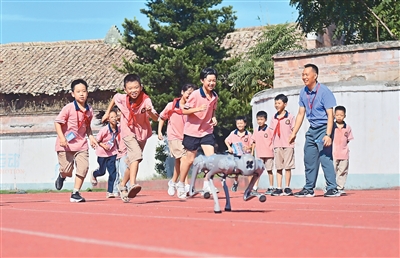
Core Points - The first National Science Popularization Month has successfully engaged the public with numerous activities across the country, promoting scientific knowledge and innovation [2][8] - The event showcased various scientific achievements and innovations, including a desktop 4D printer and wearable electronic fabrics, highlighting the integration of technology and education [3][4] - The China Association for Science and Technology (CAST) reported a significant increase in public participation in science activities, with a focus on expanding the reach and impact of science education [8][9] Group 1: Science Popularization Activities - The National Science Popularization Month featured over 100,000 activities nationwide, encouraging participation from all age groups [2] - Events included interactive exhibits at the China Science and Technology Museum, where children could engage with scientific concepts through hands-on experiences [3][5] - The "Science Night" event combined science and art, offering immersive experiences that sparked interest in scientific exploration [4] Group 2: Technological Innovations - The introduction of a desktop 4D printer at the China Science and Technology Museum allowed visitors to see the transformation of materials into soft robots, demonstrating advanced manufacturing techniques [3] - Wearable electronic fabrics showcased the potential for smart clothing, capable of lighting up and performing various functions, marking a significant advancement in textile technology [4] Group 3: Educational Initiatives - Educational programs during the Science Popularization Month included activities like designing parachutes for Mars landings, blending exploration with practical learning [7] - The Beijing Science Center organized a series of events, including a science carnival and collaborative performances between scientists and artists, to enhance public engagement with science [8] Group 4: Achievements in Science Education - The proportion of Chinese citizens with scientific literacy reached 15.37% in 2024, surpassing the 2025 target, indicating a growing public understanding of science [8] - CAST plans to expand science museum coverage to rural areas and enhance the quality of original science resources, aiming to make scientific knowledge more accessible [9]