
流变机器人

Search documents
新春走基层丨4D打印实验室里的“变形金刚”是怎样炼成的?
Yang Guang Wang· 2026-02-10 01:59
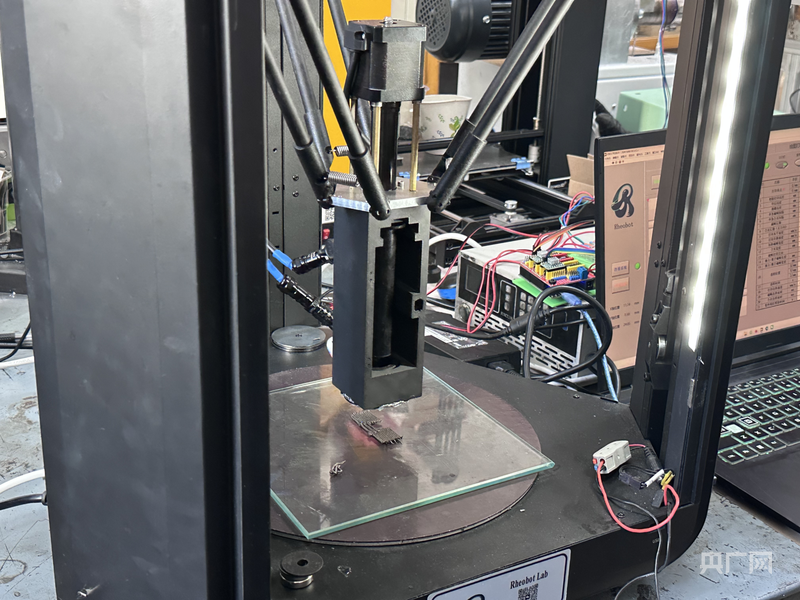
Core Viewpoint - The article discusses the advancements in 4D printing technology, particularly focusing on the development of a new type of "rheological robot" by the Rheobot team at Beijing Jiaotong University, which can autonomously change shape using magnetic control materials [1][2][4]. Group 1: 4D Printing Technology - 4D printing is an evolution of 3D printing that incorporates time as a dimension, allowing for materials to change shape and function dynamically based on environmental stimuli [3][4]. - The Rheobot team has developed the world's first rheological robot, which utilizes a new magnetic control material that can respond dynamically to magnetic fields, enabling it to perform tasks in extreme environments [2][3]. - The technology allows for precise control over the deformation of objects, enabling applications such as a flower that opens when it encounters moisture [3][4]. Group 2: Applications and Innovations - The 4D printing technology is expected to be applied in emerging industries such as low-altitude economy, with potential uses in aircraft components that can adapt their shape to improve aerodynamics and reduce fuel consumption [4][6]. - The development of new materials through 4D printing could lead to significant advancements in the strength and functionality of plastic, allowing for lighter and safer humanoid robots [6][7]. - The first desktop 4D printer, Mag 4D Printer, is set to be launched in 2024, aiming to bring this advanced technology into practical use and enhance public engagement with science [9][11]. Group 3: Research and Development - The Rheobot team is focused on simplifying the complex processes involved in 4D printing by integrating magnetic charging and programming into a single workflow, which has been recognized internationally [7][9]. - The team emphasizes the importance of translating research into practical applications that can improve everyday life, with plans to showcase their technology in science museums for educational purposes [9][11]. - The ongoing research aims to refine the technology further, with aspirations for widespread adoption similar to that of 3D printers, allowing individuals to create their own 4D printed structures [12].

让更多青创人才站上舞台“C位” 北京建设多层次创新人才梯队
Zhong Guo Qing Nian Bao· 2025-04-01 23:10
Group 1 - The 2024 Zhongguancun U30 winners list features 30 young entrepreneurs excelling in AI, humanoid robots, quantum information, biomedicine, aerospace technology, digital economy, cultural creativity, and rural revitalization [1] - Beijing is committed to supporting young tech talent as a driving force for innovation, providing resources and services to foster their development [1][4] - The "Beijing International Science and Technology Innovation Center Construction Regulations" emphasizes the importance of nurturing and utilizing innovative talent [1] Group 2 - Li Zhenkun, a teacher at Beijing Jiaotong University, introduced the "rheological robot," a soft robot produced using 4D printing technology, which can adapt its shape and is applicable in various fields [2] - The rheological robot is being tested in collaboration with Peking University People's Hospital to inhibit cancer cell metastasis [2] - Zhang Miao, COO of Beijing Zhongke Huiling Robot Technology Co., highlighted the capabilities of their "Lingbao" robots in hazardous environments, aiming to reduce risks in operations [3] Group 3 - The company has completed over 100 million yuan in financing and aims for small-scale production and delivery of up to 100 units this year [4] - Beijing's Science and Technology Commission and Zhongguancun Management Committee have implemented measures to support young tech talent, creating a comprehensive support system [4][5] - The Beijing Youth League is focused on nurturing young talent through various programs and initiatives, including training camps and competitions [5]