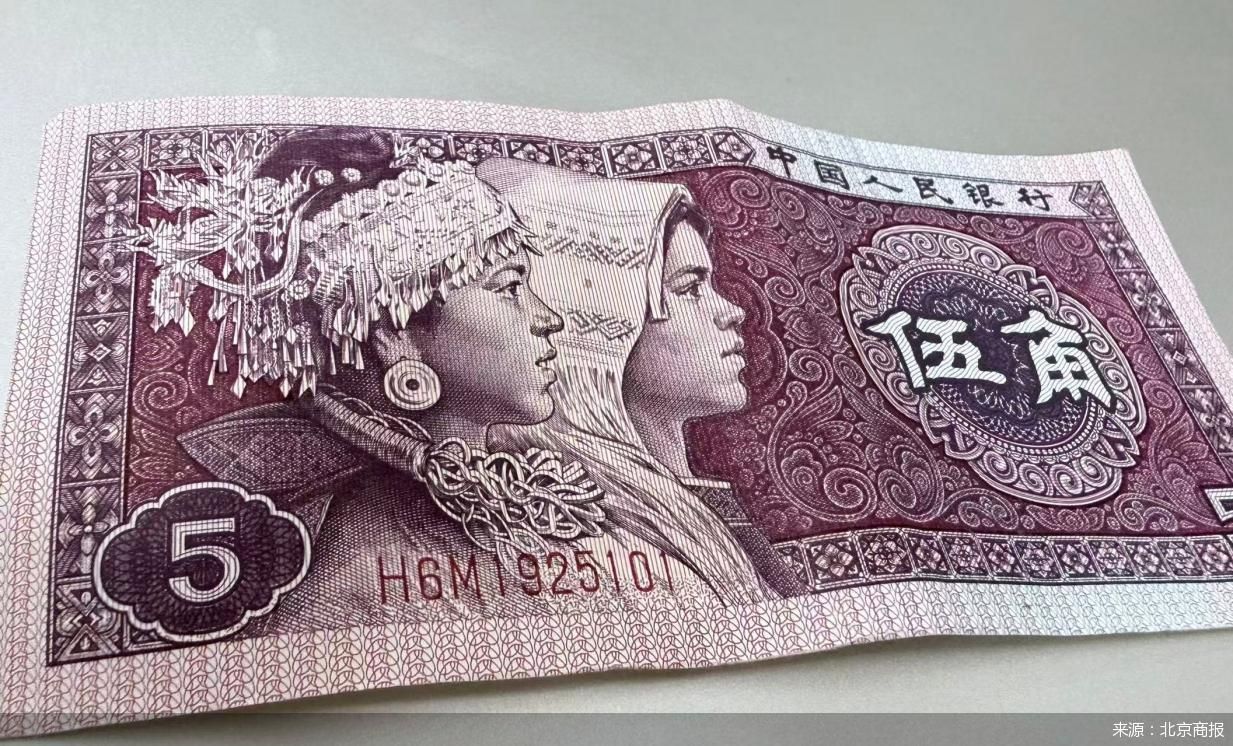
5角纸币

Search documents
5角纸币的拒收困局
Bei Jing Shang Bao· 2025-12-25 16:02
Core Viewpoint - The increasing rejection of 50-cent banknotes by merchants highlights a significant issue regarding cash payment rights and consumer protection in the context of growing mobile payment adoption [1][3][4] Group 1: Merchant Behavior - A survey of 15 merchants revealed that only 5 were willing to accept 50-cent banknotes, while 10 either outright refused or provided excuses such as "not in circulation" or "no one wants it" [3][4] - Many merchants, particularly individual business owners, lack awareness of regulations prohibiting the refusal of cash payments, leading to widespread rejection of small denomination banknotes [4][5] - The perception that small denomination banknotes are no longer valuable or in circulation is prevalent among merchants, which conflicts with their legal obligation to accept them [4][5] Group 2: Consumer Impact - The refusal to accept 50-cent banknotes disproportionately affects vulnerable groups, such as the elderly and rural residents, who rely on cash for transactions [5][6] - Consumers report accumulating 50-cent banknotes but facing difficulties spending them, as many merchants claim they are not accepted [4][5] Group 3: Regulatory Response - The People's Bank of China, along with other regulatory bodies, has issued new regulations to ensure cash payment rights, which will take effect on February 1, 2026 [9][10] - The regulations mandate that businesses maintain adequate cash reserves and cannot refuse cash payments, emphasizing the legal status of cash as a medium of exchange [9][10] - Regulatory measures will include penalties for businesses that refuse cash and initiatives to improve public awareness of cash payment rights [9][10] Group 4: Recommendations for Improvement - Experts suggest that banks should enhance the supply and circulation of small denomination cash, while community organizations should educate merchants about the legal status of cash [8][10] - A multi-faceted approach involving regulatory oversight, banking services, and merchant compliance is necessary to resolve the cash rejection issue and ensure the smooth circulation of small denomination banknotes [10]

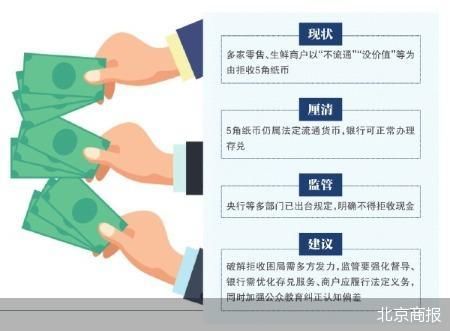
5角纸币的“拒收困局”
Bei Jing Shang Bao· 2025-12-25 13:17
Core Viewpoint - The issue of cash refusal, particularly regarding the 0.5 yuan banknote, has become a significant concern for consumer rights and payment equity, prompting regulatory action from the People's Bank of China and other authorities to ensure cash acceptance [1][11][14]. Group 1: Merchant Behavior - A survey of 15 merchants revealed that only 5 were willing to accept 0.5 yuan banknotes, while 10 either outright refused or provided excuses such as "not in circulation" or "not valuable" [3][4]. - Many merchants, particularly individual business owners, lack awareness of the legal obligation to accept cash, mistakenly believing that small denomination banknotes are no longer valid [5][6]. - The shift towards mobile payment methods has marginalized small cash transactions, leading to a perception among merchants that 0.5 yuan notes are obsolete [5][6]. Group 2: Regulatory Response - The People's Bank of China, along with other regulatory bodies, has issued new regulations to prevent the refusal of cash payments, set to take effect on February 1, 2026 [11][12]. - The regulations require businesses to maintain adequate change and ensure smooth cash transactions, emphasizing the legal status of cash as a payment medium [12][14]. - Previous cases of penalties for refusing cash payments have been publicized, indicating ongoing efforts to enforce compliance [13]. Group 3: Implications for Consumers - The refusal to accept 0.5 yuan banknotes disproportionately affects vulnerable groups, such as the elderly and low-income individuals, exacerbating the digital divide [6][7]. - Despite the challenges, 0.5 yuan banknotes remain in circulation and are legally recognized as valid currency, contradicting merchants' claims of their obsolescence [8][9]. - The need for cash as a payment option is underscored by its role in ensuring financial equity and stability, particularly for those without access to digital payment methods [6][7]. Group 4: Recommendations for Improvement - To address the cash refusal issue, banks should enhance the supply and accessibility of small denomination cash, while community organizations should educate merchants about their legal obligations [10][15]. - A collaborative approach involving regulators, banks, and merchants is essential to create a seamless cash acceptance environment, ensuring that all payment methods coexist effectively [15].