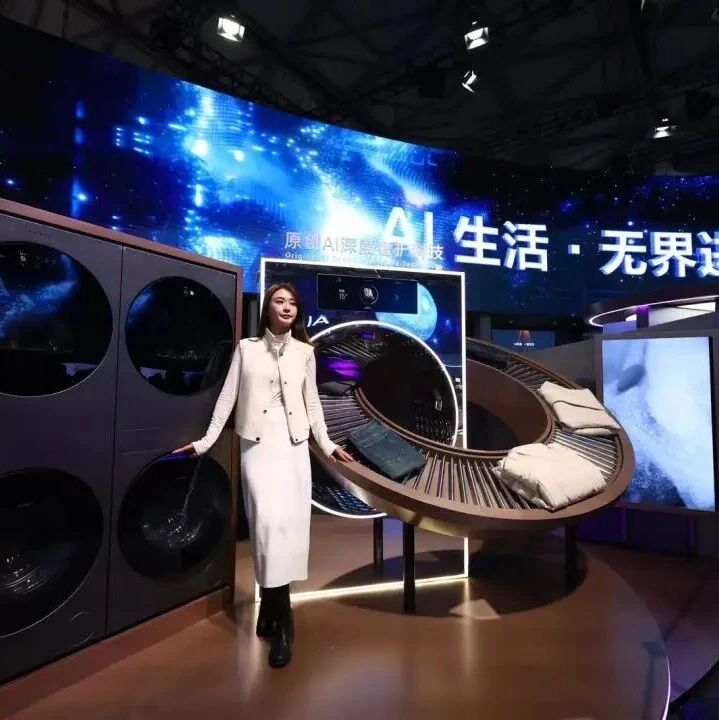
AI之眼智能家电套系

Search documents
2026 AWE落幕:AI热潮下,如何扩大家电消费?
第一财经· 2026-03-15 15:38
Core Viewpoint - The 2026 AWE showcased a significant shift in the home appliance industry towards AI and robotics, with traditional appliances losing attention as new AI-driven products emerged [3][4]. Group 1: Market Trends and Challenges - The Chinese home appliance market is under pressure, with a projected retail value of 8,931 billion yuan in 2025, reflecting a 4.3% year-on-year decline [6]. - The split-type air conditioner market saw a retail value of 2,357 billion yuan in the previous year, down 0.4%, with expectations of a further decline to 2,195 billion yuan this year, a decrease of 6.9% [6]. - Television sales in China dropped to 27.63 million units last year, indicating a challenging market environment [6]. Group 2: AI Integration and Innovations - AI and robotics are becoming integral to home appliances, with companies like Haier and Midea launching various AI-driven products, such as smart refrigerators and air conditioners that respond to environmental conditions [4][7]. - Haier's CEO revealed that over 9,000 product development suggestions were received via social media, leading to 17 new product initiatives [4]. - The penetration rates for smart air conditioners and refrigerators are increasing, with 26% and 57.35% respectively in the market [12]. Group 3: Strategic Moves by Companies - Gree announced a partnership with JD.com to sell 10 million AI air conditioners over the next three years, expanding its smart home appliance business [7]. - Panasonic is shifting its strategy to promote AI appliances developed in China to global markets, aiming for a 20% revenue share from the Asian market within three years [8]. - New entrants like MOVA are leveraging AI technology to create innovative products, such as AI mobile air conditioning robots, targeting high-cost markets first [13]. Group 4: Consumer-Centric Approach - The industry is increasingly user-driven, with companies focusing on addressing consumer pain points through practical innovations rather than gimmicks [6][12]. - The integration of AI in appliances is seen as a way to enhance user experience and meet evolving consumer demands, with a focus on energy efficiency and comfort [12].