AI客服Agent

Search documents
6亿月活的网约车平台,如何放心让天润云(02167.HK)AI接管超65%客诉问题?
Ge Long Hui· 2026-01-29 06:54
Core Insights - The article highlights the successful implementation of AI in handling customer complaints by a ride-hailing platform with 600 million monthly active users, achieving over 65% independent handling rate and 95% accuracy in ticket creation within two months of deployment [1][4]. Group 1: Reasons for AI Adoption - The platform faces high complaint volumes related to driver services and lost items, necessitating a large customer service team, which incurs high labor costs and management pressures [4]. - Customer service operates only from 9 AM to 6 PM, while ride requests occur 24/7, leading to delayed responses and negatively impacting user experience [4]. - The platform's model requires customer service to switch between multiple systems to create tickets, resulting in inefficiencies that AI aims to alleviate [5]. Group 2: Characteristics Favoring AI Implementation - Complaints are concentrated in a few categories such as lost items and driver issues, making them suitable for standardization and optimization [7]. - Users primarily seek acknowledgment and timely responses rather than immediate resolutions, emphasizing the importance of emotional engagement [8]. - Most complaints require follow-up processes, with the initial stages focused on information handling rather than complex judgments, providing a clear foundation for AI integration [9]. Group 3: Key Strategies for AI Integration - The AI first addresses user emotions rather than jumping to problem resolution, ensuring users feel heard and supported, which helps prevent escalation [10]. - The platform employs automated order clarification to reduce the need for repetitive questioning, enhancing the accuracy of complaint records and minimizing the likelihood of transferring to human agents [11]. - Post-interaction, the AI completes a standardized process that includes summarizing conversations, categorizing issues, and creating tickets in both the platform's and partner systems, achieving a 95% accuracy rate in ticket creation [14].
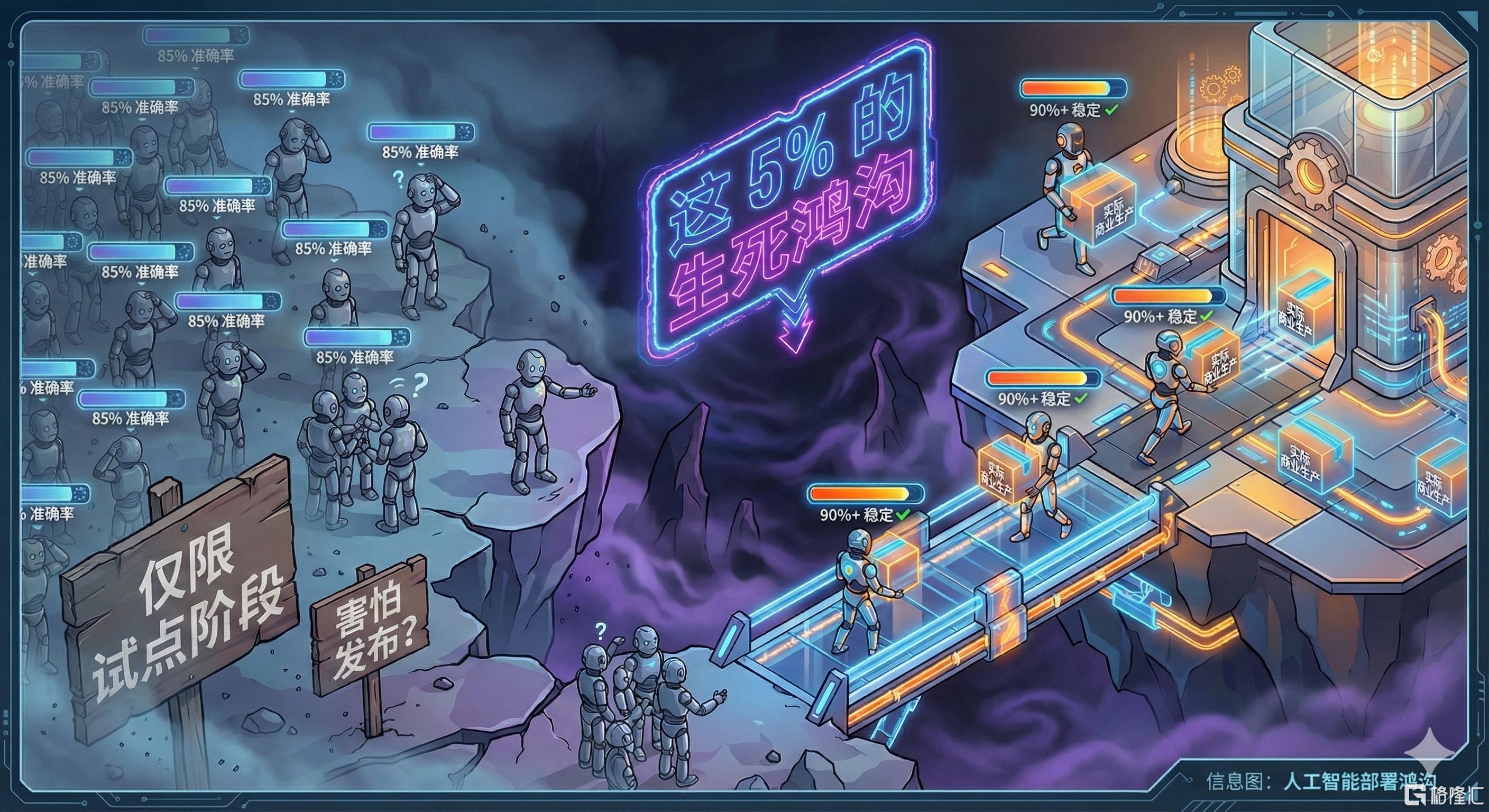
天润云(02167.HK)洞察:5%准确率差距,成AI客服Agent上线“生死线”
Ge Long Hui· 2025-12-23 14:31
Core Insights - The adoption of AI agents in customer service has increased, but many companies struggle to successfully launch these projects, with only a small percentage reaching the deployment stage [1][3] - The key differentiator between successful and unsuccessful AI projects is accuracy, with successful projects achieving over 90% accuracy, while those that stall hover around 85% [2][7] Group 1: Project Challenges - Many AI projects remain in pilot phases due to a lack of confidence in their ability to perform in real business environments [1][4] - The demo phase does not reveal the critical differences in agent capabilities, as it operates in an idealized environment where errors are overlooked [4][8] Group 2: Real Business Environment - Real business scenarios present complexities that demos do not, including increased problem complexity, non-standard user expressions, and the amplification of errors leading to complaints [5][6] - The difference in performance between agents with 85% and 90% accuracy becomes significant in real-world applications, affecting the stability of business operations [7][9] Group 3: Evaluation Criteria - To assess whether an AI agent can cross the "5% death line," business leaders should focus on stability, error management, and the ability to evolve [9][11] - Stability in performance is crucial; agents must consistently handle complex, non-standard inputs without excessive reliance on human intervention [10][11] - The ability to manage and correct errors is essential; agents should minimize errors to manageable levels rather than transferring them to human operators [10][11] - Continuous evolution is necessary for agents to adapt to changing business conditions and user needs, rather than being static systems [11][14] Group 4: Proof of Concept (POC) - Effective POCs should operate under real business constraints to reveal the true capabilities and risks of AI agents, rather than merely serving as demonstrations [14][15] - Real data and real user interactions during POCs can provide clearer insights into the feasibility of launching AI agents in business environments [14][15]