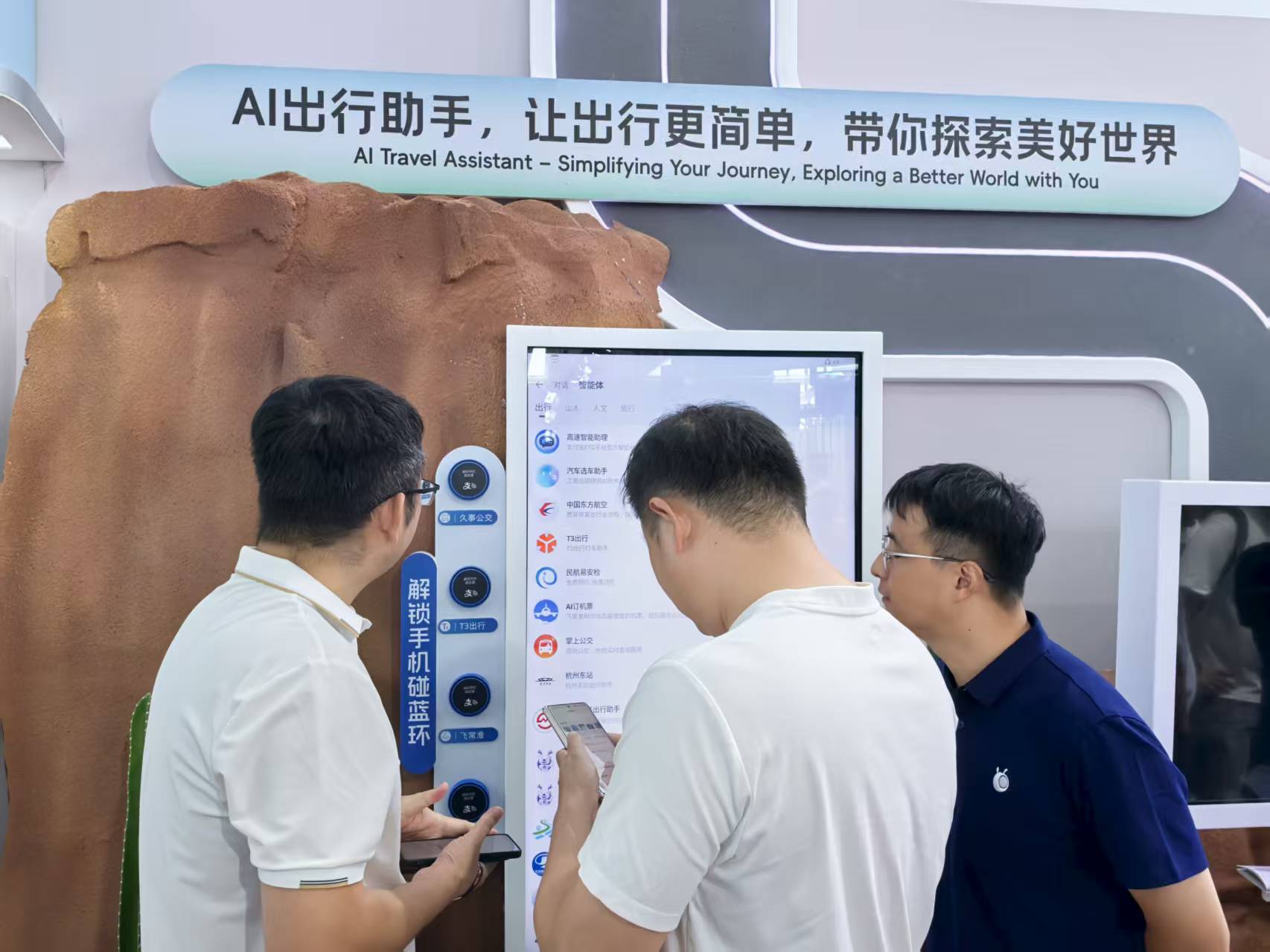
AI打车技术

Search documents
从查路线到算时间,还能约到“空气清新的老司机车” AI成了我的“长假出行搭子”
Mei Ri Jing Ji Xin Wen· 2025-10-02 09:55
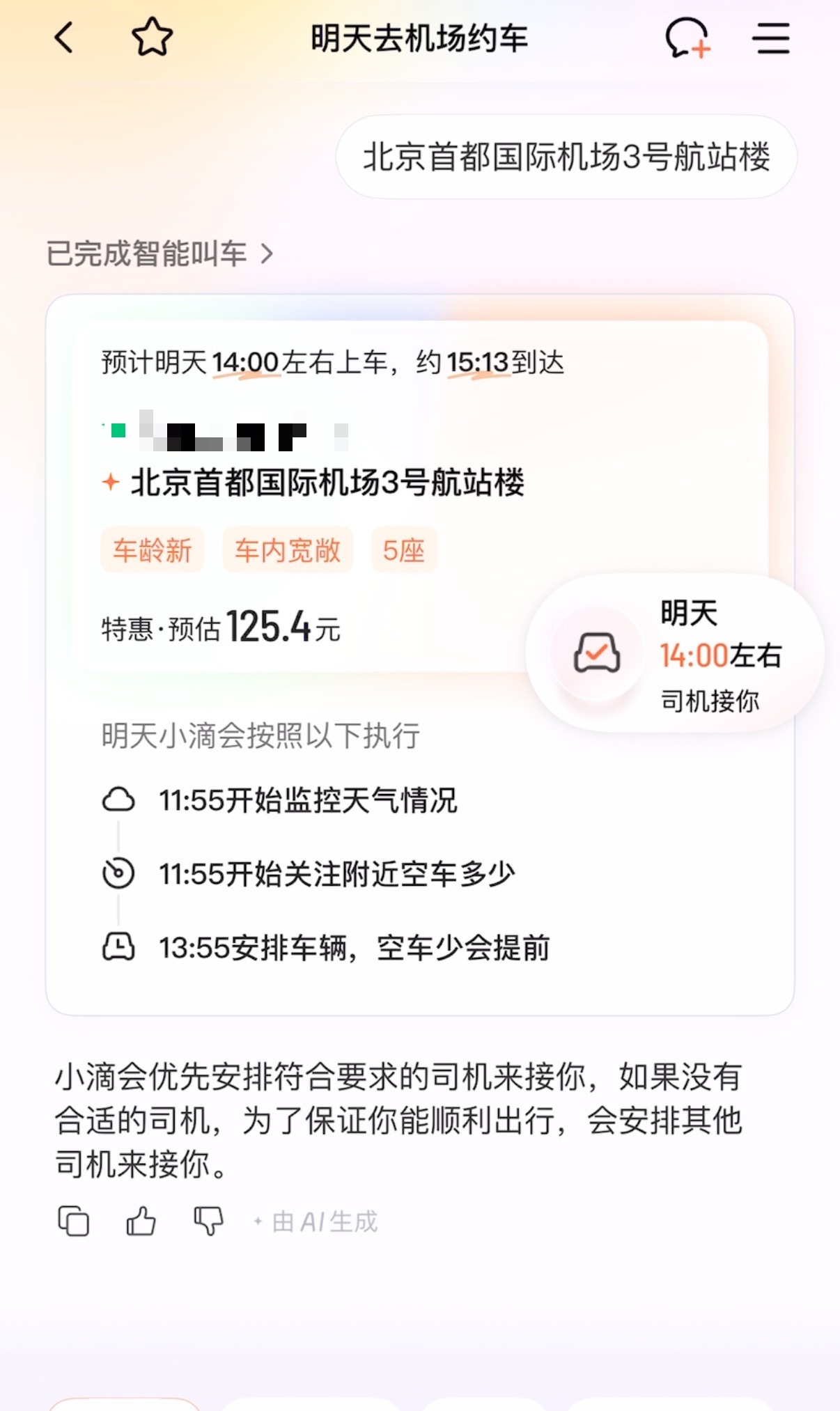
Core Insights - The article discusses the launch and functionality of Didi's AI travel assistant "Xiao Di," which aims to enhance user experience during peak travel times by providing personalized travel solutions [1][9]. Group 1: AI Travel Assistant Features - "Xiao Di" analyzes user requests and generates a complete travel plan after approximately 30 seconds of data processing, suggesting optimal departure times and monitoring conditions [1]. - The assistant can respond to vague requests, such as recommending nearby tourist attractions and matching users with suitable vehicles based on specific preferences [3][8]. - Users can describe their travel needs in detail, allowing the AI to present up to three vehicle options for manual confirmation, moving beyond traditional ride-hailing methods [8]. Group 2: Integration and Future Prospects - Didi has launched the MCP (Model Context Protocol) service, enabling other applications to integrate its AI travel capabilities, potentially allowing users to plan and book rides without opening the Didi app [9]. - The article highlights the broader trend of AI integration in travel and transportation, with other companies like T3 and Gaode also developing AI-driven solutions [9]. - Despite the promising advancements, Didi acknowledges that "Xiao Di" is still in its early stages and requires continuous learning from real-world scenarios to improve its service [9]. Group 3: User Experience and Perception - The AI assistant's ability to understand nuanced user needs, such as preferring a vehicle with a fresh atmosphere, signifies a shift from mere execution of commands to a more empathetic interaction [10]. - The article emphasizes the potential for AI to create a more human-like relationship in the travel experience, enhancing efficiency and user satisfaction [10]. - The ongoing development of AI in travel is seen as a significant step towards a more personalized and responsive service model, with users contributing to its evolution through feedback [10].

不用扫码不用打字,说走就走成了现实!
Guo Ji Jin Rong Bao· 2025-09-11 09:06
Core Insights - The collaboration between T3 Mobility and Alipay has introduced an AI-based ride-hailing feature that allows users to book rides using voice commands, enhancing user experience and efficiency [3][4]. Group 1: AI Ride-Hailing Technology - T3 Mobility's AI ride-hailing technology has been integrated into Alipay, marking it as the first intelligent assistant for ride-hailing within the platform [3]. - Users can access the AI ride-hailing feature through the "Travel" channel on the Alipay app, where they can simply state their destination, and the system will recognize the voice command and suggest relevant locations [3]. - This AI interaction significantly improves ride-hailing efficiency by eliminating the need for manual input, thus streamlining the booking process [3]. Group 2: Implementation and Features - The AI ride-hailing function was first introduced in T3 Mobility's app in December 2024 and has since undergone multiple iterations to enhance its maturity and functionality [3]. - The AI capabilities are supported by the "Lingxing Qianmo Model," developed in collaboration with China Telecom, which is the first ecological model in the domestic ride-hailing industry to be registered for both models and algorithms [4]. - The AI technology is not only used for ride-hailing but also extends to driver-passenger services, intelligent scheduling, and safety operations, helping to predict demand and reduce empty driving rates [4]. Group 3: User Experience Enhancement - The integration of AI in ride-hailing aims to shorten the distance between users and services, enhancing the overall efficiency of smart travel [4]. - T3 Mobility's public relations director emphasized the importance of combining the intelligent ride-hailing system with offline scenarios and third-party partners to elevate the user experience [4].